La collecte des déchets
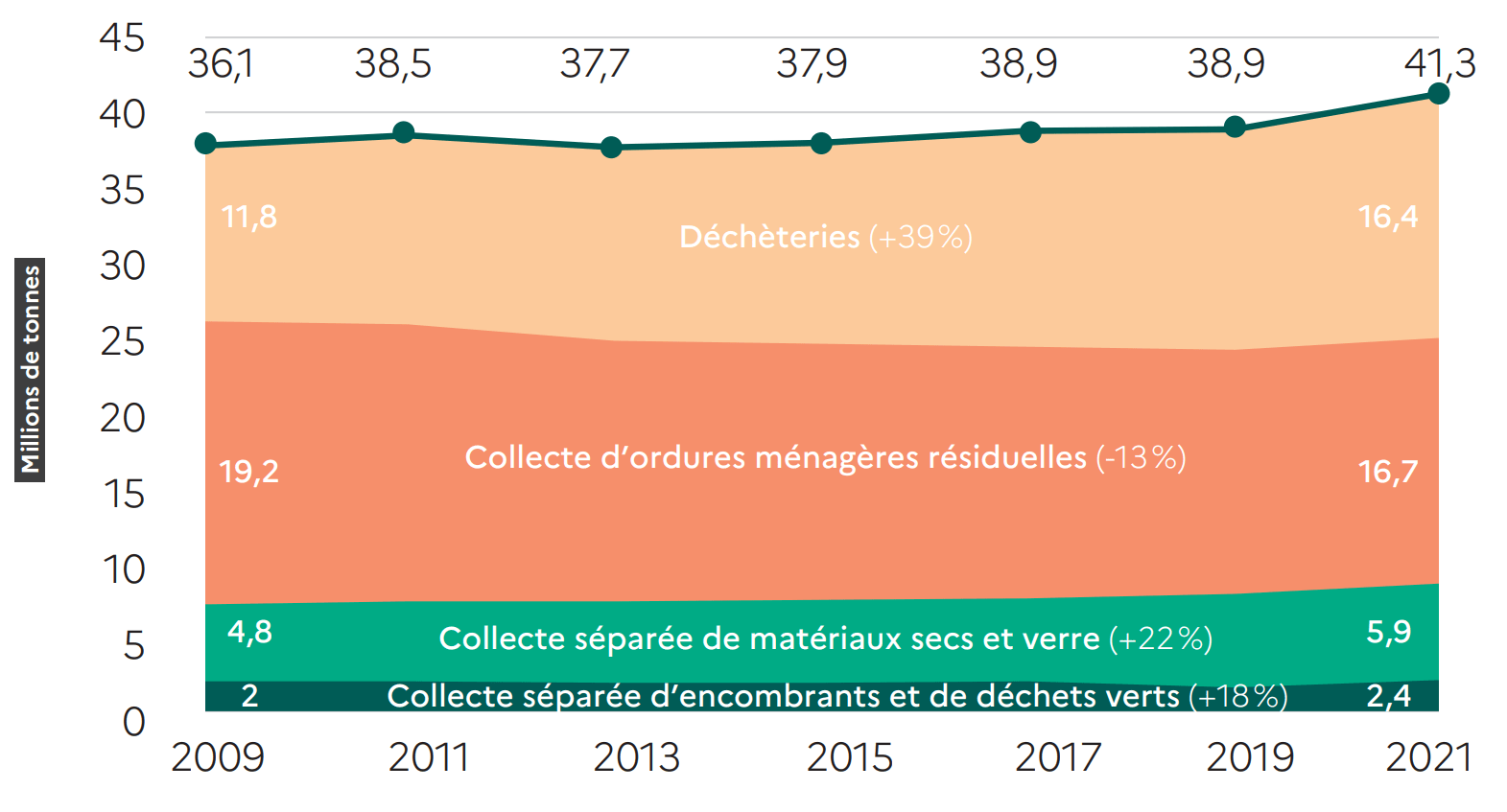
En 2021, 41,3 millions de tonnes (Mt) de déchets ménagers et assimilés ont été collectés par le Service Public de Gestion des Déchets, soit 6 % de plus qu’en 2019. Cela représente 611 kg par habitant. Depuis 2009, la collecte des ordures en mélange, directement envoyés en incinération ou enfouissement, a fortement diminué. Cela au profit des collectes sélectives et en déchetterie dont la part est passée de 43 % à 60 %.
In 2021, 41.3 million tonnes (Mt) of household waste and similar waste were collected by the Public Waste Management Service, 6% more than in 2019. This represents 611 kg per resident. Since 2009, collection of mixed waste directly sent to incineration or landfill has declined sharply. This has been offset by selective collections and drop-off centres whose share increased from 43% to 60%.
- What are the waste categories collected?Collection scopeWaste collection here includes only waste collected by the Public Waste Management Service from households and small businesses through the public service, and does not include mineral and hazardous waste.Three waste categories• Household waste and similar waste collected is divided into three categories: • Selective collections: waste from the "yellow bin" sorted for recovery purposes: glass, packaging, paper, organic waste, bulky items, etc. They represent 20% of waste; • Drop-off centre collection: allowing individuals to bring waste too bulky and voluminous for everyday containers (e.g. furniture, household appliances, large quantities of green waste, rubble, etc.), representing 40% of collected waste by weight; • Residual household waste: the portion of non-recyclable waste remaining after selective collections, often called the "grey bin", representing 40% of collected waste.
- How are household waste quantities collected changing?Overall tonnage increaseIn 2021, total collected waste tonnage continues to increase, reaching 41.3 Mt, including excavation and rubble, representing a 6% increase compared to 2019.Change by collection type• Residual household waste collection decreased by 13% between 2011 and 2021 while the underlying trend for selective collections and drop-off centres shows growth. Indeed, these reached a total of 24.7 Mt in 2021, an increase of 32% since 2009, driven mainly by drop-off centre collection (+ 39%). • Green waste quantities from selective collection and drop-off centres increased by 21% over 10 years, reaching 5.7 Mt in 2021. Selective collection of packaging including newspapers and magazines represents approximately the same tonnage at 5.6 Mt.New specific streamsThe rise since the 2000s of new "extended producer responsibility" streams (tyres, end-of-life vehicles, used oils, waste electrical and electronic equipment, etc.) has made it possible to increase collection for waste requiring specific treatment.
- How is drop-off centre activity changing?Drop-off centre growthIn 2021, there were 4,620 drop-off centres in France, an increase of more than 60% compared to 2001. They received 16.44 Mt of household and similar waste, a + 143% increase over 20 years, mainly bulky items, green waste, excavation and rubble, and recyclable materials.
Further reading
- Les filières à responsabilité élargie du producteurnotre-environnement.gouv.fr
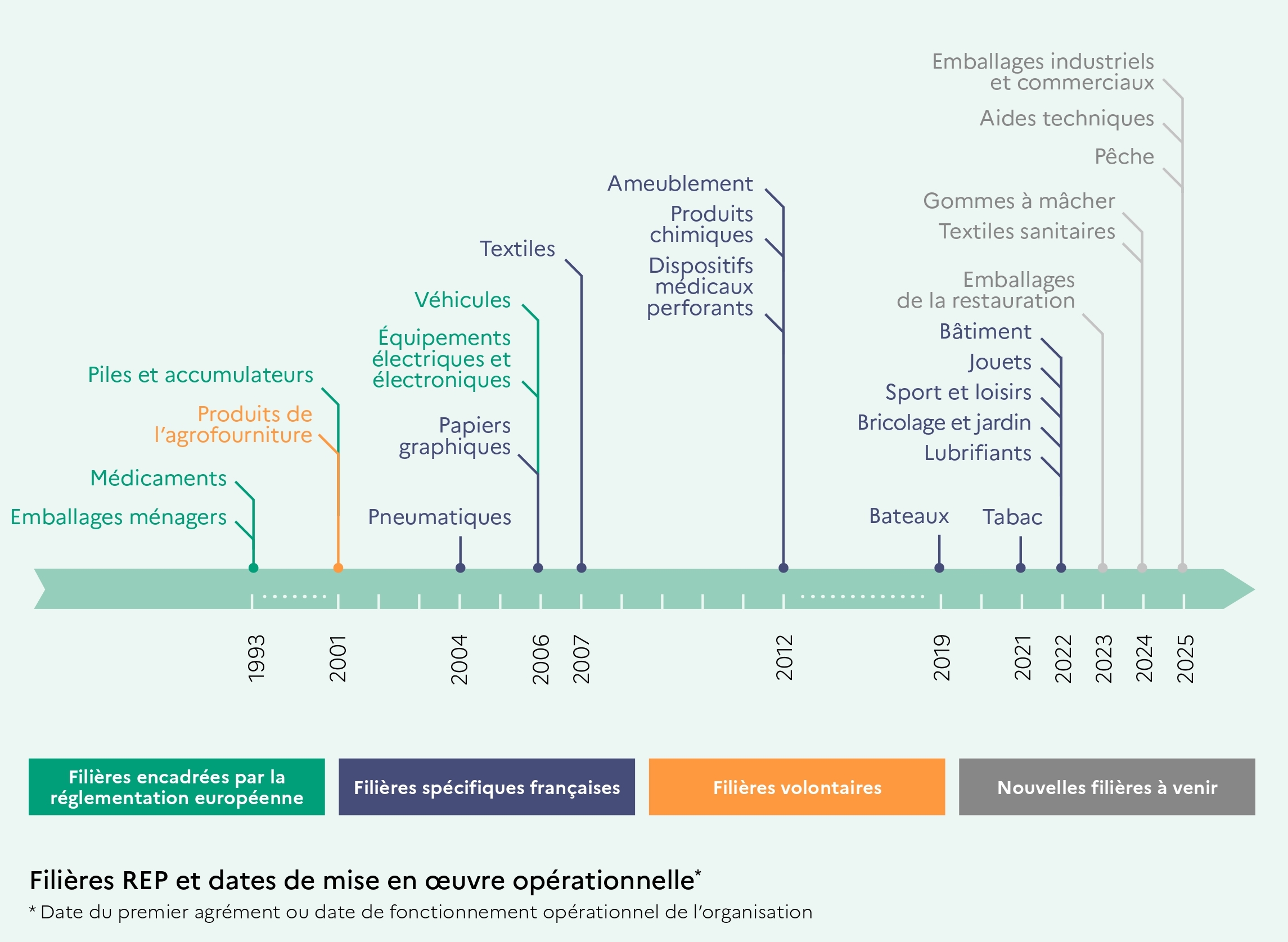
En 2021, les 14 filières à responsabilité élargie du producteur françaises ont pris en charge 9,4 millions de tonnes (Mt) de produits.
- «La collecte des déchets par le service public en France - Résultats 2021»librairie.ademe.fr
- Le traitement des déchetsnotre-environnement.gouv.fr
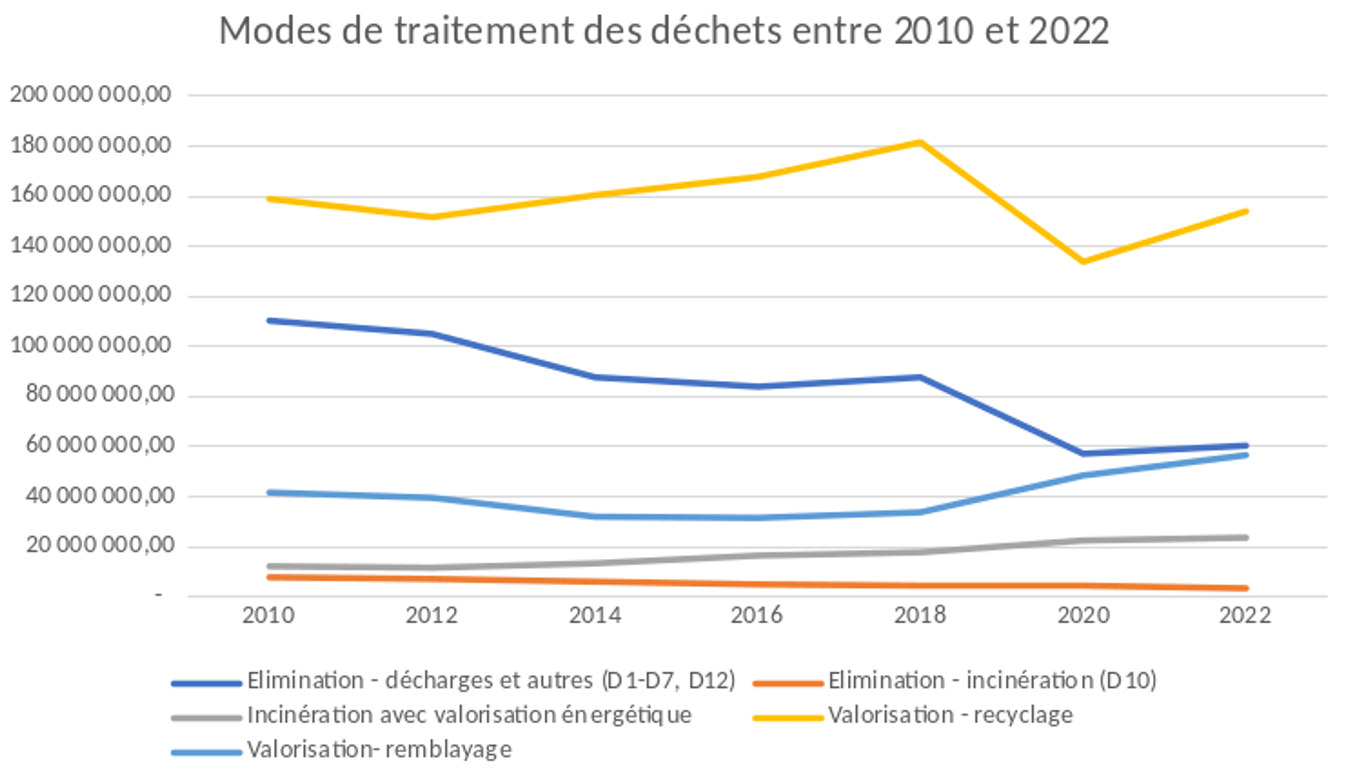
En France, en 2022, 20 % des déchets sont stockés, 19 % sont utilisés pour le remblayage, 9 % sont incinérés et 52 % sont recyclés.
- SINOE Déchetssinoe.org
Développé en collaboration avec plusieurs utilisateurs, le site SINOE® déchets a été conçu pour répondre aux attentes et besoins du terrain. Son contenu riche, fiable et actualisé offre aux collectivités des informations essentielles sur les déchets ménagers. Au-delà de l’observation, SINOE® déchets est un outil d’analyses efficace qui apporte à chacun un éclairage sur la gestion des déchets ménagers pour orienter la décision.