
Les déchets plastiques
La production mondiale de plastique a atteint 370 millions de tonnes en 2019. Chaque année, 2 à 3 % de ce plastique est rejeté dans l’environnement marin avec pour conséquence des dommages environnementaux et économiques. Le public est sensible à l’impact environnemental des plastiques. Le sondage Eurobaromètre révèle que 74 % des citoyens européens (73 % des Français) sont préoccupés par l’impact sur leur santé des produits de la vie courante en plastique et 87 % (88 % pour les Français) de leur impact sur l’environnement. 33 % des Européens (29 % des Français) identifient la pollution marine comme faisant partie des questions environnementales les plus importantes. Sur les 29 millions de tonnes de déchets plastiques collectés en Europe, un tiers est recyclé contre 15 % au niveau mondial. Si la pollution des océans par les plastiques est connue, l’impact des microplastiques sur les sols a reçu beaucoup moins d’attention alors que leur concentration pourrait y être de 4 à 23 fois supérieure.
Global plastic production reached 370 million tons in 2019. Each year, 2 to 3% of this plastic is released into the marine environment, causing environmental and economic damage. The public is sensitive to the environmental impact of plastics. The Eurobarometer survey reveals that 74% of European citizens (73% of French) are concerned about the health impact of everyday plastic products and 87% (88% for French) about their environmental impact. 33% of Europeans (29% of French) identify marine pollution as one of the most important environmental issues. Of the 29 million tons of plastic waste collected in Europe, one-third is recycled compared to 15% globally. While ocean pollution by plastics is well known, the impact of microplastics on soils has received far less attention, even though their concentration there could be 4 to 23 times higher.
- Global plastic productionProduction growth• Large-scale plastic production and use began in the 1950s. Thanks to their multiple applications, plastics became indispensable. Globally, production increased from 1.5 million tons in 1950 to almost 370 million tons in 2019. This growth was much faster than population growth, as production rose from 0.6 kg per capita in 1950 to 47.7 kg per capita today. • In 2019, global biobased plastic production reached 2.1 million tons, accounting for less than 1% of total plastic production.Petroleum originIn 2019, approximately 4% of global oil production was used to manufacture plastic.
- European plastic demandDemand volumeIn 2019, European demand reached approximately 51 million tons of plastic materials.Sectoral breakdownFour sectors account for three-quarters of total European demand, led by packaging (40%) which has a very short lifespan. In 2019, French demand was around 5 million tons, representing 9.5% of European demand.
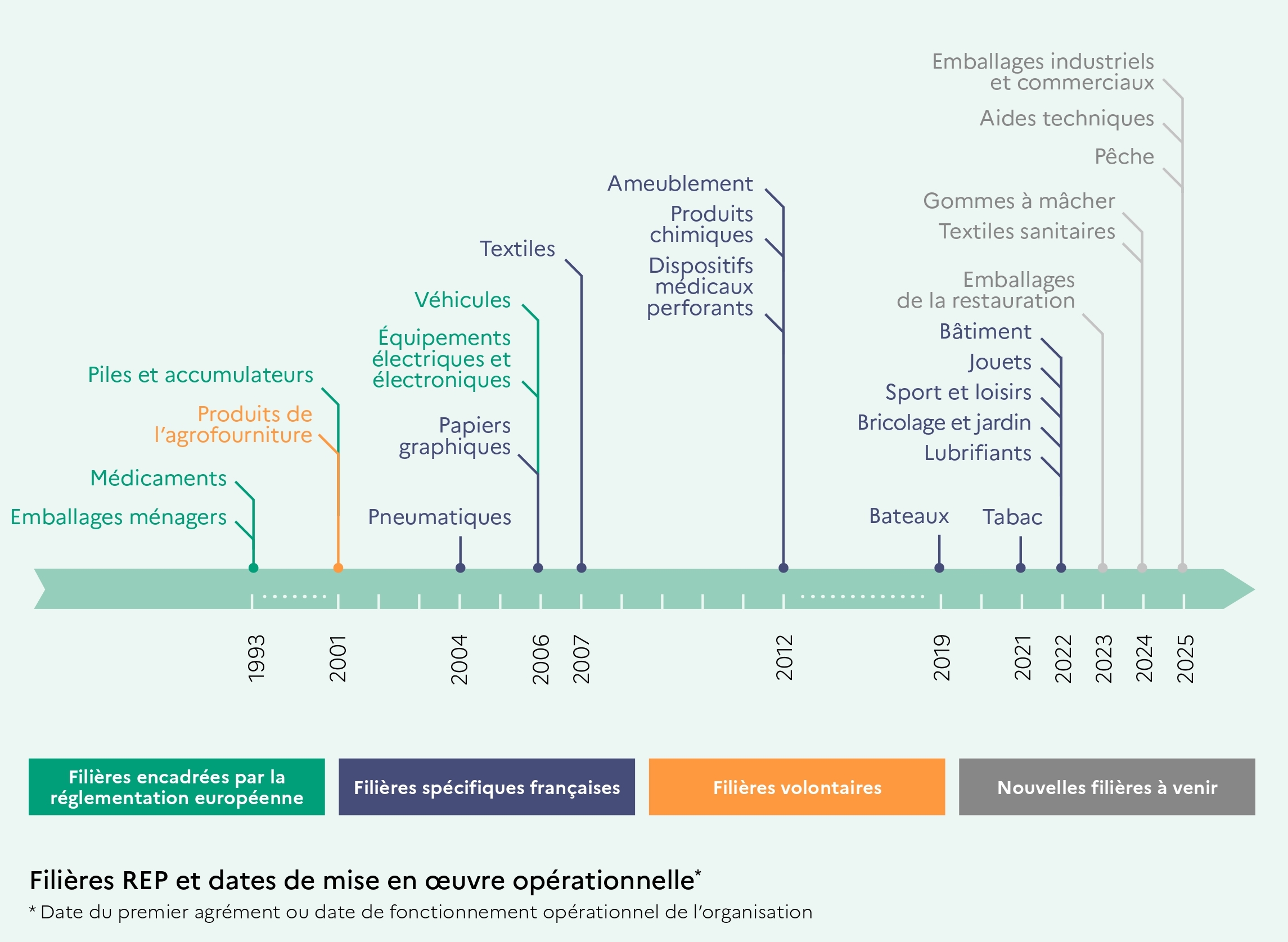
- Plastic waste treatmentWaste compositionPlastic waste consists of packaging and other products (toys, flooring, parts of electronics or vehicles, windows, etc.).Collection and recycling rates• Globally, 15% of plastic waste is collected for recycling, 25% is incinerated, and 60% is sent to landfills. In Europe, 29 million tons of plastic waste were collected in 2018, of which 61% was packaging. Since 2016, the recycling rate for all plastic waste has exceeded the disposal rate (landfill or incineration without energy recovery).Packaging recyclingPlastic packaging has a better recycling rate (42%). At the European level, rates vary between 26% (Finland, France) and 52% (Czech Republic). In France, 24% of plastic waste and 26% of plastic packaging waste are recycled.Recycling barriersOne major obstacle to plastic recycling is their great diversity: approximately 50% of packaging is either non-recyclable or extremely difficult to recycle.
- Plastic waste reaches the oceansMarine waste origins• 80% of waste found at sea originates from land. The remaining 20% comes from fishing activities (ropes, nets, traps), merchant and cruise ships, ferries, pleasure boats, military vessels, and drilling platforms. • The main land-based sources of marine waste include tourism-related waste, litter thrown in streets, illegal dumpsites, cosmetic products, polyester and acrylic fibers from laundry wastewater, tire wear particles in stormwater runoff. These wastes typically reach the sea through sewers or rivers. Natural phenomena can also contribute marine waste, such as storms, tsunamis, floods, or erosion exposing old landfills.Plastic share in marine waste• A study commissioned by the European Commission, released in May 2018, estimates that plastic objects constitute between 80 and 85% of marine waste. Non-plastic marine waste, often inert (stone) or biodegradable (paper, wood), poses less environmental risk than plastic waste. • Many studies attempt to assess the tonnage of waste dumped at sea. The figures cited vary widely and estimates are broad. This is because not all waste floats at the surface—some rests on ocean floors while other waste has been ingested by marine organisms. It is estimated that between 5 to 13 million tons of plastic waste enter the oceans annually (approximately 1% to 4% of global production). Since 1980, more than 150 million tons are believed to have accumulated.Single-use items foundThe European Commission study shows that half of waste found on European beaches (and potentially at sea) consists of single-use plastics. The following table indicates the number of samples found for each article among the top 10: An American study arrived at roughly the same list of objects (except cotton swabs, which are cardboard in the American market).Ocean gyresWaste dumped at sea begins a long drift. Due to the Earth's rotation, ocean currents create gyres. These enormous whirlpools rotate clockwise in the Northern Hemisphere and counterclockwise in the Southern Hemisphere. Eventually, plastic waste becomes trapped in these gyres. The North Pacific gyre is the size of one-third of the United States. The North Atlantic gyre extends over an area 2 to 3 times the size of France.
- From macroplastics to microplasticsPrimary microplasticsWaste size determines its environmental impact. Microplastics are tiny particles, sometimes invisible to the naked eye. They are defined as particles smaller than 5 mm (unlike macroplastics). Primary microplastics enter the environment directly as microplastics. Some result from wear during use (tire dust, fibers from washing synthetic textiles). Others are intentionally added to products (cleaning agents in detergents, exfoliating microbeads in cosmetics).Secondary microplasticsSecondary microplastics enter marine environments as macroplastics and slowly degrade into small fragments through the effects of currents, UV rays, temperature, bacterial degradation, and mechanical agitation.Primary sources• According to a study by the International Union for Conservation of Nature, between 15 and 31% of ocean plastics could come from primary sources. The largest contributor is textile degradation during washing, followed by tire erosion from driving. The third source comes from urban dust (abrasion of objects or infrastructure, sandblasting, detergents). • In textiles, for example, losses average 0.5 g per kilogram of washed fabric, while tire wear is approximately 1 g of rubber per 10 km of driving.
- Consequences of marine plastic pollutionEnvironmental impacts• The consequences include economic, social, and environmental damage. The "plastic soup" forming at ocean surfaces endangers ecosystems, biodiversity, and potentially human health, particularly through plastics in the food chain. Socioeconomic impacts include cleanup costs, damage to tourism, maritime transport, fishing and aquaculture, and loss of resources that could be reinvested in the economy. • Impacts can be categorized by waste size: • For macroplastics, the main consequences are: entanglement of marine mammals and birds in nets; ghost fishing; fatal ingestion of plastic debris by birds, fish, or sea turtles; disruption of ecosystem balance due to transport of invasive species over long distances; navigation hazards (accidents, propeller blockage); pollution of seabeds. • For microplastics, the primary consequence is ingestion. The small size of microplastics allows them to interact with a particularly wide range of marine organisms. They can be ingested by filtering cetaceans, mollusks, plankton, or fish, entering the food chain. The problem is that plastic is non-inert—it contains chemical additives that can be endocrine disruptors, carcinogens, or cause toxic reactions. The main feared effects on marine species are growth or fertility problems and mortality. Research suggests that Europeans currently consume up to 11,000 pieces of plastic in their food annually due to seafood consumption. However, the consequences for our health remain poorly understood. Once ingested, are plastics encapsulated by tissues and forgotten by the body, do they cause inflammation, or do they release chemicals? Research on microplastic effects and their contained additives on human health is not yet sufficiently advanced to provide conclusive results. • Globally, at least 700 marine species are affected, with 17% threatened or critically endangered according to the International Union for Conservation of Nature.Financial impacts• The United Nations Environment Programme (UNEP) estimates the annual natural capital cost of plastic waste in marine ecosystems at 13 billion dollars (economic losses from fishing, aquaculture, and tourism, beach cleanup). • The European Commission estimates the cost for Europe at 470 million euros. • Beach maintenance costs are significant for municipalities. It typically requires year-round action with increased frequency during summer months (manual cleaning, sifting). To illustrate, expenses approached 6 million euros for the departments of Gironde, Landes, and Pyrénées-Atlantiques in 2008.Actions implemented• Marine waste is a transboundary problem by nature. The MARPOL convention (for MARine POLlution), which entered into force on December 31, 1988, addresses ship pollution and prohibits in Annex V the discharge of plastic materials at sea in any form. • However, UNEP, evaluating the effectiveness of international approaches to combat marine plastic waste, emphasizes that existing mechanisms need to be built and strengthened, as no global institution dedicated to this issue currently exists. Nevertheless, actions are being taken at the international level. • At the European level, Directive (EU) 2015/720 of the European Parliament and Council of April 29, 2015 requires Member States to significantly reduce consumption of lightweight plastic bags (thickness < 50 microns). This must decrease to 90 bags per capita by December 31, 2019 and 40 bags per capita by December 31, 2025 (compared to nearly 200 on average in 2010). • Today, among the 10 most common single-use items found on beaches, only plastic bags are subject to regulation. • However, on January 16, 2018, the European Commission adopted its first plastic strategy, part of the transition toward a more circular economy. It aims for 100% reusable and recyclable packaging and more than 50% recycled plastic waste by 2030. Single-use plastic consumption will be reduced, and intentional microplastic use will be limited. • On June 5, 2019, the European Commission adopted Directive (EU) 2019/904, prohibiting the marketing of several single-use plastic products: • Straws, cutlery and plates, coffee stirrers, balloon sticks, and cotton swab sticks will all be banned from the EU starting July 3, 2021. Oxo-degradable plastics, food containers, and expanded polystyrene cups will also be prohibited on this date; • A target of 90% collection of plastic bottles by 2029 is set. Bottles sold in the EU must contain at least 25% recycled plastic by 2025 and at least 30% by 2030; • Extended producer responsibility is also extended to fishing nets and fast-food containers; • Tobacco sector companies must finance the collection and cleanup of cigarette butts discarded in streets. • As part of the fifth "Our Ocean" conference held in Bali on October 29-30, 2018, the European Union announced 23 new commitments for ocean protection, including various initiatives to reduce plastic pollution. Financially, 9 million euros will be dedicated to reducing plastic and marine waste in Southeast Asia, 7 million euros to help Pacific countries reduce marine waste and conserve biodiversity. 100 million euros will be directed toward research and development (R&D) projects under the Horizon 2020 program for developing smarter and more recyclable plastics, improving recycling chains, and tracing or eliminating hazardous substances from recycled plastics. • In France, for several years, France has taken measures to reduce single-use products impacting marine environments through various laws: • The law on energy transition for green growth of August 17, 2015 banned single-use plastic bags at supermarket checkouts starting July 1, 2016, outside checkouts from January 1, 2017, and disposable cups, glasses, and plates (except compostable in home composting and biobased) starting January 1, 2020; • Law "2016-1087" of August 8, 2016 provided for prohibition of plastic-stemmed cotton swabs starting January 1, 2020 and plastic microbeads in rinsed cosmetic products by January 1, 2018; • Through the Food Law, the prohibition of 7 new single-use plastic products in 2020 was adopted, following straws and mixer sticks. These now include cutlery, steak picks, disposable cup lids, meal trays, ice cream containers, salad bowls, and boxes; • The law on combating waste and circular economy of February 10, 2020 provides for the end of single-use plastic packaging by 2040. It also specifies that starting January 1, 2021, tobacco products equipped with filters composed in whole or in part of plastic, and starting January 1, 2025, fishing gear containing plastic, fall under the extended producer responsibility (EPR) principle. It also sets a target of 100% recycled plastic by 2025. • In the biodiversity plan, presented July 4, 2018, France aims for zero plastic discharge into the ocean by 2025. This goal, aligned with the Interministerial Sea Committee (CIMER) objectives, is broken down into 35 actions in the Zero Plastic at Sea Action Plan (2020–2025). • Several actions are also being conducted in France. • However, while states legislate, everyone can play a role in reducing marine pollution: • Industries by committing to increase integration of recycled materials in their products and caring about their recyclability from manufacturing (ecodesign); • Scientists by directing research toward biodegradable plastic in seawater or bacteria capable of attacking plastics or improving recycling procedures or finding other solutions; • Users by adopting responsible behavior: never littering in nature or on public roads, and sorting waste; • Associations through operations such as "I navigate, I sort," "Nothing overboard, all my waste at port!" sponsored by sailor Catherine Chabaud in 2013.