Les mouvements transfrontaliers de déchets
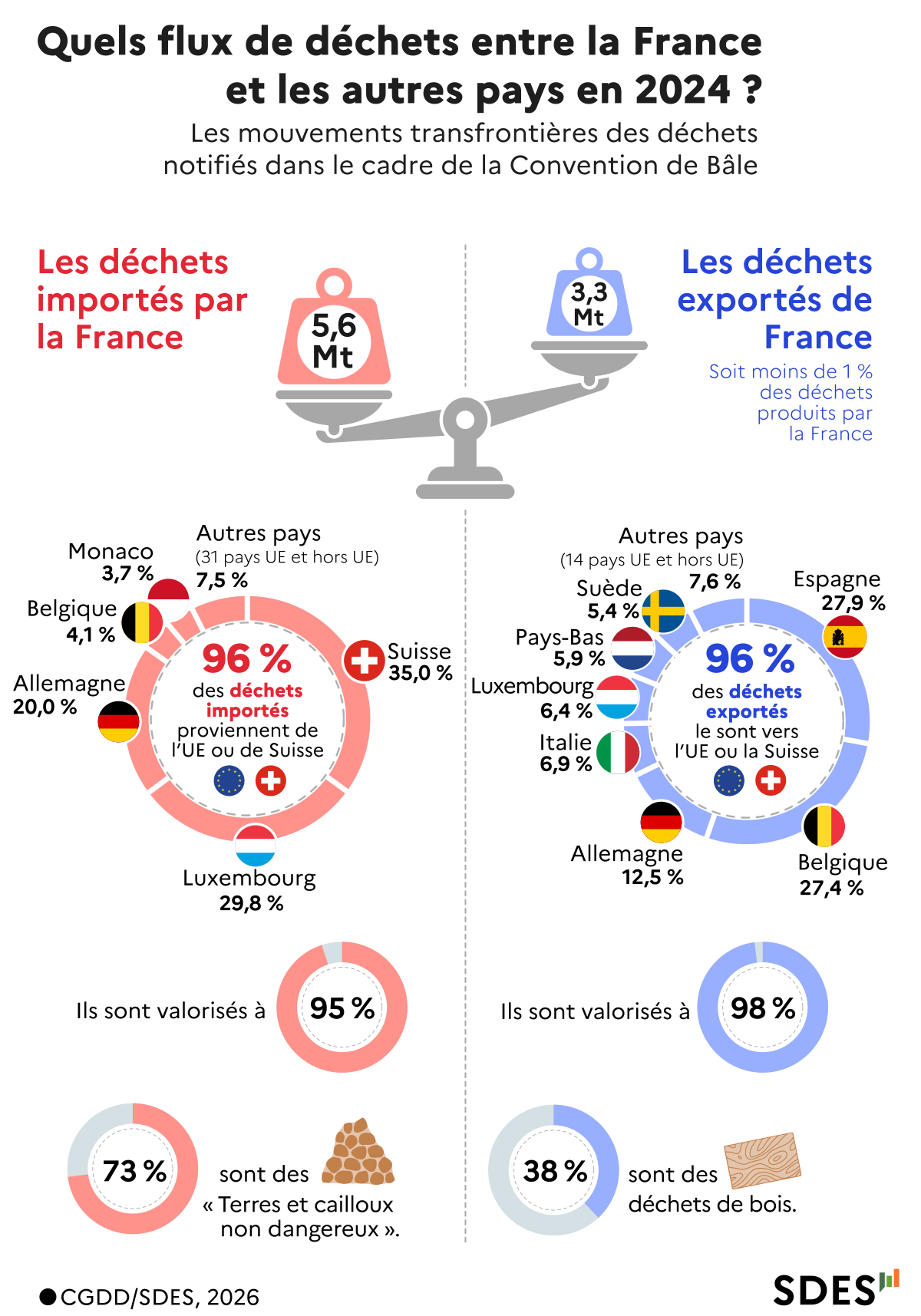
La Convention de Bâle sur le contrôle des mouvements transfrontières de déchets dangereux et de leur élimination a été adoptée le 22 mars 1989 et est entrée en vigueur le 5 mai 1992. Elle a pour objectifs de réglementer le commerce international de déchets dangereux et d’autres déchets, de réduire au minimum leur production et leurs mouvements transfrontières et d’assurer leur élimination de manière écologique. En 2024, la France a importé 5,6 millions de tonnes (Mt) de déchets notifiés et en a exporté 3,3 Mt.
The Basel Convention on the Control of Transboundary Movements of Hazardous Wastes and Their Disposal was adopted on 22 March 1989 and entered into force on 5 May 1992. Its objectives are to regulate international trade in hazardous and other wastes, to minimize their production and transboundary movements, and to ensure their disposal in an environmentally sound manner. In 2024, France imported 5.6 million tonnes (Mt) of notified waste and exported 3.3 Mt.
- Hazardous waste and other waste: what are we talking about?Regulatory framework• Transboundary movements of hazardous waste, imports and exports, are subject to an annual monitoring report drawn up under European laws and international conventions. Countries commit to exercising full authority to authorize or prohibit imports or exports. The parties involved ensure proper management of these transfers: designation of competent authorities, adequate facilities, prevention of risks to human health and the environment…Scope of application• Radioactive waste is not covered by this convention. Certain categories of waste, not listed in the Convention but considered hazardous in their country of import or export, are subject to a notification procedure.Growth in flows• Transboundary waste movements have experienced rapid growth since the early 2000s. Encouraged to recycle, EU member states apply the proximity principle. Thus French imports and exports predominantly involve European countries, with over 95% motivated by recovery.
- ImportsImport origins• In 2024, France imported 5.6 million tonnes of waste from 36 countries. • The majority of waste imported into France comes from European countries, in accordance with the proximity principle for treatment: 61% from European Union countries and 35% from the European Free Trade Association (EFTA), with almost all from Switzerland.Type of imported wasteFrance imports predominantly "non-hazardous soil and stones" (73% of imported waste), mainly from Luxembourg and Switzerland.Distant origins and treatment• Quantities of waste from distant countries such as New Zealand, Argentina, the Philippines or Peru are very small. These are wastes containing hazardous substances, such as wastes containing PCBs (oils, construction waste, transformers), packaging containing hazardous substance residues or phytosanitary products that are incinerated at very high temperatures. 95% of notified imported waste is recovered and 5% is disposed of.
- ExportsExport destinationsRegarding notified exported waste (3.3 million tonnes), EU countries are the destination for 95% of it.Main destination countriesSpain, Belgium, Germany and Italy are the main destination countries for notified exported waste (75% of exported waste).Recovery and disposal2% of waste is exported for disposal, the remainder for recovery.
Further reading
- Les échanges transfrontières de déchets faisant l’objet d’une notification préalable en 2024statistiques.developpement-durable.gouv.fr
Article Web - Service des données et études statistiques – CGDD – Janvier 2026.
- Transferts transfrontaliers de déchetsecologique-solidaire.gouv.fr
Ministères Transition écologique, Aménagement du territoire, Transports, Ville et Logement.
- La Convention de Bâlebasel.int
La Convention de Bâle, officiellement Convention de Bâle sur le contrôle des mouvements transfrontières de déchets dangereux et de leur élimination est un traité international qui a été conçu afin de réduire la circulation des déchets dangereux entre les pays.