Les conséquences de l’utilisation des ressources naturelles sur l’environnement
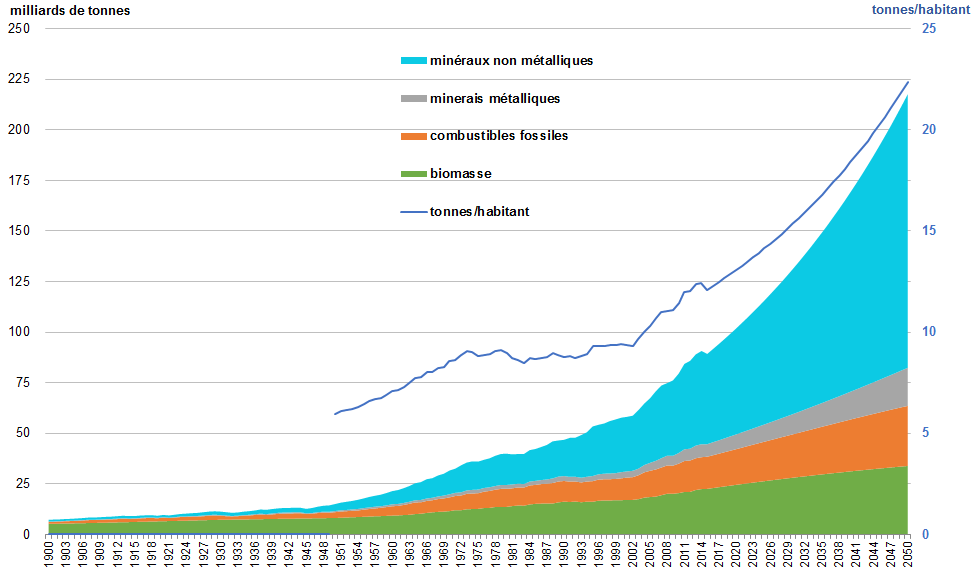
Depuis 1970, l’utilisation des ressources naturelles dans le monde a été multipliée par quatre, pour arriver aujourd’hui à presque 40 kilogrammes de matériaux utilisés par personne et par jour en moyenne. Cela s’explique par l’augmentation de la population et par l’évolution des modes de vie et de production. Pour répondre à la demande en biens et en services, il faut extraire, fabriquer, importer ou exporter des matières premières et des produits. Cette forte utilisation des ressources a des conséquences de plus en plus importantes sur l’environnement.
Since 1970, the use of natural resources worldwide has quadrupled, reaching almost 40 kilograms of materials used per person per day on average today. This is explained by population growth and changes in lifestyles and production methods. To meet demand for goods and services, raw materials and products must be extracted, manufactured, imported, or exported. This heavy use of resources has increasingly significant consequences for the environment.
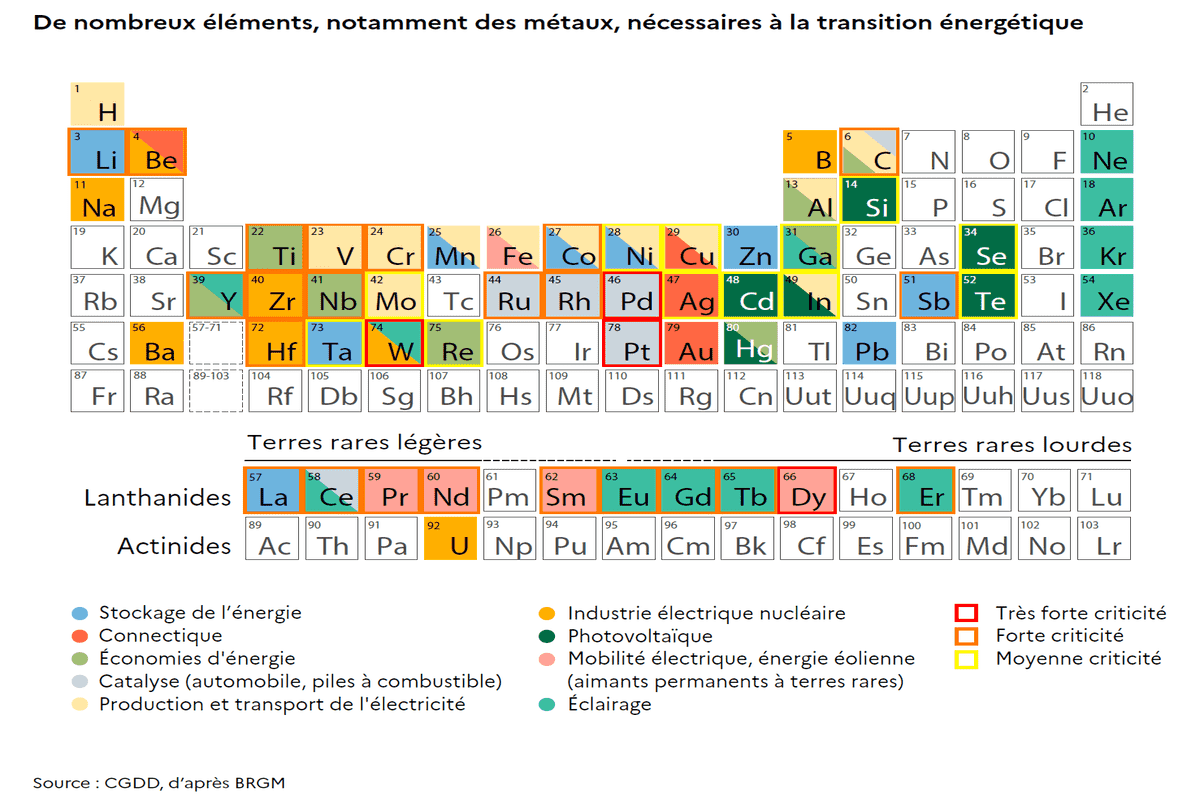
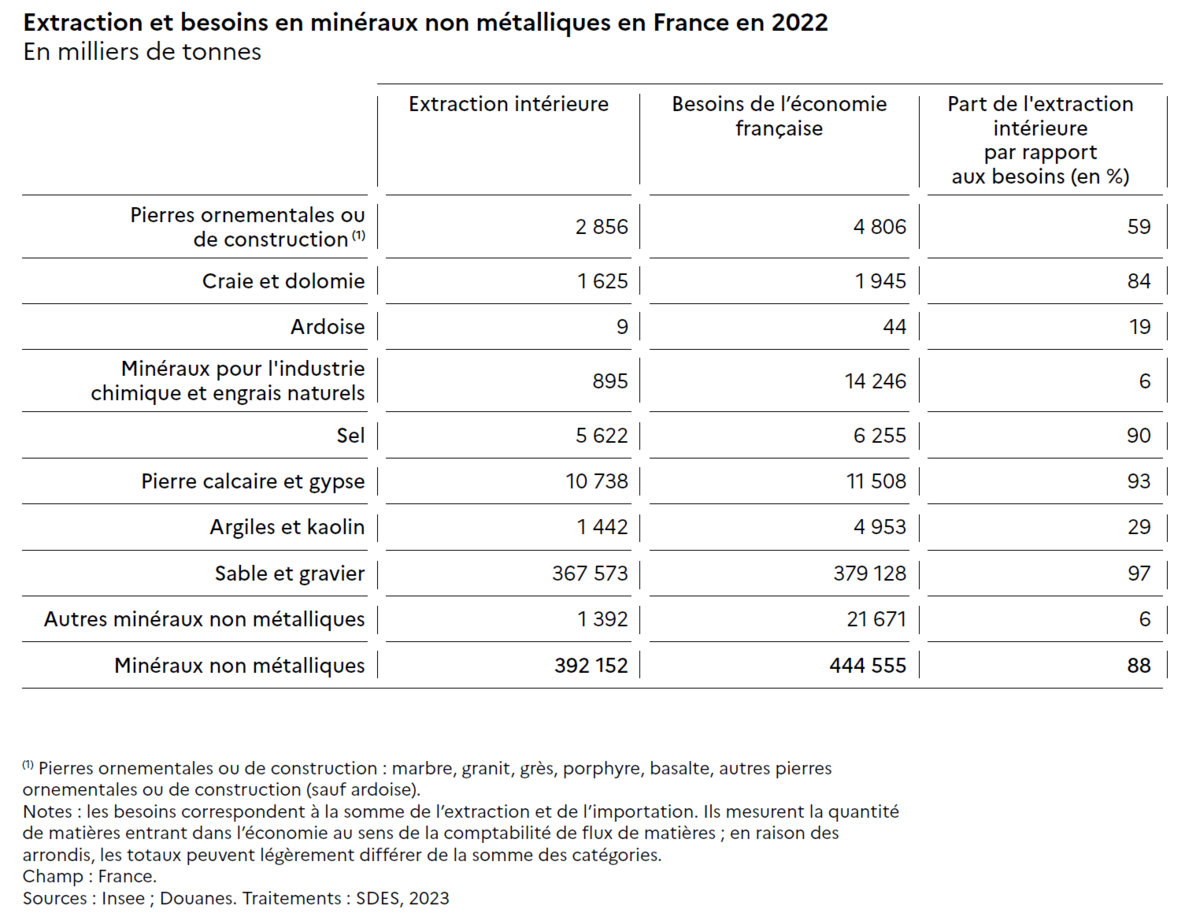
- Natural resource use damaging the environmentRenewable and non-renewable resources• We use natural resources to house, feed, and transport ourselves, and to obtain information and communicate. Some resources are renewable, such as agricultural crops for food, water for irrigation, and forests for timber. But most resources are not renewable: sand and gravel for construction, fuels for vehicles, heating oil or gas, plastics, steel, aluminum, and more.Environmental effects• Extraction, processing, and transport all have environmental impacts. These effects vary widely: soil degrades, biodiversity is threatened, landscapes are damaged, greenhouse gases are released, waste is produced, and more. Here are some global figures (Source: UN):Global figures• Extraction and processing of fuels such as coal, oil, and gas account for over 60% of emissions causing climate change and 40% of air pollution health impacts • Fossil fuels, metallic and non-metallic minerals represent 35% of greenhouse gas emissions • Biomass such as agricultural products and forests account for one-third of these emissions
- Consequences likely to worsen in coming yearsBetter resource management• To limit environmental damage caused by resource extraction, processing, and use, we must manage them better. This is all the more important as the environmental consequences will worsen in coming years. • It is therefore important to: • use resources more efficiently • reduce the toxicity of materials used • produce less waste • further develop a circular economy through reuse and recyclingExtraction to surge by 2060• According to the International Resource Panel, global extraction of materials could increase by another 60% by 2060. This would represent 220 billion tonnes, compared to just over 100 billion today and 30 billion in 1970. This increase could complicate achieving global climate, biodiversity, and pollution targets. • Source: Krausmann et al., 2018. Processing: SDES, 2019 • Consumption of all materials is rising sharply, but unevenly:Changes by material type• Extraction of non-metallic minerals such as sand and gravel has surged. They are mainly used to build buildings and infrastructure, such as roads. This began in Europe and North America in the 1970s–1980s, then spread to Asia and the Pacific from the 1990s onward. If this trend continues, these materials will represent 60% of global extraction by 2060. • Biomass such as agriculture, forests, and fishing, which is renewable, has declined proportionally: it represented 37% of extraction in 1990 versus one-quarter today. This means the share of renewable resources is falling worldwide. • Fossil fuels such as oil, gas, and coal represent 17% of total extraction, down from 22% in 1990. • Metallic ores remain stable at roughly 10% of global extraction.
- Resource consumption in FranceApparent domestic consumptionThis indicator measures materials extracted in France plus imports minus exports. In 2022, this totaled 760 million tonnes, or 11.2 tonnes per capita, compared to an average of 14.2 tonnes per capita in the European Union. In France, half of this consumption concerns construction materials. After a sharp drop between 2007 and 2014 due to the 2008 crisis, it has remained stable.Material footprintThis is a more comprehensive indicator as it also accounts for resources used in other countries to manufacture and transport products we import, such as fuels and minerals. In 2022, France's material footprint was 13.4 tonnes per capita, compared to 11.2 tonnes per capita for domestic consumption. "France's material footprint in 2022: an indicator of our actual raw material consumption"Material productivity• This indicator compares wealth produced (GDP) to the quantity of materials used. It shows whether a country is becoming more efficient in its use of natural resources. France aims to improve this by 30% between 2010 and 2030. This means producing more value with fewer raw materials. In 2022, France reached €3.1 per kilogram of material used, a 18% increase since 2010. In Europe, the average is €2.17 per kilogram, compared to €1.80 per kilogram in 2010 (Source: SDES, 2024). • > A global inequality • > Poor countries consume six times less material than rich countries and have ten times less climate impact. But in middle-income countries, resource consumption more than doubled over 50 years, driven largely by economic growth and infrastructure development.
Further reading
- Global Resources Outlook 2024 – Perspective des ressources mondialesresourcepanel.org
Panorama global de l’utilisation des ressources à travers le monde – Programme des Nations unies pour l’environnement.
- Consommation de matières et empreinte matières - Extrait du Bilan environnemental 2024statistiques.developpement-durable.gouv.fr
Suivi des consommations de matière et de l’évolution de l’empreinte matières en France - Service des données et études statistiques, janvier 2025.