Game Theory: How Zelda Breath of the Wild SOLVES The Zelda Timeline!
6 chapitres
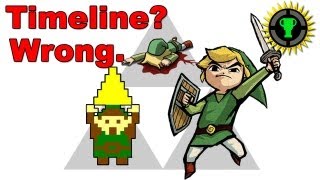
- Introduction and ContextOpening SetupMatPat introduces Game Theory as the show consistent across all Zelda timelines and announces the long-awaited theory about Breath of the Wild's timeline placement.Game OverviewLink wakes from a 100-year nap to find Hyrule devastated by Calamity Ganon and must reawaken four ancient Divine Beasts to defeat Ganon once and for all.Timeline Primer• The timeline starts with Skyward Sword and remains linear until Ocarina of Time • Ocarina of Time splits into three timelines: Adult Era, Child Era, and Failed Hero timeline • The split occurs because of time travel mechanics creating branching realitiesDirector ConfirmationLegend of Zelda director Eiji Aonuma confirmed in a Game Informer interview that Breath of the Wild takes place after Ocarina of Time.
- Initial Evidence AnalysisEvidence MethodologyOnly items and clues physically found in the game are used; amiibo items are excluded as they are Easter eggs rather than canon.Rock Salt ClueRock Salt found in mineral deposits references an ancient sea, which online theorists linked to Wind Waker's flooded Overworld, suggesting the Adult Era timeline.Race Evidence• The Rito (bird race) and Korok (forest spirits) appear in Breath of the Wild and Wind Waker • According to Eiji Aonuma, Zora evolved into the Rito when Hyrule became almost completely water • The visual similarity between Koroks across games is unusual given races change appearance frequentlyTimeline ComplicationsThe Rito also appears in Twilight Princess stone reliefs and the Fokka bird-enemies in Zelda 2, suggesting evidence could point to multiple timelines.
- Memory and Castle AnalysisLink's Memory EvidenceZelda's Memory #1 mentions Link being skyward bound, adrift in time, and surrounded by glowing embers of twilight, referencing Skyward Sword, Ocarina of Time, and Twilight Princess respectively.Twilight ReferenceThe mention of twilight is specific to Twilight Princess across all timelines, suggesting Breath of the Wild belongs in the Child Era timeline.Castle ArchitectureHyrule Castle in Breath of the Wild shares more architectural similarities with Twilight Princess's castle than with castles from A Link to the Past or Wind Waker.Limited Child Era SupportThe architectural evidence and twilight reference provide some support for the Child Era timeline, but the overall evidence base is limited.
- Geography and Failed Hero EvidenceMap Comparison• Breath of the Wild's geography matches A Link to the Past with desert to the southwest, Death Mountain to the north, Lost Woods to the north, and Lake Hylia to the south • Spectacle Rock, a distinctive glasses-shaped formation, appears in Breath of the Wild and only in Failed Hero timeline gamesEnemy AppearancesLynels appear exclusively in Failed Hero timeline games: the original Legend of Zelda, A Link to the Past, Oracle games, and A Link Between Worlds, suggesting they were recruited into Ganon's army after his victory in Ocarina of Time.Ganon's Form• In Child and Adult eras, Ganon appears in humanoid Gerudo form as Ganondorf • In Breath of the Wild, Calamity Ganon has no humanoid form, existing only as a demon • According to Hyrule Historia, in the Failed Hero timeline, Ganon sheds his Gerudo form permanently to become the Demon KingRevival PatternGanon is revived twice in the Adult Era, reincarnated once in the Child Era, and revived four times in the Failed Hero timeline, explaining his rage-filled purely demonic form in Breath of the Wild.
- Wild Tunic and Final ProofShrine Challenge RewardCompleting all 120 shrines unlocks the Tunic, Cap, and Trousers of the Wild, powerful equipment items serving as near-complete game rewards.Timeline Hat SignatureIn every Failed Hero timeline game (original Legend of Zelda, Zelda II, A Link to the Past, Oracle games, A Link Between Worlds), Link's hat features a yellow stripe. Other timelines show only solid green hats.Critical DiscoveryThe Wild tunic's yellow stripe on the hat matches the signature design element of Failed Hero timeline, proving Nintendo has maintained continuity from the original game.ConclusionAll physical evidence strongly supports Breath of the Wild belonging to the end of the Failed Hero timeline, with minor twilight references possibly explained by Zelda's cross-timeline vision.
- Final ThoughtsEvidence SummaryPhysical evidence including geography, Spectacle Rock, Lynels, Ganon's demonic form, and the yellow stripe hat all conclusively point to the Failed Hero timeline.Timeline ConfirmationThe discovery demonstrates that Nintendo was not improvising the three-timeline split as a fan solution, but had been carefully tracking continuity from the series' beginning.Alternate ExplanationThe Twilight reference and mentions of sailing high seas in foreign translations could indicate Zelda has vision across multiple timelines through the Triforce of Wisdom.Theory ClosureBut hey, that's just a theory—A Game Theory! Thanks for watching!