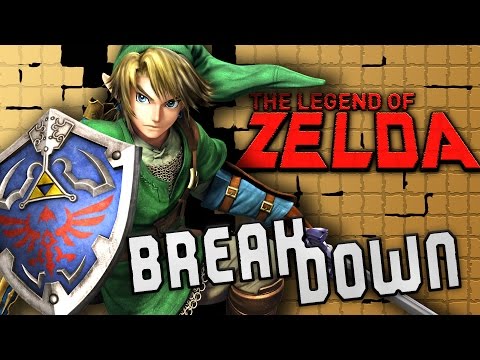
The Legend Of Zelda Break Down: A Link Through Time
7 chapitres
- The Vision Behind Zelda's CreationDesigner's PowerAfter the success of Donkey Kong in 1981, Shigeru Miyamoto rose to a position of power at Nintendo and was given leadership of a new team named Nintendo R&D 4 with the directive to create great exclusive content for the console.Two Core Ideas• First idea: Very linear gameplay where story and events happened in strict sequence, which eventually became Super Mario Brothers • Second idea: Open-ended and non-linear gameplay where players had to think about what to do next, solve puzzles, and plan aheadMarket OpportunityPC RPGs like Ultima existed but were cruel and unfocused. The console market had even fewer options, filled primarily with action platformers and shooters. Miyamoto saw an opportunity to create something unique and focused in that space.Childhood Inspiration• Memories of hiking and exploring the countryside of Kyoto became the Overworld • Caves found on adventures became dungeons to explore • The maze of sliding doors in his home informed the labyrinth-like structure of dungeons
- Technical Innovation and Game DesignRevolutionary FeatureThe game included a battery-powered save feature, making it the very first console game to ever include saving and loading a player's progress. This was a crucial step that became standard in nearly every game today.Design PhilosophyMiyamoto's main priority was making games fun first, so the story was never a main focus. It was meant simply to be groundwork for the gameplay.Scale and ExplorationThe world was so huge that players wouldn't be able to explore it all in one sitting, at least not on their first playthrough. This was unprecedented for console games at the time.Narrative ResponsibilityCo-director Takashi Tezuka took on the role of writer. He was a longtime fan of classic high fantasy novels like Tolkien but chose a decidedly smaller, fairy tale-like tone rather than grand high fantasy.
- Story, Characters, and NamingThe ConflictThe land of Hyrule was peaceful and prosperous until Ganon and his army invaded with the intention of stealing the otherworldly Triforce. After obtaining a fraction of this sacred artifact representing Power, Princess Zelda broke another piece into eight shards and scattered them across the land.The Hero's MissionAfter being kidnapped, Princess Zelda left instructions with her handmaiden Impa to find someone courageous enough to stand up and fight against Ganon. Impa finds such a hero in the protagonist, a small Elven boy named Link, who took heavy inspiration from Walt Disney's Peter Pan.Zelda's Name OriginWhile Link's character was set from the beginning, Zelda's name was not. Miyamoto wanted something special, uncommon, and magical. He discovered Zelda Fitzgerald, wife of Great Gatsby author F. Scott Fitzgerald, and fell in love with the sound of her name.Narrative Structure• The plot resembles a basic version of the Hero's Journey or Monomyth • Boy leaves home, acquires magical sword from a wizard, defeats foes and overcomes obstacles • Acquires pieces of a mystical artifact, confronts and battles the villain, rescues the princess, and everything returns to normal
- Original Concept and Alternative DesignsEarly Development RumorsAccording to internet hearsay (unconfirmed by Nintendo), Miyamoto stated that early in development the Triforce pieces were originally intended to be powerful microchips sent from the future.Time Travel ConceptIn the original concept, the player was meant to be able to travel between two settings: a futuristic world and a fantasy world. This duality may have also been the origin of the player character name, Link, representing the link between these two worlds.Final Design DirectionNintendo hasn't outright confirmed these early concepts, and the final game settled on a straightforward fantasy fairy tale setting without time travel or futuristic elements.Creative EvolutionThe shift from a complex dual-world narrative to a focused fairy tale adventure demonstrates how design priorities and market considerations shaped the final product.
- Crafting the Iconic SoundtrackComposer SelectionKoji Kondo, a Nintendo employee who was quickly becoming their go-to in-house musician, was chosen to compose the soundtrack. He had previously composed music for Punch-Out and Super Mario Brothers.Creative Process• Kondo would spend ages writing music pieces and listening to them for hours • His philosophy was that if gamers would listen to his soundtracks repeatedly, he would do the same to ensure it didn't get repetitive • This meticulous approach resulted in timeless, iconic musicMusical Themes• Opening theme: Epic and foreboding, preparing players for their journey • Overworld theme: Whimsical with a tone of swashbuckling and fearlessness • Labyrinth theme: Creepy and unsettling to make dungeons feel uncomfortable and eerieImpact and LegacyDespite only having about five full songs total, almost every single track left a lasting impact. Even simple jingles from the game entered public consciousness, with the music becoming truly iconic.
- Release, Reception, and Industry ImpactManagement ConcernsDespite creating something special, Nintendo's management worried that gamers wouldn't respond kindly to Zelda's open-ended map, proto-RPG elements, save system, and complex objectives. However, others were confident and recognized the game's unique value.Marketing StrategyIn North America, Zelda was given unique golden packaging with a portion of the front cut out to show the similarly gilded cartridge. This packaging made the game stand out and signal its special nature to consumers.Commercial Success• Released February 21, 1986 on the Famicom in Japan • Released August 22, 1987 on the Nintendo Entertainment System in North America • First NES game to sell more than 1 million copies, ending its run at well over 6.5 million copies soldCritical Acclaim• Critics immediately fell in love with the game upon release • Consistently named one of the best NES games ever made • Appeared in Nintendo Power's top 30 Nintendo games from its very first issue well into the 1990s • Currently holds the Guinness Book of World Records title for the highest rated game of all time
- Legacy and Influence on GamingGenre Foundation• Nonlinear gameplay and open-world map design paved the way for longer quests on consoles • Solidified the action-adventure genre as a powerhouse in the gaming space • Revolutionary save system became a standard feature across the industryIndustry TrendThe focus on open-ended gameplay was arguably decades ahead of its time. Modern gaming trends have shifted towards this idea, with some of the most successful games of modern times having mastered this approach.Historical SignificanceThe Legend of Zelda remains one of the most influential games ever made, establishing design philosophies that continue to shape game development today.Franchise PotentialAfter a success like this, it was unthinkable that the game wouldn't get a sequel or spawn a franchise, marking the beginning of a lifetime of adventures in the Zelda universe.