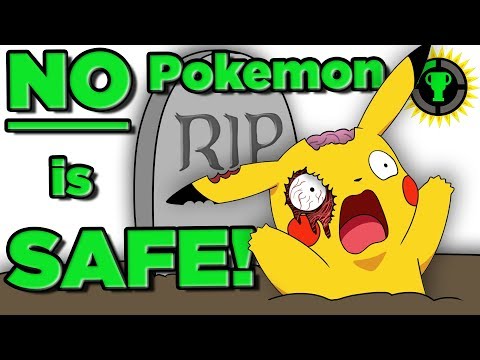
Game Theory: Pokemon Are Going EXTINCT! (Pokemon Sun and Moon)
Game Freak has made decisions in the Pokémon Sun and Moon games that foretell a tragic future for all the cute cuddly creatures that you've come to know and love in the series.
6 chapitres
- Introduction to Alola and the Extinction CrisisSetting the StageWelcome to the Alolan Islands, a tropical paradise where players can battle crime syndicates, explore wormholes, and collect stickers during their vacation adventure.The Hidden ThreatGame Freak has intentionally programmed ecological decisions into Pokémon Sun and Moon that create a slow poison guaranteed to cause the extinction of beloved Pokémon species on these islands.Core MysteryAn undiscovered threat exists that is an unintended consequence of something intentionally programmed into the games, putting many iconic Pokémon species at risk of genetic extinction.Investigation GoalExpose the hidden ecological threat and identify which Pokémon are fated to face extinction due to the decisions made by the game developers.
- Yungoos: The Invasive Species ProblemBackstory and ImportYungoos did not originally live in Alola but was imported from another region to deal with the exploding Rattata population problem that plagued the islands.Unintended Consequences• Yungoos failed to curb Rattata numbers and instead drove them into urban areas • Rattata were forced to become nocturnal and evolved into the Dark-type Alolan variant • Alolan Rattata survive by being active at night while Yungoos hunts during the dayEcological DefinitionYungoos is technically an invasive species, meaning it's not native to the Alolan ecosystem, and invasive species are responsible for 42% of all endangered species on Earth being at-risk.The Real-World ParallelIn 1800s Hawaii (the inspiration for Alola), mongooses were imported to control rats but failed because mongooses hunt during the day while rats were nocturnal, and mongooses continue to devastate local wildlife to this day.
- Impact on Hawaiian Wildlife: Historical PrecedentMongoose FailuresMongooses in Hawaii seldom crossed paths with nocturnal rodents they were imported to control, creating a classic example of poor ecological planning with devastating consequences.Documented Extinctions• In Puerto Rico, mongooses caused at least seven amphibian and reptile extinctions • In Jamaica, mongooses were the primary cause of extinction for one lizard, one snake, two birds, and one rat species • Mongooses primarily target ground-nesting bird eggs, hatchlings, and endangered sea turtle eggsCurrent StatusMongooses continue to be a problem across most Hawaiian Islands to this day, serving as a cautionary tale for the Pokémon games' fictional ecosystem.Pokémon ConnectionThe Yungoos-Rattata scenario in Pokémon Sun and Moon mirrors the real-world mongoose-rat disaster, suggesting that Game Freak studied actual Hawaiian ecological history to create their lore.
- Mapping Yungoos Distribution and Extinction RiskIsland Coverage• Yungoos appears on Routes 1, 2, 3, 4, 6, and 8 across Melemele and Akala islands • Gumshoos, its evolved form, dominates late-game Routes 10, 11, 15, 16, and 17 on Ula'ula island • Combined distribution covers the entirety of multiple islandsHunting Behavior AnalysisYungoos prefers to hunt close to the ground and only during the day, making certain Pokémon vulnerable based on their habitat and activity patterns.Species at RiskSix Pokémon species will be completely wiped out: Slowpoke, Vullaby, Delibird, Igglybuff, Pichu, and Eevee.Ecosystem Collapse ScopeThis is not a single-island crisis but a multi-island extinction event affecting the entire ecology of the Alolan Archipelago, with six species disappearing causing cascading food chain disruptions.
- Additional Invasive Species and Their ImpactsGrimer's Toxic ThreatAlolan Grimer was brought to the islands to solve a garbage problem and developed toxic lumps of poison that leak lethal toxins, threatening sea life around Hou'oli City and Cape Ula'ula island.Makuhita's DestructionMakuhita was brought to the region by humans and trains by slamming its body into trees, devastating plant life on Route 2 and destroying nesting sites for birds like Spearow.Meowth's Bird Massacre• Meowth was not originally in Alola but human action caused populations to surge and go feral • Wild cats are listed among the most harmful invasive species globally by the International Union for the Conservation of Nature • Feral cats have established populations on all eight main Hawaiian Islands • Wild cats kill approximately 2.4 billion birds annually and have contributed to the extinction of 33 speciesCascading ExtinctionsThe combination of Yungoos, Grimers, Makuhita, and Meowth creates a multi-layered extinction crisis affecting birds like Pikipek and Pichu, with Pichu's survival being especially dire due to overlapping predation with Yungoos.
- Conclusion: The Ruined Alolan EcosystemOverall Threat AssessmentThe Alolan ecosystem is fundamentally compromised, with at least six confirmed species destined for extinction due to Yungoos alone, while additional invasive species multiply the devastation.Multiple Invasive SpeciesFour distinct invasive species—Yungoos, Grimer, Makuhita, and Meowth—were introduced by humans to solve isolated problems, creating an ecological catastrophe with unpredictable consequences.Redefined MottoThe phrase 'Gotta catch 'em all' takes on sinister meaning in Alola: players must catch all invasive species to prevent permanent ecosystem collapse and the extinction of native Pokémon.Game Freak's AchievementDespite the seemingly casual nature of Pokémon game design, Game Freak crafted a surprisingly dark and scientifically accurate ecological cautionary tale within the lore of Pokémon Sun and Moon.