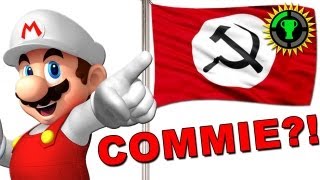

Game Theory: Mario is COMMUNIST?!?
Break out the borscht and pierogies comrades cause it's time to celebrate a true soviet hero.
8 chapitres
- Introduction and OverviewOpening HookThe episode begins with a bold claim that Mario is a communist sympathizer, framed as both shocking and entertaining.Series Context• Previous episodes covered Princess Peach's psychological issues • Explored kidnapping conspiracy theories between Peach and Bowser • Analyzed Super Mario Brothers 3 as a potential stage play • Upcoming episode will examine quantum mechanics in the seriesThesis StatementEverything from Mario's design to the mushrooms he eats to Japan's political history points to Mario being a communist sympathizer.CredibilityThe claim was initially met with skepticism by co-host Matt but was validated through research.
- Russian History Crash CourseHistorical ContextThe period leading up to World War One was difficult for Russia, with the government printing millions of rubles to finance the war, causing massive inflation.Economic Crisis• Food prices quadrupled over four years • Workers saw no change in pay • It took wheelbarrows of money to buy one loaf of bread • Poor sanitation and dangerous work conditions were widespreadRevolutionary Movements• The February Revolution in March 1917 overthrew Tsar Nicholas the Second • The October Revolution in November 1917 brought communists to power • Communism aimed to create a classless, moneyless society where wealth is sharedKey Leaders• Lenin led the Bolshevik Party during the October Revolution • Trotsky was exiled and assassinated • Stalin took power and was responsible for nearly 20 million deaths via secret police, famines, and purges
- Mario's Communist Design ElementsColor Symbolism• Mario is primarily associated with red, the official color of communism • The official story claims red was chosen to contrast with the blue background, but orange would be the true color opposite to blue on the color wheel • Fire Flower Mario is clad in red and white, the colors of Lenin's Bolshevik Party • Red was known as the Red Threat, Red Scare, and Red Terror in the real worldIconic Features• Mario's hat has a similar shape and design to Stalin's hat, both featuring a circle with a logo • His moustache resembles the facial hair of communist leaders • These features align with communist aesthetic and symbolismCharacter ArchetypesWario represents the anti-Mario, portrayed as a greedy, overweight capitalist pig obsessed with accumulating wealth and material possessions, contrasting with Mario's working-class background.Class Messaging• Mario is a plumber and formerly a carpenter, both working-class physical labor positions • These professions define members of the Communist Party • His working-class status makes him a perfect fit for communist ideology
- Communist Symbolism in GameplayWeapons ChoiceMario's signature weapon is hammers, which are a key symbol in communist imagery, representing the working class.Revolutionary Goal• Super Mario Brothers involves overthrowing King Koopa, paralleling the Russian Revolution's goal of overthrowing Tsar Nicholas the Second • The gameplay mirrors the real-world class revolutionFlag Symbolism• At the end of each level, Mario tears down a flag and raises his own • The flag he raises features a red star on a white background • This represents the Soviet flag and the red star emblem of the Communist Party and Red Army • The five points of the star represent the five fingers of the communist worker's handPeace Sign InterpretationThe flag Mario tears down is claimed to be a peace sign or skull, with Mario's message of down with peace and up with the people.
- Mushrooms and Cultural ContextMushroom IdentityThe Mario mushrooms are identified as the Amanita muscaria, also known as the fly amanita, a poisonous mushroom found in Siberia, the eastern half of Mother Russia.Historical UsageThe Amanita muscaria has been used throughout history for its ability to cause hallucinations, explaining its function as a power-up in the games.Russian ConnectionThe mushroom's origins in Siberia directly link Mario's most iconic power-up to Russian geography and culture.Geographic SignificanceSiberia's association with Mother Russia reinforces the communist theme present throughout the game's design.
- Japan's Political InfluenceDevelopment LocationNintendo is located in Japan, not America, making communist influence possible in game development.Japanese Communism• The Japanese Communist Party has been a strong presence in elections since the 1950s • The party was at its strongest in the 1970s and 80s, when Mario games were first developed • In any given election during that period, well over five million votes went to the Japanese Communist PartyPolitical ContextThis represents about ten percent of nearly 50 million votes cast, showing significant communist political presence in Japan during Mario's development.Developer InfluenceIt is plausible that one or two developers involved in Mario's creation could have subtly worked in their political beliefs.
- Counterarguments and ConclusionSkeptical Rebuttals• The flag Mario tears down is actually a skull, not a peace sign, lacking the necessary green pixels at the bottom to complete a peace sign design • Mario overthrows King Koopa but then instates another aristocracy supervised by Princess Peach • This doesn't align with the people's plumber narrativeBalanced AssessmentDespite these counterarguments, the evidence from mushrooms, enemies, character design, and Japanese political history is not as ridiculous as it initially sounds.Final VerdictThe question of whether Mario is communist remains open to debate and viewer interpretation.ClosingIn the end, it's just a theory, a game theory.
- End Card Segment and Thank YouPrevious Poll ResultsThe previous episode's superhero tournament showed that the Man of Steel was defeated by Spider-Man, and everyone lost to Batman.Current PollThis week features a battle of Nintendo villains: Bowser, Ganon, or Mother Brain, with viewers voting via the end card.Channel Growth• The channel has been growing thanks to viewer help and support • The host attended the SGCGC gaming convention where they thanked viewers in person • Viewers are acknowledged as integral to the show's successAppreciation MessageThe host expresses gratitude to the audience, stating that viewer success is the show's success and that they love their support.