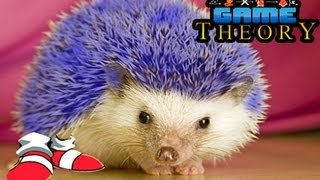

Game Theory: The Science of Sonic the Hedgehog
Today we're exploring the good, the bad, and the ugly of the Sonic franchise to see what its cute cast of critters can teach us about their real-life counterparts.
7 chapitres
- Introduction to Sonic's Real-Life BiologyVideo OverviewThe episode explores what Sonic the Hedgehog and other characters from the franchise can teach us about their real-life animal counterparts, examining both accurate and inaccurate portrayals.Sonic's Characteristics• Blue colored with distinctive spiky shoes • Approximately five spikes on his back • Famously depicted as running extremely fastFantasy vs RealityReal hedgehogs cannot be blue and have approximately 5,000 spines rather than just five.What's NextInvestigation into whether hedgehogs are truly the fastest animals and examination of Sonic's extended character roster.
- Hedgehog Speed: Fastest Thing Alive?Speed Champions• Cheetah: 70 mph on land • Peregrine falcon: 185 mph in the air • Sailfish: 68 mph underwaterSize-Adjusted ComparisonWhen accounting for body size, the cockroach wins by running 50 times its body length every second, equivalent to a human running at 185 mph.Hedgehog Reality• Run at approximately 4.5 mph • Run 6.6 times their body length per second • Have excellent running stamina unlike cheetahsConclusionHedgehogs are quick for their small size but are not the fastest thing alive.
- Sonic's Rolling Ball Defense MechanismGame MechanicBeginning in Sonic 2, Sonic can rev up into a rolling spiked ball as both a movement and attack method.Animal AccuracyReal hedgehogs can indeed curl into a ball using their two back muscles to pull the spiky skin over their belly and face, creating a prickly ball.Defensive Tactics• Hedgehogs use rolling as a defense mechanism in extreme circumstances • In most cases they prefer to run away rather than roll to attackGame-Reality ConnectionThis is one of the few accurate characteristics of Sonic's portrayal in the games.
- Knuckles and the EchidnaGame PortrayalKnuckles is depicted as a gliding, wall-crawling animal with massive spiked fists designed for digging.Accurate Traits• Echidnas have long claws used for burrowing and foraging for food • They are covered in spines earning them the name 'spiny anteater' • They roll into a quilled ball as a defense mechanismUnique Biology• Their rear legs point backwards while front feet point forwards to help them dig faster • They date back to the dinosaurs • Like the platypus, echidnas are monotremes meaning they're mammals that lay eggs and hatch their young • They have a four-headed penisDesign DecisionSega omitted the most unique and unusual characteristics of echidnas, replacing traits like the four-headed penis with the ability to glide.
- Secondary Characters: Tails and RougeTails' Species• While some sources identify him as a fennec fox, his proportional ears and white-tipped tail suggest he is actually a red fox • His red-orange coloration and vertical oval pupils support the red fox identificationTails' CharacteristicsTails is depicted as an adorable mutant with two tails, making him unique among foxes.Rouge the BatRouge bears resemblance to the Honduran white bat, a snowy white fluffy animal with yellow nose and ears.Related SpeciesThe Honduran white bat has reportedly inspired the Woobat from the newest strain of Pokemon.
- Chameleon Color Changes and Albatross FactsEspio's Color ShiftingEspio the Chameleon from Knuckles' Chaotix had the power to change into multiple colors, raising the question of whether real chameleons can turn purple.Chameleon Biology• Chameleons can change into practically any color • They have special pigment cells under their skin called chromatophores • Top layers contain red and yellow pigments while bottom layers contain blue and white • Brain signals cause cells to grow or shrink, mixing pigments like paint in as little as 20 secondsStorm the AlbatrossStorm is the big, dumb, but fiercely loyal member of the Babylon Rogues from Sonic Riders, an avian group of thieves.Albatross Accuracy• Real albatrosses live in colonies with other birds, making their portrayal alongside a hawk and swallow accurate • They are dedicated to their partners through lifelong pair bonds • The giant albatross has the largest wingspan of any living bird but struggles with takeoff and landing
- The Lifespan Parallel: Game History and Hedgehog RealityFranchise Context• The first Sonic game was released in June 1991 • Sonic and Knuckles, considered the last great Sonic game, came in October 1994 (three-and-a-half years later) • Sonic Adventure 2 was released ten years after the originalHedgehog Lifespan• Average hedgehog lifespan: three-and-a-half years • Maximum hedgehog lifespan: nine yearsThe ConnectionThe Dreamcast games were well-received with Sonic Adventure 2 being the last quality game before the wave of odd design choices and bad reviews hit in the 2000s, which coincides with the maximum lifespan of a hedgehog.Final ThoughtArt imitates life unintentionally, as the decline of the Sonic franchise mirrors the lifespan of real hedgehogs, earning it the title of one of gaming's most beaten dead horses.