Are You Using the Wrong Compressor? Compression Masterclass
7 chapitres
- Introduction to Compressor TypesVideo OverviewThe video explores why different compressor types exist and demonstrates through before and after examples which compressor to use for different sounds.Key Differences• Fat compressors vs opto compressors • Tube compressors vs VCA compressors • Each type has clear strengths and weaknesses for processing different soundsLearning ApproachFocus on hearing the differences through audio examples rather than technical theory to understand which compressor type to grab from your plugins.Content PreviewBonus category at the end covers plugins that add punch and impact without using compression.
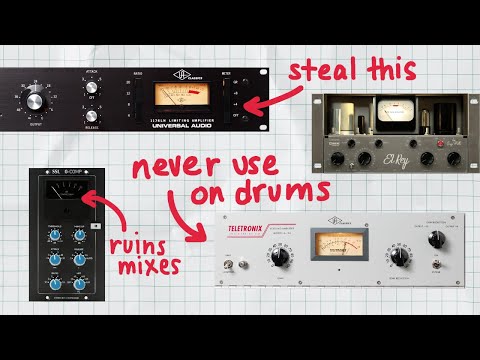
- Fat Compressor: The 1176Named ComponentsAll compressors discussed are named after the components used inside them.The 1176 Characteristics• Most famous fat compressor available • Very fast attack even in the slow setting • Brings attitude and character to the sound • Adds tons of extra harmonics and saturationSound ExampleDemonstrated on drums with slow attack and fast release settings, showing how it tames transients while pulling up reverb and room tone.Best Uses• Dynamic vocals • Synths • Situations requiring lots of control and character
- Opto Compressor: The LA2ADesign PhilosophyThe opto compressor is much slower and smoother than fat compressors, with the LA2A being the most famous example.Key LimitationBecause they are slower, optos don't recover quickly from big transient changes in volume, making them less suitable for taming peaks alone.Pairing StrategyClassic combination pairs a fat compressor on top to grab transients while the opto works on the average signal level.Applications• Vocals for taming peaks and bringing up average level • Synthesizers • Smooth sounds like strings
- Tube Compressor: Fairchild 670Mix Bus ExcellenceTube compressors excel on the mix bus and are praised for creating mix glue and warmth.Famous ExampleThe Fairchild 670 is the most renowned tube compressor, widely used in professional studios.Application CautionTube compression can sound mushy and obvious if pushed beyond a few dB, requiring careful dialing in.Sonic Character• Tubes provide a nice, musical sound quality • Used in output stages of many other compressors • Best applied to mix bus and group buses
- VCA Compressor: The Versatile ChoiceClassic Examples• SSL bus comp famously found in their consoles • Distressor • API • dbx 160Key Strengths• Extremely versatile and precise • Often paired with distortion and saturation • Can achieve both subtle and extreme settings • Capable of very fast attacks and releases not possible with other typesSound VersatilityVCA compressors can sound extremely smooth and transparent or messy, gritty, and distorted depending on settings.Desert Island ToolCalled a desert island compressor because you can pretty much do anything with it, and when run into tube circuitry, can match the tone of almost any other compressor.
- Transient Shapers: Beyond CompressionWhat They AreTransient shapers are not compressors but still work on the dynamics of the signal by looking at transients.Unique Capability• Can boost low mids or highs on transients • Add character and tone similar to compression • Work without using EQ or compressionRevor PluginRevor is a custom-built transient shaper that separates low, mid, and high transients for independent control, something traditional compressors cannot do.Purpose• Add impact or punch to individual tracks • Can be applied to individual tracks, mix, or master • Solves the phase issues that occur when manually splitting bands
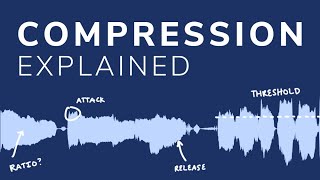
- Summary and Key TakeawaysBeyond BasicsUnderstanding compression theory like threshold, ratio, attack, and release is only part of the puzzle.Character MattersDifferent compressor types add significantly different character and tone to production and mixes.Practical ApplicationReference this video when choosing which compressor plugin to use for specific tasks in your productions.Continued LearningViewer engagement encouraged through comments for further discussion and clarification on compression techniques.