Why You Need to Highpass for Louder Mixes and Clarity
5 chapitres
- Introduction to High-Pass FilteringProblem StatementMany producers don't understand why removing inaudible frequencies below 20 Hertz is important for louder, clearer mixes.Video Objective• Explain the importance of high-pass filters on almost every track • Demonstrate why removing sub-20Hz frequencies improves mix clarity and loudness • Provide exaggerated examples to illustrate the conceptScope DefinitionThis tutorial focuses on removing extremely low frequencies between 0-20 Hertz, not traditional high-pass filtering up to 100-200 Hertz.ContextConfusion arose after a previous mastering tutorial gained significant traction, with viewers questioning the removal of inaudible frequencies.
- Understanding Human Hearing and Audio FilesHuman Hearing RangeHuman hearing on average ranges from 20 Hertz at the lowest to about 20 kilohertz at the highest, though some individuals can push beyond these boundaries.Audio File SpectrumA WAV file exported at 44.1 kilohertz contains all sound frequencies from 0 Hertz up to just over 22 kilohertz, including frequencies humans cannot hear.Invisible EnergyThe computer interprets inaudible frequencies as energy that occupies a portion of the overall allowed energy in the WAV file, even though listeners cannot perceive them.Key ImplicationYour final mix contains unheard sound energy that the computer recognizes and processes, which can impact overall loudness and mix clarity.
- Demonstrating Inaudible Frequency ImpactPure Sine Tone TestA 12 Hertz pure sine tone is completely inaudible to human ears, yet headphones and speakers attempt to reproduce it with massive cone movement.System ResponseEven though headphones rated to 5 Hertz technically reproduce these frequencies, listeners cannot hear them, only experiencing speaker distortion.Limiter BehaviorWhen an inaudible sub-bass sine tone passes through a limiter, it causes complete clipping on the master channel despite being imperceptible to the human ear.Practical ConcernEven extreme examples illustrate that inaudible frequencies consume valuable energy in your mix and warrant attention during production.
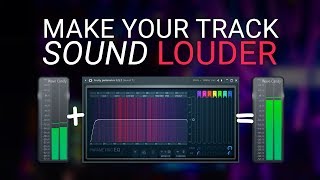
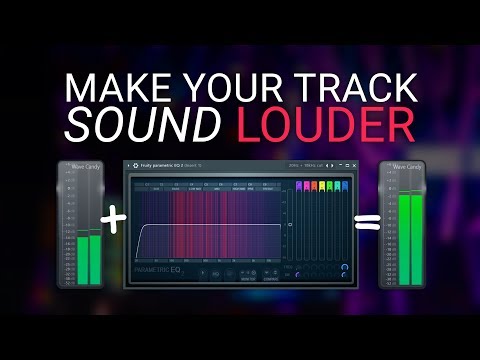
- Real-World Mix Comparison and ResultsTest Setup• Mix with exaggerated low-end information between 5-15 Hertz • Signal chain: high-pass filter, compressor, limiter simulating mastering conditions • Limiter ceiling set at -1 dB with threshold lowered to create significant gain reductionWith High-PassWhen the low-cut filter is engaged, the mix reads approximately -8 RMS on the meter and sounds clear and controlled.Without High-PassWithout the low-cut, inaudible frequencies trigger excessive compression and limiting, pushing RMS closer to -6 but sounding heavily squashed and distorted.Key FindingThe high-pass version allows audible frequencies to be pushed further through the limiter before distortion occurs, resulting in perceived loudness improvement without sacrificing audio quality.
- Professional Practices and Key TakeawaysMeasurement RealitySpectrum and dB meters represent what computers see in binary code, not what humans actually hear in the mix.Common Noise Sources• Hum and static from recordings • Room noise, air-conditioning, footsteps, traffic rumble, and low-frequency plane noise • Poorly produced or uncurated samples accumulating energy below 20 Hertz across multiple tracksIndustry StandardProfessional mixing and mastering engineers universally apply high-pass filtering to remove sub-20Hz frequencies as standard practice, not as a specialized technique.Implementation ApproachThere is no right or wrong way to implement this technique—simply set your favorite EQ as a high-pass filter and apply it to your tracks for peace of mind that your final mix is optimized.