
Kodak's Film Quality Control Process - Smarter Every Day 275-B
This video is all about how kodak in rochester new york controls the quality of the film they're manufacturing
6 chapters
- In-Line Scanner TechnologySystem OverviewThe scanner is located in-line during film manufacturing and creates a raster image to detect any dirt or imperfections in the film as it's being produced.Equipment Setup• Two different laser types: infrared scanner and helium neon laser • Spinning mirror carousel directs the laser beam • Air flotation system prevents roller contact with the filmDetection MethodThe raster scan beam travels across the film width, detecting dirt or imperfections by identifying differences in transmission or reflection.LimitationsWhile the scanner catches physical defects like dust, it cannot detect chemical issues in the film emulsion, which requires separate testing.
- Chemical Testing and SensitometryTest PurposeThe lab performs sensitometry to verify that film meets quality standards before sale, ensuring photographers can rely on consistent performance for important work like weddings.Sample Processing• Film samples are cut into 35mm strips • Processed through multiple photo processors including C41, ECN black and white, and industrial Ectochrome • Some processors are dedicated to specific film types, others are sharedChemical StationsThe lab contains various processing tanks with different chemicals including stop bath and other developer solutions required for different film types.Equipment HeritageMuch of the hardware and test equipment was made decades ago and is maintained through engineering expertise and occasional upgrades from sources like eBay.
- Ectochrome Film and Densitometer AnalysisFilm PropertiesEctochrome is a slide film that produces direct positive images, meaning the colors appear as seen in the photo rather than as a negative that needs printing.Development HistoryThe development team, led by emulsion designer Jeff, updated three of the emulsion color records to improve film performance.Testing Room• Dedicated testing room was added for Ectochrome development • Operations began January 1st of the next production cycle • Significant investment was required for the new facilityMeasurement EquipmentA densitometer analyzes red, green, and blue exposure levels on a logarithmic scale to verify that trace curves are parallel and consistent, indicating proper film performance.
- Light Box Inspection and Defect DetectionVisual ExaminationTechnicians examine film on light boxes looking for any visible defects such as streaks and spots, which are graded from A to G in severity.Defect Assessment• Operators determine whether film is usable or not usable • Defects within specifications are acceptable • Defects exceeding limits may result in rejection of entire sectionsQuality StandardsEach film type has release specifications that define acceptable defect levels, such as a certain number of spots per square foot or per hundred feet.Communication SystemDefects are reported using roll numbers and splice locations for example, position 12-7 means roll 12 at splice 7, allowing the control room to identify exact film sections for investigation.
- Defect Tracking and Root Cause InvestigationDefect Classification• Surface defects from handling are acceptable and not investigated further • Iron spots are particularly concerning as they indicate rust, suggesting mechanical issues • Repeated defects at the same location indicate systemic machinery problemsInvestigation ProcessWhen a suspicious defect is identified, the quality team resamples different sections of the film to determine if the defect repeats at the same location.Mechanical DiagnosisRepeated defects at identical positions indicate something on a roller or mechanical component is continuously marking the film, requiring equipment maintenance.Quality Philosophy• There are no negative consequences for technicians reporting defects • Catching issues before customer delivery is preferred over production speed • Defect feedback is treated as improvement data, not blame
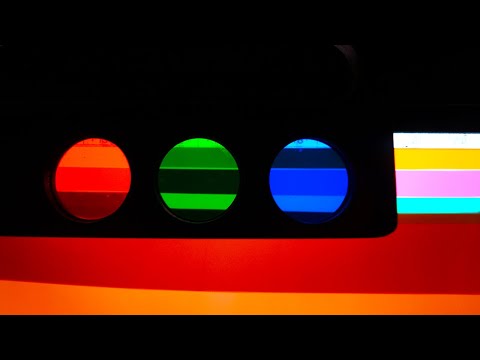
- Color Separation TestingTest Film Structure• Three candy stripe sections show different film layers • Heavy density section receives maximum light exposure • Normal density section receives average exposure • Clear section receives no light exposureLayer IdentificationWhen a defect appears in the overall density, technicians use the candy stripes to determine which color layer is affected by examining which stripe shows the defect.Color Filter Method• Color paddles with yellow, magenta, and cyan filters isolate specific color records • Looking through the red filter shows cyan defects as black spots • Looking through the green filter shows magenta defects as black spots • Looking through the blue filter shows yellow defects as black spotsColor PerformanceMagenta typically behaves most consistently and reliably, while all colors perform properly when coating and chemical processes work correctly.
![How Does Film ACTUALLY Work? (It's MAGIC) [Photos and Development] - Smarter Every Day 258](https://img.youtube.com/vi/TCxoZlFqzwA/mqdefault.jpg)