Why NASA's Next Space Suits are not Pressurized to 14.7psi - Smarter Every Day 296
NASA is about to make a technical decision, and I want to try to explain why it's so important.
13 chapters
- Introduction to the Moon Program ChallengeThe MissionNASA is designing the Artemis program to return humans to the moon and establish sustained presence, unlike Apollo's flags and footprints approach.Critical TransitionThe transition from spacecraft to spacesuit is crucial because astronauts must go from breathing oxygen in the spacecraft to being in a pressurized spacesuit with its own life support system.Historical ContextApollo used the A7L suit with PLSS (Portable Life Support System) that pressurized the spacesuit, but the new Artemis program requires different architectural decisions.Video OverviewThe episode observes a government spacesuit test at the neutral buoyancy laboratory while explaining the physics and decisions behind the Artemis suit pressure architecture.
- Neutral Buoyancy Laboratory Tour and Dive TrainingFacility SignificanceThe Sonny Carter Training Facility's neutral buoyancy laboratory is the most utilized underwater training facility in the world for astronaut EVA preparation, with similar facilities only in Moscow and Japan.Key Personnel• Dominic del Rosso: Chief engineer, diving instructor trainer, zero gravity program director, served as fire chief and WB-57 Canberra backseater • Pat Keller: Master scuba diver trainer and maintenance department manager who runs safety divers and scuba instructorsTraining ApproachThe NBL simulates zero gravity by achieving neutral buoyancy, allowing astronauts to train in all three degrees of freedom for 6-hour runs, plus additional training for surface recovery, aircraft water survival, and lighting conditions.Special Nitrox BlendThe facility uses a custom 46% oxygen nitrox mixture designed specifically for the 40-foot pool depth and 4 psi suit pressure, enabling unlimited bottom time without decompression sickness concerns.
- Understanding Pressure and Decompression SicknessNitrogen AbsorptionAs divers descend, increased water pressure forces nitrogen from breathing air into the bloodstream and body tissues, requiring careful management to avoid decompression sickness.Safety Protocols• Divers must limit bottom time to control nitrogen buildup • Ascent must be slow to allow nitrogen to safely exit tissues • Safety stops at specific depths are required to dissipate nitrogen • This same physics applies to astronauts transitioning between spacecraft and suit pressuresExtended Bottom TimeEnhanced Nitrox (EAN) increases oxygen percentage and reduces nitrogen, allowing divers to stay down longer. The NBL uses an even higher oxygen blend optimized for their specific depth and suit configuration.Astronaut ApplicationOn-orbit spacesuits operate at 4.3 psi delta pressure, requiring astronauts to breathe 100% oxygen and spend 3-3.5 hours in pre-breathing protocol before EVA to safely decompress from the ISS 14.7 psi environment.
- Spacesuit Physics and DesignSuit Pressurization EffectsWhen pressurized, a spacesuit acts like a balloon where higher internal pressure makes the suit stiffer and harder to move. The pressure difference between inside and outside the suit determines the 'stiffness' or resistance to movement.Movement StrategyThe suit is designed with specific joints and bearings. Rather than fighting the suit by forcing movement in unintended directions, astronauts must find the path of least resistance through the designed joints to minimize fatigue.Heat ManagementSpacesuits include a liquid cooling garment with tubes that dissipate body heat, essential because in space there is no air to carry heat away naturally like on Earth.Glove Pressure ChallengeHigher suit pressure makes gloves stiffer and harder to close. This directly impacts an astronaut's ability to manipulate tools and perform fine motor tasks, making pressure decisions critical for mission success.
- Lunar Walking Physics and InertiaWeight vs. MassOn the moon at 1/6 gravity, your weight is one-sixth that on Earth, but your mass and inertia remain the same. This creates a paradox where movement requires the same force even though weight is reduced.Center of Gravity Management• Astronauts must manage center of gravity differently than on Earth • Moving the center of gravity forward requires proportionally larger lean angles • Falls often result from mismanaging CG positioning relative to feet • Arthur C. Clarke described astronauts as 'six times more sluggish than their weight would suggest'Directional ChangesThe high inertia means changing direction requires significant effort. When an astronaut wants to stop moving forward, their inertia wants to continue, making direction changes difficult and fatiguing.Training NecessityAstronauts must train for lunar walking before missions because it is fundamentally different from Earth walking. Apollo astronauts experienced numerous falls while learning proper CG management techniques.
- Neutral Buoyancy and Center CalculationsDual Center ChallengeIn the pool, both center of gravity and center of buoyancy must be aligned. Misalignment creates torque and instability, forcing one leg to work harder and producing invalid lunar training data.Measurement SystemThe partial gravity weigh out system uses three load cells on a tilting platform. Measurements at upright and 20-degree tilt positions create intersecting vectors that pinpoint exact center of gravity in three-dimensional space.Weight Distribution Trimming• Conformal pockets around the suit hold adjustable weights • Foam blocks can be added to adjust buoyancy in specific areas • Divers continuously adjust weights to achieve 1/6 gravity equivalent • Fine-tuning ensures CG and CB alignment for realistic lunar simulationStability AchievementWhen center of buoyancy is perfectly aligned with center of gravity, the astronaut has no preferred orientation and remains stable, simulating the actual lunar environment.
- Test Planning and XEMU Suit SpecificationsTest ObjectivesThe test characterizes EVA performance at elevated suit pressures, specifically comparing 4.3 psi (current ISS standard) with 6.2 psi and higher pressures to evaluate trade-offs.Pre-Breathe Problem• ISS astronauts spend 3-3.5 hours pre-breathing before EVA • This includes 100% oxygen breathing, airlock depressurization to 10.2 psi, and 1 hour of light exercise in suit • Higher suit pressure reduces the gap between habitat and suit, reducing pre-breathe time • Zero pre-breathe scenario would mean putting suit on and immediately going outsideXEMU Design SpecificationsThe XEMU is NASA's government reference design suit rated to operate up to 8.2 psi, designed with variable pressure operation in mind for future mission flexibility.Mission ContextEarly Artemis missions plan six days on moon surface with four 8-hour EVAs. Minimizing pre-breathe time is critical to maximize actual EVA work time and mission efficiency.
- Blind Test Execution and Astronaut PerformanceTest ConductAstronauts Jessica Meir and Randy Bresnik conduct the first dive in the new lunar suits. The test remains blind: only test leadership knows the pressure settings to eliminate bias in subjective assessments.Suit Engineers• Christine Davis: Advanced suit engineer since 2016, mechanical engineer, serves as Jessica's suit test engineer • Joel assists Randy's suit setup and testing • Engineers ensure cooling garment connections, proper fit, secure straps, and safe pressurization proceduresTrimming Process• Divers first achieve complete neutral buoyancy with tipping and spinning tests • They then add weights to create 1/6 gravity equivalent • Partial gravity weigh out system measurements identify any CG/CB misalignment • Additional weight adjustments fine-tune the system for stable lunar simulationDive ObservationsFour divers per subject provide safety, utility, and float support. Communication is one-way from underwater personnel to topside, allowing the test team to prepare for next steps while maintaining subject focus.
- Underwater Lunar Surface SimulationMockup DesignThe Human Landing System mockup features an airlock, front porch area representing the elevator, and a ramp exit onto the lunar surface. Low-fidelity construction using non-corroding materials like stainless steel and plastic with grating to prevent air trapping.Environmental Elements• Rocks and simulated regolith provide terrain complexity • Lighting intensity creates shadows and operational area definition • Easter eggs embedded by engineers include Alan Shepard's golf ball reference and Neil Armstrong's boot print • Represents a larger lander than Apollo's actual spacecraftTask ComplexityMission control assigns specific tasks like retrieving tools from carts, manipulating peg boards with hoses, and collecting samples. These controlled variables allow comparison of fatigue levels and performance across different pressure runs.Operational RealityThe test demonstrates that astronauts must learn lunar walking from scratch. Even experienced spacewalkers struggle with 1/6 gravity dynamics, center of gravity management, and the physical coordination required on the lunar surface.
- Fall Recovery and Real-Time Problem SolvingRandy's FallWhile working on his knees, Randy mismanages his center of gravity during the transition to standing, resulting in a fall that demonstrates the precise physics principles being trained.Diver Support Protocol• Safety diver checks on Randy's wellbeing • Utility diver clears hoses from the work area • Divers allow Randy to self-recover rather than assisting • Team celebrates the recovery as successful trainingLearning OutcomeRandy must problem-solve in real-time, trying different leg positions and movements until finding what works. This trial-and-error approach builds the muscle memory and neural pathways needed for actual lunar operations.Training ValueThe fall demonstrates why the NBL is essential: astronauts learn to manage lunar dynamics on Earth before missions. Real-time data collection during recovery provides NASA with authentic performance metrics.
- Astronaut Feedback and Suit ComparisonRandy's AssessmentRandy describes struggling with center of gravity management on the lunar surface. In the simulator, he had to adapt quickly, trying different strategies until finding positions that provided enough traction and stability to stand.Jessica's Experience• Jessica found the test much less exhausting than ISS EVA training • The XEMU allows use of entire body including legs, unlike ISS suits requiring all upper-body work • Discovered a preferred squat position providing surprising stability • Felt the run was natural due to having a gravity vector and upright orientationSuit ImprovementsJessica compared the new XEMU favorably to the older EMU suit used on ISS. The ability to walk and use leg muscles resulted in much lower metabolic fatigue, comparable to normal exercise rather than marathon-level exertion.Blind Test ReflectionJessica suspected she was at normal pressure rather than elevated pressure based on forearm fatigue levels. Both astronauts acknowledged that without comparison reference, subjective scoring is challenging despite the objective metrics collected.
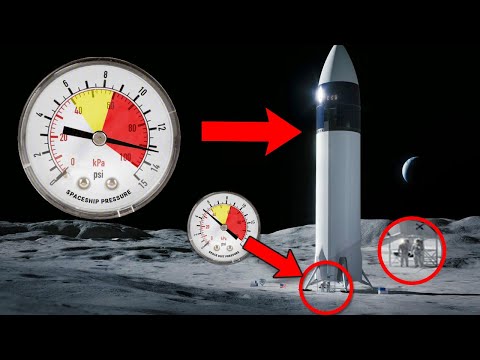
- Pressure Architecture Decision and Mission ImpactThe Central QuestionThe fundamental decision is whether the Artemis lunar habitat should be pressurized at 14.7 psi (like Earth) or lower pressure like Apollo's 5 psi environment.Trade-off Analysis• Lower pressure: reduces pre-breathe time to zero, enables immediate EVA departure like Apollo • Lower pressure risk: creates fire hazards with oxygen-rich environments and challenges for modern electronics cooling • Higher pressure: safer for electronics and reduces fire risk but requires longer pre-breathe protocols • Balanced approach: optimize pressure flexibility to handle multiple mission scenariosHistorical Precedent• Apollo: 5 psi oxygen-rich environment, zero pre-breathe time • Skylab: 5 psi oxygen-rich environment with 22-foot diameter comparable to 30-foot Artemis HLS • ISS: 14.7 psi requiring 3-3.5 hour pre-breathe with 4.3 psi suitsFuture FlexibilityNASA should design adaptable hardware that works across different pressure profiles. This enables optimization for specific mission needs: lower pressure for surface EVA-heavy missions, higher pressure for longer-duration habitats, and progressive pressure reduction during EVA like Russian strategies.
- Facility Significance and ConclusionNBL ImportanceThe neutral buoyancy laboratory is indispensable for Artemis program success, providing the only facility capable of full three-dimensional EVA training in realistic conditions with authentic work environment simulation.Research Assets• Provides extended duration training impossible in other environments • Zero-gravity flights offer different data but cannot replicate underwater complexity • Suspension-based training provides limited training compared to NBL capabilities • Real-time pressure testing enables informed architectural decisionsTeam ExcellenceThe personnel at the NBL represent hand-selected professionals with exceptional temperament, skills, and ability to react under pressure. Divers demonstrate masterful buoyancy control and spatial awareness in three-dimensional operations.Taxpayer ValueThe facility represents significant taxpayer investment that directly enables human lunar exploration. The comprehensive testing and training capability justifies the resource allocation and makes Artemis program safer and more effective.