
The Chemistry of Kodak Film - Smarter Every Day 275-C
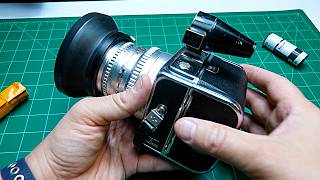
today we're going to talk about film and this is ektachrome and this is ektar these are both made at the kodak film plant in rochester new york
20 chapters
- Introduction to Film Chemistry FundamentalsOverviewDestin introduces Kodak film types (Ektachrome and Ektar) made at the Rochester facility and presents Dr. Jeffrey Hansen, a world expert in film chemistry.PurposeThe video documents how film chemistry works with emphasis on information not readily available online, including how film manufacturing differs from digital sensors.Expert IntroductionDr. Hansen is praised for his teaching ability to explain complex concepts by gradually introducing viewers to advanced ideas while maintaining comprehension.Content Highlights• Tour of Kodak manufacturing facilities showing chemical kettles and production areas • Explanation of film capabilities that digital sensors cannot replicate • Direct knowledge from a leading film chemistry expert
- Silver Halide Crystal Structure and PropertiesBasic StructureSilver halide is an ionic crystal combining silver with halide elements (chloride, bromide, or iodide) in a cubic rock salt structure arrangement.Key PropertyThe mobile interstitial silver ions within the crystal lattice are fundamental to how photography works, as these ions can move within the structure.Manufacturing Process• Created through precipitation by combining silver nitrate and sodium bromide solutions • Crystals nucleate and crash out when solution becomes supersaturated • Gelatin acts as a peptizer to support grains and prevent interactionCrystal DiversityKodak manufactures 127 different silver halide varieties ranging from 50 nanometers to 3 microns, each with specific properties for different film applications.
- Controlling Crystal Size and Shape During PrecipitationPrecipitation EquipmentThe planar emulsion precipitation apparatus (PIPA) is a dual-function mixer that combines mixing and pumping through two pump jets that crash into each other.Control Factors• Temperature regulation of the solution • Mixing speed of the apparatus • Chemical composition of the precipitation solution • pH levels for digestion of nucleiShape SelectionBy adjusting kettle conditions, operators can control whether to create cube-shaped or tabular grains, with nuclei control determining if grains grow small with many nuclei or large with fewer nuclei.Metal Dopants• Ruthenium and iridium are added as precious metal dopants inside crystals • These metals control the photoelectron lifetime and electron trap behavior • Iridium comes from cosmological sources like asteroid impacts
- Photon Interaction and Latent Image FormationPhoton AbsorptionWhen a photon hits the silver halide crystal, it creates an electron-hole pair that can either annihilate if they recombine or separate to form a latent image.Sensitivity RangeWithout additional chemistry, silver halide is only naturally sensitive to ultraviolet and very short blue light, requiring dyes to extend sensitivity to visible light wavelengths.Developable CentersThree to five stable silver metal atoms form a sensitivity center that can capture electrons, allowing the latent image to survive processing until development.Electron Management• Metal dopants like iridium create shallow wells to separate electrons and holes in space and time • Ruthenium creates shallow traps to protect electrons • This separation prevents annihilation and preserves the latent image
- Color Film Layer Structure and Spectral SensitivityMulti-Layer ArchitectureColor film consists of stacked layers with cyan emulsions sensitive to red light, magenta emulsions sensitive to green light, and yellow emulsions sensitive to blue light.Light Management• Inner filter layers prevent unwanted light transmission between color layers • Yellow filter layer blocks blue light from reaching lower layers • Tabular grain crystals allow light penetration through multiple layersColor SeparationThree separate color records across different wavelength bands enable color separation, similar to how the human eye's RGB cone cells function, creating comprehensive visible spectrum coverage.Balance Adjustment• Daylight and tungsten balance films adjust color sensitivity for different light sources • Tungsten balance films have larger blue layer sensitivity due to less ambient blue light • Color balance controlled by varying silver halide crystal amounts in each layer
- Chemical Sensitization and Sensitivity CentersEnhancement StrategyGold and sulfur chemicals stabilize latent images and create sensitivity centers that attract silver atoms to specific grain locations.Center PlacementGold-sulfur aggregates are positioned preferentially to encourage silver accumulation at one location, avoiding scattered sensitivity centers that could cause reciprocity failure.Optimal ConfigurationThe ideal film contains single or multiple working sensitivity centers that resist decay without creating excessive numbers that would reduce photographic quality.Gelatin Role• Gelatin sourced from animal bones contains collagen that becomes gelatin through digestion • Sulfur content in animal feed historically improved film sensitivity • Kodak uses 16 different gelatin types with varying molecular weight distribution and ion content
- Color Development and Coupler ChemistryDevelopment ProcessDuring development, developer molecules diffuse to latent image locations and donate electrons, creating a catalytic effect that grows silver and oxidizes the developer.Coupler ReactionOxidized developer molecules bind to coupler molecules, creating colored products in the vicinity of developing grains through a chemical reaction.Dispersion System• Dispersions are oil-in-water mixtures with aqueous and oil phases • Couplers exist in the oil phase as micron-sized particles (0.1-0.2 microns) • Oxidized developer molecules diffuse and encounter these droplets to generate dyeImage FormationFine grain crystals produce tight dye clouds creating sharp images, while large grains produce diffuse dye clouds that can appear granular if too extensive.
- Bleach, Fix and Final Image FormationSilver RemovalBleach processing oxidizes remaining silver back to silver ions that are then washed away by fix, leaving only the dye clouds in the film.Black FormationBlack in color film results from cyan, magenta, and yellow dye clouds positioned adjacent to each other, contrasting with digital CMYK which includes black ink.Final CompositionFinished color film contains only dye molecules from couplers with no silver remaining, fundamentally different from digital printing which combines CMYK plus black.Advantage Over Digital• Film uses three-color records for comprehensive spectrum coverage • Digital uses bayer filter pattern with position-based RGB filtering • Film allows multi-layer photon detection unlike single-layer digital sensors
- Component Complexity and Material ManagementComponent DiversityKodak maintains 1200 different components with 127 emulsions, 71 different films, and approximately 60 dispersions for various imaging and chemical functions.Chemical Count• Each imaging sensor contains 20-25 chemicals after sensitization • A single 500-speed tungsten balance motion picture film contains over 280 components • Components are cleverly arranged with nothing leaving production unless perfectSourcing StrategyOf 1200 components, 100 are purchased off-the-shelf while 800 are manufactured in-house, ensuring quality control and proprietary processes.Precision Inventory• Barcode tracking ensures exact quantities of hundreds of specialty materials for each film production • Approximately 700 weighing operations actively fill components • Missing a single material would make the entire formulation incorrect
- Emulsion Preparation and Washing ProcessPre-Coating StepsTwo weeks before coating, components and emulsions are prepared and kitted together, then moved via bridge from building 30 to building 38 for coating operations.Melting Process• Emulsion containers (jell-o-like blocks) must be melted in large kettles • Temperature sensitivity requires controlled heating to prevent fogginess or insufficient sensitivity • Some materials are kept on passive systems with slow warm water meltingIonic RemovalAfter precipitation, sodium ions from sodium bromide and nitrate ions must be removed through washing using semi-permeable membrane tubes that allow water and ions to pass while retaining gelatin and silver halide crystals.Washing Completion• Conductivity measurement determines when solution is sufficiently clean • Concentration process removes excess water for gelatin storage • Processing occurs in dedicated wash facilities separate from other operations
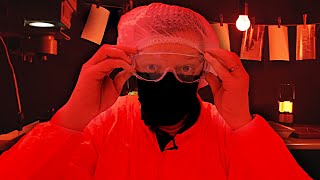
- Emulsion Laboratory Safe Light ConditionsRed Light EnvironmentEmulsion precipitation labs operate under red safe light conditions because silver halide is only naturally sensitive to ultraviolet and blue light, making red and infrared wavelengths safe.Eye AdaptationHuman vision adjusts to red light levels and color, allowing operators to work comfortably and read even with limited visibility after eye adaptation occurs.Pre-Sensitized StateSilver halide in the lab exists before dye sensitization, so it cannot detect visible light wavelengths and remains unaffected by the red safe light environment.Facility Design• Emulsion preparation occurs in controlled dark spaces on the eighth floor • Different chemical vessels contain silver nitrate, growth salt, and auxiliary silver • Temperature control maintained with vessels heated to specific degrees
- Crystal Precipitation Equipment and Kettle DesignPIPA SystemThe precipitation kettle features a marine propeller for bulk mixing and baffles along the wall to create optimal roll and turnover for crystal formation.Pumping System• Two pump jets crash into each other to mix chemicals • Holes in the pump intake precise residence times for ion control • Both mixing and pumping occur simultaneously for reaction controlOperational FlexibilityThe entire PIPA assembly can be pulled up to the ceiling for maintenance access and servicing, with surrounding areas containing components ready for addition during precipitation.Byproduct ManagementAfter silver halide precipitation, sodium atoms and nitrate molecules must be removed, as sodium nitrate crystals would clog equipment and scatter light if allowed to remain.
- Solution Preparation and Chemical HandlingFloor OperationsThe eighth floor of building 30 handles solution preparation with high-volume chemical storage in a horseshoe-shaped arrangement containing acids, bases, surfactants, and other frequently used materials.Scheduling SystemWall-mounted charts show 24-hour schedules with activities listed vertically and time horizontally, allowing operators to identify required solutions for each precipitation event.Barcode Automation• All chemicals are barcode-tracked from preparation through use • Operators scan themselves to log who handled materials • Scanning paper positions indicate quantities needed for each operationQuality Control• Multiple scanning checkpoints ensure correct chemical selection • Light systems on chemical dispensers indicate status (red = nearly empty, green = ready) • Barcodes transfer from paperwork to physical containers for tracking through production
- Gelatin Inventory and Film-Specific FormulationsGelatin TypesKodak maintains 16 different gelatin varieties with varying molecular weight distributions and ion contents, with some used for precipitation where quality significantly impacts performance.Gelatin Sources• Gelatin derived from animal bones including cow and pig bones • Shoulder bones contain collagen that is digested into gelatin • Sulfur content from animal feed historically improved film sensitivityStorage OrganizationBulk gelatins stored in gaylord containers in dedicated inventory room with funnels for easy loading into usable supply containers for specific production needs.Formula-Specific Needs• Emulsion gelatins differ from coating gelatins in properties and pH response • Each film type requires specific gelatin selection based on performance requirements • Gelatin scapegoat reputation unwarranted but historically blamed for film problems
- Advanced Dispersions and Inhibitor ChemistryDispersion TypesKodak produces approximately 60 different dispersions including color-generating couplers and active chemistry dispersions that control grain development and color separation.Timing Control• Selective chemistry activates at specific milliseconds after development begins • Activation sequence prevents interference with target color layers • Chemical signaling travels up and down through film layersGrain Development ManagementInhibitor dispersions slow or stop development of large grains after initial development begins, allowing smaller grains to take over and reducing visible granularity.Layer-Specific Chemistry• Cyan layer imaging can trigger chemistry to shut down yellow and magenta development • Prevents color cross-talk and unwanted imaging in non-target layers • Complex chemical logic achieved through precise dispersion placement and timing
- Automated Bridge System and Material TransportBridge FunctionThe automated bridge connects building 30 to building 38, eliminating human contact with film components once they enter the transport system to maintain quality standards.Automation Process• Operators load gallon jars and scan barcodes to initialize transport • Robots remove jar tops without human intervention • Continuous operation routes chemicals to appropriate destinationsQuality Checkpoints• Barcode scanning automatically directs containers to correct destinations • Weight verification ensures containers match design specifications • Containers failing weight checks are diverted for investigationSystem Logistics• Empty containers return via reverse loop for recycling • Storage queue sections accommodate large volumes during peak operations • System ran continuously 24/7 during full production capacity
- Batch Melt Facility and Temperature-Sensitive ProcessingDark Room OperationBatch melt dark room handles temperature-sensitive emulsions and dispersions in light-protected conditions with operators working from elevated platforms.Automated Dumping• Carts are raised to platform height for operator access • Robotic dumping devices automatically pour contents into designated kettles • Gelatin-based emulsions and dispersions require careful handlingMelt DurationMelting process takes two to two-and-a-half hours depending on gelatin content, with excessive gelatin creating rock-like consistency requiring extended heating time.Facility Scale• Multiple large kettles can be brought online simultaneously or sequentially • Dual kettle systems allow shift-on-the-fly operations • Massive room with wall-mounted supply jacks for water and delivery systems
- Advanced Delivery System and Thermal StabilityADS PurposeThe advanced delivery system (ADS) receives melted emulsions from kettles through pipes, filters them extensively, and delivers temperature-controlled material to coating hoppers.Facility Infrastructure• Extensive piping network with multiple filters for material purification • Delivery process maintains precise temperatures to prevent thermal currents • One floor below batch melt receives material through wall-mounted pipesThermal ControlTitanium coating hoppers require dimensional stability with no thermal gradients from top to bottom, necessitating laminar flow delivery free from thermal currents or eddies.Multi-Discipline Engineering• Addresses thermodynamics, mechanical stability, and fluid dynamics simultaneously • Flow meters monitor delivery rates for each coater line • System separates delivery to different coating machines for parallel production
- Facility Scale and Manufacturing ComplexityInvestment ScaleThe complete Rochester facility represents an investment exceeding 1.3 billion dollars, reflecting the enormous complexity of modern film manufacturing.Engineering Disciplines• Photochemistry governing light-sensitive reactions • Fluid dynamics ensuring proper material flow • Thermal management maintaining precise temperatures • Mechanical engineering for precision equipmentOperational CoordinationComplex interactions between multiple systems require careful management of timing, temperature, composition, and quality control throughout the manufacturing process.Production Flow• Materials flow from chemical preparation through emulsion making to coating and finishing • Each stage builds on previous precision • Any deviation in process parameters affects final film quality
- Conclusion and Industry ImpactDocumentary SignificanceThis video represents rare documentation of important industrial history, providing unprecedented public insight into film chemistry and manufacturing processes not readily available online.Expert Recognition• Dr. Jeffrey Hansen demonstrates expertise earned through years of experience • Hansen acknowledges collaborative team effort behind film manufacturing • Kodak maintains succession planning for critical technical positionsWorkplace CultureKodak's work atmosphere reflects a family-like environment with emphasis on mentoring and knowledge transfer between experienced and newer employees.Future Content• Related video on sensitometry quality testing shows how film is evaluated post-production • Main channel video documents film threading throughout manufacturing plant • Patron support on patreon.com/smartereveryday enables in-depth technical documentaries
![How Does Film ACTUALLY Work? (It's MAGIC) [Photos and Development] - Smarter Every Day 258](https://img.youtube.com/vi/TCxoZlFqzwA/mqdefault.jpg)