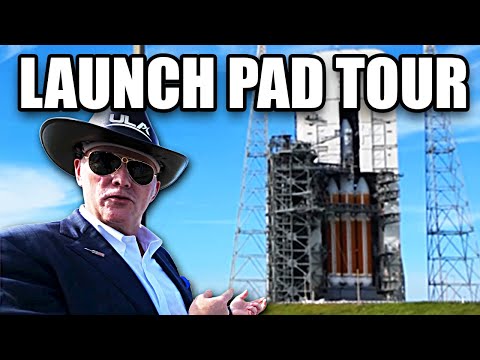
Delta IV Heavy Pad Tour, (with CEO Tory Bruno) - Smarter Every Day 199
Parker Solar Probe is about to be launched into space to touch the sun
6 chapters
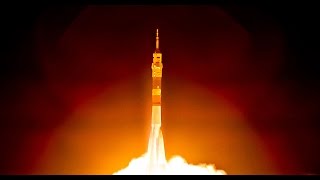
- Introduction to Parker Solar Probe MissionMission OverviewUnited Launch Alliance's Delta IV Heavy rocket will launch the Parker Solar Probe, designed to become the fastest man-made object in history by traveling to the sun.Challenge ExplanationReaching the sun is harder than reaching Pluto because it requires removing orbital velocity; the spacecraft needs to shed the 67,000 miles per hour velocity from Earth's orbit around the sun.Launch Details• Parker Solar Probe is a small probe equipped to handle the extreme environment near the sun • Delta IV Heavy is a large rocket capable of delivering the necessary velocityAccess GrantedDestin received an invitation to visit the launch pad just before rollback and will be accompanied by United Launch Alliance CEO Tory Bruno.
- Pad Tour and Rocket Engineering DiscussionInitial MeetingDestin meets Tory Bruno, CEO of United Launch Alliance, who reveals he is a subscriber to the Smarter Every Day channel and will allow the crew to ride the Mobile Launcher during rollback.Rollback Details• A 10 million pound building 30 stories high will move at one-third mile per hour • The journey covers 300 feet and will take approximately 45 minutes • The movement will speed up slightly after a few minutesDelta IV ArchitectureThe Delta IV Heavy uses three cores: two outer cores operate at full throttle to get past Max Q, then those are jettisoned. The center core throttles back during initial flight, then ramps to full throttle after the side cores separate, nearly doubling velocity.Propellant Systems• Delta IV uses cryogenic propellant on both upper and lower stages • Atlas uses kerosene • The Parker Solar Probe requires a special solid rocket kicker stage at the end for additional velocity
- Technical Deep Dive: Solid Rocket Kicker StageUnique DesignThe Parker Solar Probe mission uses an unusual solid rocket kicker stage because the probe requires extraordinary energy and velocity to reach the sun.Technical Features• The solid kicker stage has a vectorable nozzle with actuators for thrust vector control • Burns out approximately 44-45 minutes after liftoff • Allows pointing before separation unlike typical solidsMission TimelineThe Parker Solar Probe will arrive at its first perihelion in November, then conduct seven years of solar encounters with 24 passes. Every third pass will bring it close enough to Venus to use gravitational assists to spiral closer to the sun.Rocket AssemblyAll three cores arrive in a giant truck, are flipped vertical into the assembly building, finished, and then the Mobile Launcher rolls away when ready for launch.
- Inside the Launch Complex and Structural EngineeringOperational Procedures• Crew must maintain focus and avoid distracting personnel on communications headsets during rollback • Visitors will be positioned on level 6 for briefing and must follow safety protocolsMobile Launcher OperationPneumatic clamps release and the entire 10 million pound building is pushed away from the pad at controlled speed, demonstrating precision engineering for such massive structures.Core Architecture Details• Horizontal struts carry loads from side cores and transmit them into the center core mechanically • The structure uses a rigid frame design for optimal dynamic response and rocket steering control • This design allows for cleaner control compared to damped alternativesThrust SpecificationsEach of the three cores uses the same engine, same propellants, and can produce the same thrust level. Combined, the rocket generates approximately 2.2 million pounds of thrust, with each core producing slightly over 700,000 pounds at full power.
- Mission Context and Personal StoriesPayload ImportanceThe rocket serves the payload; the Parker Solar Probe represents the life's work of scientists and engineers who have dedicated at least a dozen years to this mission, making it the pinnacle of their careers.Engineering InnovationA scientist named Andy developed an innovative trajectory approach that made this mission feasible; without his contribution, the Parker Solar Probe mission would not be possible.Tory's Passion• Tory Bruno has been working with rockets his entire life • His first rocket launch occurred at age nine using 80-year-old dynamite from his grandmother's barn • He constructed rockets from dynamite sticks and successfully launched some into the sky • He approaches his 400th professional launch with the same excitement as his firstShared ExpertiseTory Bruno's wife is also a rocket scientist, and during the rollback she discusses the technical aspects of the mission with him, including the different stages and propellant choices.
- Launch Precision and Mission SuccessRemarkable AchievementTwo weeks after launch, Felipe reported that the Delta IV Heavy's trajectory insertion was so accurate that the Parker Solar Probe's required trajectory correction maneuver dropped to just 10 meters per second.Mission Impact• Exceptional accuracy allowed the spacecraft to save significant fuel • Fuel savings extended the overall mission lifespan • ULA achieved pinpoint accuracy, placing the probe exactly where neededSignificanceThe Parker Solar Probe will become the fastest man-made object in history while advancing humanity's understanding of the sun.Closing AppreciationDestin expresses gratitude to Tory Bruno and United Launch Alliance for the unprecedented opportunity to witness and document this historic mission, emphasizing it was a lifetime experience.