Touring the Vulcan Rocket on the Launch Pad - Smarter Every Day 297
In this video, we're going to walk right up to a huge rocket on the launch pad.
9 chapters
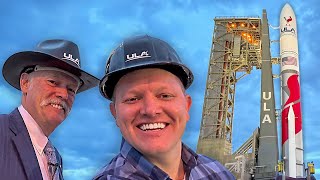
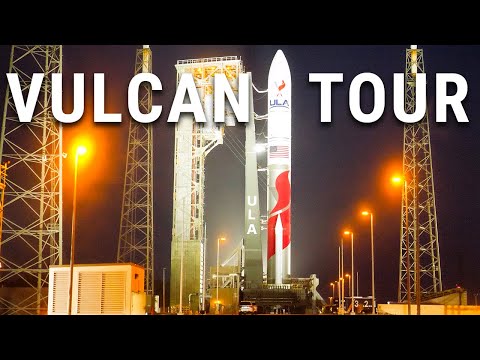
- Introduction and ContextAbout This VideoA tour of the Vulcan Rocket on the launch pad with Tory Bruno, CEO of United Launch Alliance, just two days before the first flight.Why It Matters• This is the first flight of the Vulcan Rocket, marking a historic moment in American space launch • ULA is retiring their Delta and Atlas class rockets after decades of reliable service • The video captures the rocket being manufactured in the factory and now seeing it being flownWho's Involved• Tory Bruno - CEO of United Launch Alliance, described as a legend in the rocket community and very smart engineer • Destin Sandlin - host of Smarter Every Day • Destin's father - who worked on the James Webb Space Telescope and is serving as camera operatorBroader ContextAmerica is in the middle of an explosion of aerospace development with SpaceX, Blue Origin, and other companies developing new rockets simultaneously.
- Rocket Overview and SpecificationsBasic Dimensions• 202 feet tall - equivalent to 20 stories high • 18 feet (5.4 meters) in diameter • Nearly a million and a half pounds fully fueled at liftoffEngine Configuration• Two BE4 liquid engines (oxygen and methane) producing 1.5 million pounds of thrust combined • Two GEM 63XL solid rocket boosters producing 450,000 pounds of thrust each • Solids are about 7 feet longer than GEM 63s previously flown on Atlas • Total thrust: approximately 2 million poundsSolid Rocket Details• GEM 63XL boosters are the longest monolithic (non-segmented) rocket motors ever flown • 109,000 pounds of propellant in each solid • Burn time: approximately 1 minute 50 seconds • 50 tons of propellant expelled in less than two minutes • Fixed nozzles (not gimbal-controlled) because liquid engines provide sufficient control authorityDesign FeaturesSolids are canted (angled) to pass through the average center of gravity of the rocket as propellant is consumed, allowing liquid engines to focus on forward momentum rather than fighting the solids.
- Lightning Protection and Launch InfrastructureProtection System• Four grounded towers surrounding the rocket • Two sets of cables connecting the towers electrically around the entire launch pad • The inner square area where the rocket sits looks tight but provides safe clearance for the rocket • Astronauts initially nervous about the confined space, but spacing is actually adequateMobile Launch Platform• Weighs 2.5 million pounds • Rolls out at 2.5 miles per hour, taking a couple of hours to move from the VIF to the pad • Equipped with four sets of rails • Design is brand new for Vulcan, not reused from AtlasAssembly LocationFirst stage, upper stage, payload fairing, and interstage arrive separately by rocket ship at the VIF (Vehicle Integration Facility), then are stacked vertically before solids and payload are added.Support Systems• Environmental Control System (ECS) for payload temperature and humidity control • Propellant umbilicals for LOX and methane • Electrical and data umbilicals • Ground wind damper because winds can get high at the launch site
- Acoustic Water Suppression and Flame TrenchAcoustic ProblemWithout water suppression, the sound at the launch pad would reach 300 decibels, which alone could kill people on the pad and damage the spacecraft through reflected acoustic energy.Water Solution• Acoustic Water Suppression System dumps about 10 swimming pools worth of water in the first minute of launch • Water is nearly the best acoustic energy absorbing material available • Prevents reflected energy from damaging the rocket and protects people in the vicinityFlame TrenchBeneath the launch platform is a flame trench that directs all exhaust gases to the outlet, which blows them away from the pad and knocks over the fence.Unique FeaturesUnlike shuttle or Artemis, the Vulcan uses umbilicals that disconnect and fall away passively rather than mechanical arms that must swing away, simplifying the system.
- BE4 Liquid Engines Deep DiveEngine Capabilities• Two BE4 engines produce 1.5 million pounds of combined thrust • Designed to work with variable thrust through thrust vector control • Can pitch, yaw, and roll the vehicle independently • 86,000 gallons of LOX and 73,000 gallons of methane consumed in five minutesTesting ApproachDespite extensive horizontal firing tests, vertical thrust testing is limited because the most important factor is how the engines interact with the rest of the rocket, which can only be fully tested during actual flight.Critical Phenomena• Pogo - oscillations in the fluid column like water hammer that must be absorbed by design features • Buzz - interactions between the engine and structure affecting fuel flow • Screech - acoustic phenomenon inside the combustion chamber at thousands of hertz that can destroy the engine in seconds if uncontrolledScreech Problem SolvingMethane combustion creates more acoustic energy than kerosine due to its chemistry, making it particularly challenging. Solution involves careful mixing control, operating pressures, and baffles in the injector face plate to interrupt resonance.
- Engine Cooling and Materials InnovationMaterial CompositionThe engine bell appears to use Inconel, a very aerospace alloy that has a long history of use in rocket engines like the X-15 and F1 engine blankets.Cooling Method• Uses fuel (methane) to cool both the bell and the outside of the combustion chamber • Engine is ox-rich, not fuel-rich, allowing fuel to be used for film cooling • LOX is not used for cooling because it has poor heat transfer propertiesDesign Evolution• Unlike older Apollo engines with brazed cooling tubes, the BE4 uses machined channels • Future RL10 upgrades will move from brazed tubes to 3D-printed channels • 3D printing offers similar weight efficiency to hand-brazed tubes but much faster and cheaper production3D Printing Benefits• Rough surface finish creates turbulence that improves heat transfer • Superior cooling conditions compared to smooth channels • Offset some weight penalties with better thermal performance • Particularly beneficial for expander cycle engines like RL10
- Booster Design and Control StrategyCant Angle PurposeThe solids are canted at an angle so their thrust passes through the average center of gravity as the rocket burns fuel, rather than overloading the liquid engines with control demands.Center of Gravity Movement• When fully fueled, the center of gravity is very high (toward the front) due to the full Centaur upper stage • As propellant burns, the center of gravity slowly moves forward • Design engineers optimize the solid thrust point to average between where the CG starts and where it endsAltitude EffectsThe same 4-degree cant produces different vehicle responses at sea level versus at 5 miles altitude due to different aerodynamic pressure and mass conditions, suggesting the thrust point is likely optimized for a specific altitude rather than being a simple average.Maximum Configuration• The Vulcan can be equipped with up to six solid boosters • Six solids is the maximum that can physically fit around the rocket • Design structure is already built to handle six solids even though this flight uses only two
- Visual Features and CustomizationRed Paint DesignRed paint is applied to the side of the Vulcan rocket by hand in a paint booth with masking, adding less than a couple of hundred pounds.Application Strategy• Applied by hand with a brush in the paint booth • Time-consuming process that requires slowing production • Future missions may use automated sprayers to speed up the process • Plan is to paint every other booster, or every third one, depending on weight marginsMobile Platform ImprovementsThe Vulcan's mobile launch platform is deeper and more ergonomically friendly than the Atlas platform, allowing technicians to walk around inside rather than lying on their backs reaching up.Interior AccessThe platform features hatches that allow personnel to access and maintain piping, plumbing, data lines, and other systems inside, making maintenance much easier than previous designs.
- Launch Day ExperienceLaunch Conditions• Launch occurred at 2:00 AM on Monday morning • Destin and his father were driven five miles away from the launch pad to a viewing site • Water between viewing location and rocket provided clear line of sight • Destin used a Phantom Miro high-speed camera recording at 1,000 frames per secondSpecial Moments• Destin had seen the Vulcan being built in the factory • He had walked on the launch pad two days before launch • Watching the first flight with his father made the experience particularly meaningful • His father had worked on the James Webb Space TelescopeFuture Content• Tory Bruno explained cryogenic fueling of rockets in detail • This explanation will be featured in a dedicated future video • Destin learned processes and concerns he previously didn't know existed • The cryogenic fueling discussion included a visit to the control room to see the launch sequenceAdditional Activities• Visited the Kennedy Space Center Visitor Center • Saw the Space Shuttle Atlantis • Rode the Figment of Your Imagination ride at EPCOT with his father, recreating a childhood memory