UP CLOSE Delta IV Heavy Launch Pad Tour (Tory Bruno CEO of ULA) - Smarter Every Day
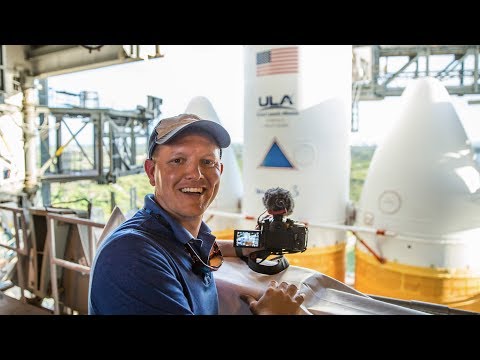
This was an opportunity to geek out over Rockets with a fellow rocket lover that just happens to own the company that makes the Rockets
14 chapters
- Introduction and Launch Pad AccessChannel ContextDestin from Smarter Every Day introduces a unique opportunity to visit a rocket launch pad and interview Tory Bruno, CEO of ULA, a fellow rocket enthusiast who owns the company manufacturing the rockets.Experience Overview• Three hours spent at the launch pad with extensive footage recorded • This is Destin's first opportunity to see an orbital rocket launch in person • Intimate mechanical rocketry conversations with Tory Bruno throughout the visitSpecial AccessDestin is granted permission to ride the Mobile Service Tower (MST) rollback with Tory Bruno, experiencing a 10 million pound building moving 330 feet at approximately one-third mile per hour.GratitudeDestin expresses deep appreciation for the unprecedented access and opportunity to witness rocket launch operations firsthand and ask technical questions at the actual launch pad.
- Parker Solar Probe Mission and Delta IV Heavy ConfigurationMission ObjectiveParker Solar Probe will reach speeds of 430,000 miles per hour near the Sun, traveling within 3.8 million miles of the solar surface, and will conduct this mission for seven years with approximately 24 passes around the Sun.Rocket Architecture• Delta IV Heavy uses three cores: two outer cores at full throttle and one center core throttled back to conserve fuel • All three cores are identical, with the configuration comparable to bolting three rockets together • This design provides better propellant mass fraction after the throttled center core burns outOrbital MechanicsParker Solar Probe requires a C3 (characteristic energy) of 154 kilometers squared per second squared to escape Earth's gravity and establish an elliptical orbit around the Sun, which is exceptionally high compared to typical missions.Trajectory StrategyVenus gravity assists will gradually reduce the spacecraft's perihelion from approximately 33 solar radii to within 3.8 million miles of the Sun through multiple orbital passes, with approximately every third Venus pass tightening the orbit further.
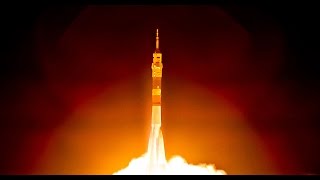
- Propulsion Systems and Fuel ManagementEngine Configuration• All ULA rockets use cryogenic propellants on the upper stage • Delta IV uses hydrogen and oxygen on both first and second stages • Parker Solar Probe includes a custom solid-rocket kicker stage fabricated by Northrop Grumman's orbital ATK divisionHydrogen IgnitionHydrogen flows first to cool and spin up the engines, then ignition occurs, causing hydrogen to burn along the rocket's side and char it, creating the distinctive orange appearance during launch.Fuel Management Strategy• Every mission is analyzed individually for propellant margins accounting for wind variability and trajectory variations • Minimum propellant reserves follow established standards based on calculations and operational experience • For Parker Solar Probe, the rocket will burn propellant to depletion for maximum performanceFlight FlexibilityULA rockets can recalculate and reprogram their flight trajectories in-flight, allowing adjustments after four months, enabling customers to reach either fixed destinations or variable targets depending on mission requirements.
- Thermal Protection and Tank InsulationInsulation Materials• Cork insulation is used on the rocket exterior, ground into small pieces and bonded together with binder material applied in sheets • Spray-on polyurethane insulation called Sophia is applied thicker than cork for additional protection • Both materials serve dual purposes as ablators that burn away while removing heat and insulating the cryogenic tanksBoiloff PreventionPropellant continuously boils away and is vented from the cryogenic tanks during ground operations, making insulation critical to minimize this loss and maintain flight margins.Cork CompositionCork prevents flaking by being ground up and bonded with a binder material, then applied in sheets and bonded to the rocket structure rather than used as solid cork planks.PurposeThe combination of cork and Sophia insulation protects the liquid hydrogen and liquid oxygen tanks from ambient heat, preventing excessive boiloff while the rocket remains on the launch pad.
- Rocket Assembly and Supply ChainManufacturing LocationThe entire Delta IV Heavy rocket is assembled in Decatur, Alabama, with structures built locally using isogrid construction techniques featuring thin materials with ribs for stiffness and strength.Component Sources• Engines are provided by partner Aerojet Rocketdyne located in California • Upper stage components come from partner Rouen, a company based in Switzerland that has recently moved operations into the ULA factory • The payload fairing was designed and assembled by NASA's Johns Hopkins University Applied Physics LabConstruction Methods• Isogrid structures are thin but stiffened with ribs for strength • All components are welded and assembled with weight minimization as a primary design principle • Sophia insulation is sprayed onto all structuresPartnership StrategyRouen's relocation to the United States represents a strategic move to bring manufacturing capabilities within the country, exemplifying a partnership model that strengthens domestic aerospace production.
- Launch Operations and Flame ManagementMobile Service Tower• The MST weighs 10 million pounds and moves approximately 300 feet during rollback • Movement occurs at approximately one-third mile per hour, taking about 45 minutes to complete the journey • The tower moves slowly but accelerates slightly during the operationFlame Bucket SystemThe flame from engine ignition is diverted through a flame bucket that turns the exhaust away from launch structures, directing it to the side where no plumbing or critical infrastructure exists.Engine Ignition Sequence• Ignition begins with thrust measurement and strain monitoring • The rocket is placed under thrust vector control to maintain proper orientation once engines achieve thrust • All three cores cannot be ignited simultaneously; they are staggered for faster propellant consumption and flame managementIgnition PatternThe outer left core ignites first, with flames rolling across and igniting the remaining cores like a gas burner on a grill, preventing flame suppression and ensuring rapid propellant consumption.
- Thrust Vector Control and Structural DesignCore ConfigurationThe three cores operate simultaneously at full power, each producing approximately 700,000 pounds of thrust for a combined total of approximately 2.2 million pounds, with identical engines and propellants.Structural FrameLarge horizontal struts carry loads from the side cores and transmit them to the center core, forming a rigid structural frame that allows proper dynamic steering and control of the rocket.Control AdvantagesThrust vector control (TVC) is more effective on the Delta IV Heavy because the side cores provide a larger moment arm from the center core, improving control authority during flight.Operation RequirementsTVC requires active engine thrust to function, necessitating that engines ignite and maintain thrust before release from the launch pad, as TVC becomes inoperative without active thrust.
- Solid Rocket Stage and Mission-Specific AccuracyThird Stage DesignParker Solar Probe uses a custom solid-rocket kicker stage fabricated by Northrop Grumman, providing the additional velocity and energy (C3) required for this mission beyond what the cryogenic stages can deliver.Solid Rocket Control• The solid rocket includes thrust vector control through its own actuators and nozzle • It has integrated controllers making it part of the rocket system rather than a passive component • This TVC capability allows the solid stage to be pointed properly when the cryogenic upper stage completes its burnSpacecraft InsertionAfter approximately 40 to 45 minutes from launch, the spacecraft separates and enters its first perihelion pass near the Sun for the beginning of its seven-year mission profile.Trajectory Precision• The accuracy required is stunning because the spacecraft must be dropped off at a specific point in space within 40 minutes of launch • No meaningful course corrections occur after injection; the trajectory must be established by the launch vehicle alone • The spacecraft's attitude control system can only orient it to face the Sun but cannot correct trajectory errors from the launch vehicle
- Tory Bruno's Background and Rocket HeritageEarly PassionAt age nine, Tory became fascinated with rockets after watching a friend's homemade rocket launch fail, inspiring him to build his own rockets from salvaged materials.Homemade Rocket Building• He removed the propellant from commercial model rocket sticks • He compiled the propellant into an old wrought iron pipe to create functional rockets • Several of his homemade rockets achieved partial flight, and he retained all ten fingers throughout the processProfessional CareerHis first professional rocket work was with Lockheed on ballistic missiles launched from submarines, developing expertise in large-scale rocket systems.Family Legacy• His wife Rebecca is also a rocket scientist • His children are fourth-generation engineers, continuing a family tradition • His father worked on Apollo for North American Aviation near Edwards Air Force Base
- Parker Solar Probe Mission Heritage and VisionScientific MotivationDr. Eugene Parker theorized the existence of solar wind in the 1950s and proposed that the solar corona is hotter than the Sun's surface, concepts that were not widely believed at the time.Mission ValidationParker Solar Probe represents a 60-year technological development effort to finally verify Dr. Parker's theories about solar wind and corona temperature, proving that his original calculations were correct.Team Dedication• The mission is dedicated to Andy, the orbital mechanics specialist who designed the Venus gravity-assist trajectory that made the mission feasible • Andy passed away before seeing the mission launch, making the flight a memorial to his contributions • Honoring deceased team members and retirees through mission dedications is common practice in spacecraft programsCareer SignificanceFor the scientists and engineers who worked on the Parker Solar Probe, this represents the pinnacle of their careers after at least a dozen years of development, making the launch a profound responsibility and life's work achievement.
- Propellant Dynamics and Fluid ManagementPogo Instability• Propellant feed lines run the full height of the rocket from the orange band at the top to the engines at the bottom • The fluid column can resonate and oscillate like water hammer, feeding unstable pressure to the engines • This instability can interfere with combustion and engine performanceSuppression SystemsPogo suppression systems absorb oscillation energy from the fluid column, preventing water hammer effects similar to expansion tanks used in home plumbing systems.Sloshing Control• Internal tank baffles prevent propellant from sloshing away from the engine inlet during acceleration • Baffles help dampen fluid motion while maintaining weight efficiency • Computational fluid dynamics modeling predicts how fluid and vapor interact in confined tank spacesTrade-Off BalanceBaffle design requires finding the optimal balance between preventing sloshing and minimizing weight, as too few baffles risk engine starvation and too many baffles add excessive mass that reduces performance.
- Zero-Gravity Operations and Upper Stage CoastingCoasting PhaseThe upper stage performs coasting phases where engines shut down for extended periods, during which propellant floats freely in zero gravity.Bubble Management• The critical concern during coasting is preventing vapor bubbles from reaching the engine inlet • Bubble location directly affects engine restart capability • Improper bubble positioning can prevent reliable restart of upper stage enginesRestart PreparationBefore engine restart, the attitude control system applies gentle positive pressure to move propellant back toward the engine inlet, ensuring the engine inlet is covered with liquid rather than vapor.Fluid DynamicsComputational fluid dynamics specialists model the behavior of liquid propellant and vapor in confined spaces with zero-gravity conditions, predicting bubble migration and enabling proper restart sequences.
- Specialized Expertise and Rocket Engineering PhilosophyEngineering Disciplines• ULA employs specialized experts in structural design, analysis, dynamics and motion control, and propellant behavior modeling • Dedicated sloshing specialists model how propellant moves inside tanks during flight, predicting cavitation risks • Teams focus deeply on individual technical disciplines to solve complex rocket engineering problemsDesign PhilosophyEvery aspect of rocket design involves trade-offs and compromises, requiring careful analysis to find optimal solutions that balance performance, weight, reliability, and cost.Mission Success MetricsULA measures success not by the rocket itself but by the mission payload reaching its objective, acknowledging that the rocket is simply the vehicle for delivering the spacecraft to its destination.Technical PassionTory Bruno demonstrates deep engagement with rocket technology throughout his career, living and breathing the subject matter and understanding the intricate details of orbital mechanics, propulsion, and spacecraft operations.
- Launch Appearance and Final ObservationsVisual ImpactThe Delta IV Heavy appears larger in person than expected from distant viewing, despite the 30-story building and rocket being difficult to perceive accurately from the launch pad perspective.Pre-Launch BeautyThe pristine rocket at the pad represents its most beautiful appearance before launch, before engine firing will char the side and create the distinctive flame pattern visible during flight.Flame Pattern• Hydrogen ignition creates orange charring on the rocket side as the rocket appears to catch fire • The flame pattern is partially predictable based on physics but varies slightly each launch • The rocket sets itself on fire then rises into the sky trailing a column of flameEmotional SignificanceThis mission represents decades of work for many team members and embodies the pinnacle of their career achievements, making the launch a profound moment in their professional lives.