HOW TO WATCH THE ECLIPSE (AND SHADOW SNAKES) - Smarter Every Day 171
8 capitulos
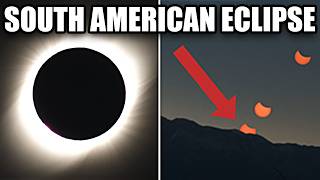
- Understanding Solar Eclipse BasicsMain ConceptSolar eclipses involve specific moments that can be observed if prepared down to the second. There are phenomena beyond just totality that most people don't know about.Expert IntroductionDr. Gordon Tulipan is a plastic surgeon and renowned eclipse fanatic who has traveled the world filming eclipses and has been invited to give talks at NASA.Video PurposeThe goal is to prepare and inspire people not to miss the upcoming eclipse, as it will be a once-in-a-lifetime event for many who can drive to it rather than travel globally.Key TakeawayTotal solar eclipses are rare, with only a few hitting each continent over several decades, making this eclipse particularly special for viewers in the path.
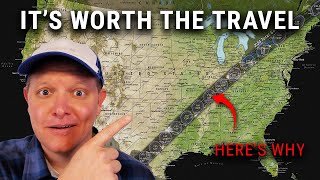
- Moon and Sun Orbital MechanicsCelestial AlignmentThe Moon and Sun are almost exactly the same size in the sky despite being very different celestial bodies, which is what makes total eclipses possible.Orbital Dynamics• The Moon orbits Earth in an ellipse • When closer to Earth, the Moon appears larger • When farther away, the Moon appears smallerEclipse Types• Annular eclipse: Moon doesn't fully block the Sun, creating a bright glowing solar disk • Total eclipse: Moon fully blocks the Sun when at its largest apparent sizeGeographic RarityRed curves show annular eclipses where the Moon is smaller than the Sun. Blue curves show total eclipses, which are extra special and require travel to see.
- The Totality Path and Contact TimesPath StrategyThe narrow band where the eclipse shadow moves over the ground is called the totality plane. You must be within this band to see a total eclipse, preferably at the center where totality lasts several minutes instead of just seconds at the edges.Four Contact Moments• C1: Exact instant when the lunar disk touches the solar disk • C2: Exact second when the lunar disk fully covers the Sun • C3: Moment when the Sun pokes out from behind the Moon • C4: Exact moment when the Moon stops covering the SunDuration VariationThe partial phase between contacts can last over an hour. At the edges of the totality plane, totality lasts only a few seconds, but at the center it can last several minutes.Preparation ImportanceKnowing exact contact times down to the second is critical because you only get one shot at seeing these phenomena. Precise timing determines whether you can capture specific events.
- Phenomena During Partial PhaseEnvironmental Changes• Temperature decreases noticeably • Lighting changes dramatically • Animals become confused thinking nighttime is fallingShadow Bands MysteryShadow bands are serpentine shadows moving across the ground that look like thousands of snakes crawling in unison in parallel. They don't happen at every eclipse or every observing area.Scientific PuzzleShadow bands are a real phenomenon documented since 1842, when children tried to grab them with their hands. Scientists have theories but don't know the actual cause, and they're difficult to capture on video due to low contrast.Observation WindowShadow bands occur just before C2 and just after C3 when the Sun is a narrow slit, lasting only 20-30 seconds, making them extremely difficult to capture.
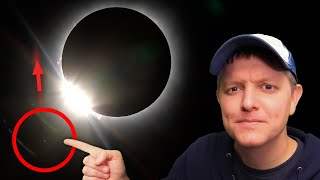
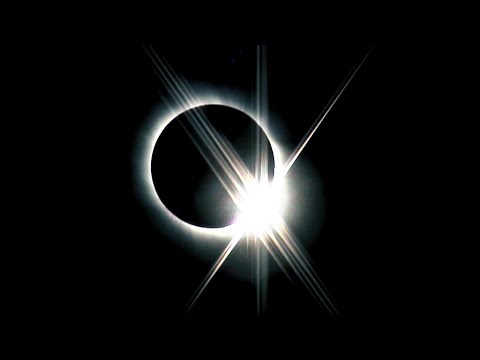
- Diamond Ring and Bailey's BeadsDiamond Ring EffectThe diamond ring is the moment just before C2 when the eclipse looks like a diamond ring in photographs. It marks the final seconds before totality begins.Bailey's Beads FormationBailey's Beads occurs when the lunar disk is about to cover the solar disk. The Moon's valleys and mountains cause sunlight to break into beads as it filters through the lunar terrain.Visual AppearanceInstead of a smooth crescent as expected, the uneven lunar surface creates multiple points of light that look like beads strung together around the Moon's edge.Timing ChallengeBoth phenomena happen extremely fast, requiring photographers to know the exact second they occur to capture them. Bailey's Beads appear immediately after the diamond ring.
- Eclipse Timer TechnologyHistorical MethodBefore smartphones, observers had to send a self-addressed stamped envelope to a space center to receive solar eclipse bulletins, then manually calculate contact times through interpolation for their specific location.Modern SolutionDr. Tulipan created the Solar Eclipse Timer App that uses smartphone geolocation to instantly calculate precise contact times for any location on Earth.App DevelopmentThe app was developed since the previous August and tested in parking lots about 6 times before the video. It provides C1, C2, C3, and C4 times and speaks them aloud during the eclipse.Game-Changing ImpactThe app eliminates the cumbersome manual calculation process, making eclipse preparation accessible to everyone with a smartphone and accurate to the second for any location.
- Testing the App and Planning Day-of ExecutionReal-World TestingIn a Brentwood, Tennessee parking lot, the app was tested on the edge of the totality plane. Just by walking across the parking lot, the app showed the difference between totality and partial eclipse.Location Precision• One sidewalk showed 6 seconds of totality duration • Across the parking lot, another location showed only partial eclipse with C2 and C3 missing • The 9-second location showed how timing varies with precise locationPre-Eclipse Checklist• Get to the totality plane, preferably the center • Turn off phone and texting 15 minutes before eclipse • Prepare white plastic sheet to capture shadow bands • Position camera to photograph diamond ring and Bailey's BeadsCritical Reminders• Use only approved solar viewing glasses to avoid pupil dilation and harmful UV exposure • Know exactly when phenomena will occur • Time is critical—you only get one shot at each event
- Complete Eclipse Timeline and SafetyBefore Totality• C1: Temperature decreases, animals behave oddly • Up to 60+ minutes of partial phase • Watch for shadow bands on white surface • Diamond ring appears about 5 seconds before C2Totality Period• C2: Remove eclipse glasses and view directly • Scan the horizon—it looks like a 360-degree sunrise • Maximum totality occurs in the middle • Duration varies by location (seconds to minutes)After Totality• C3: Sun begins to reappear, put glasses back on immediately • Bailey's Beads reappear as sunlight returns • Diamond ring visible again • Possible shadow bands for 60 seconds after C3Safety ProtocolUse only approved solar viewing glasses before C2 and after C3. Never look at the sun without proper protection except during totality when the Moon completely blocks direct sunlight.