How to FLY A SPACESHIP to the SPACE STATION - Smarter Every Day 131
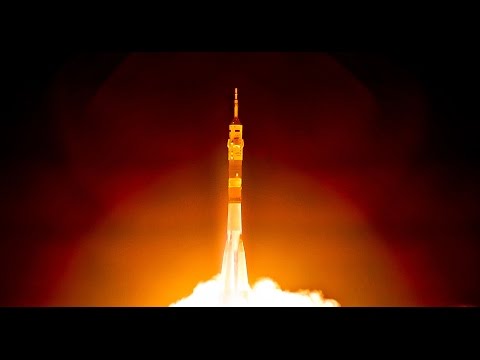
Most people know that if you're gonna go to the International Space Station you first get on this rocket in Russia called the Soyuz.
4 capitulos
- Introduction to Space TravelMission OverviewUS astronaut Scott Kelly and Russian cosmonaut Mikhail Korniyenko are about to spend an entire year at the International Space Station to prepare for future Mars missions.Research Goals• Study effects of space environment on the human body for long-duration missions • Investigate bone loss, muscle loss, and radiation effects on genetics • Research vision problems, immune system, and vestibular system changes • Test life support systems including oxygen and water productionPersonal ContextScott Kelly's space flight durations have been increasing progressively: 8 days, 13 days, 159 days, and now approaching a year, which puts him on track for potential Mars missions lasting five years.Spacecraft ControlThe Soyuz commander controls docking operations using a stick mechanism, though the spacecraft typically docks automatically. Under intense acceleration during launch, the center seat pilot can reach controls better than side seat crew members.
- Launch and Initial Orbit InsertionLaunch ProfileThe powered flight from ground to space takes nine and a half minutes on a powerful rocket filled with fuel. At the end of the ride, the spacecraft reaches approximately 17,000 miles per hour.Moment of WeightlessnessThe moment you enter space is exactly when the third stage cuts off after nine and a half minutes. The booster falls away and you feel like you're floating because you're no longer under powered flight, placed at a safe altitude outside the atmosphere.Initial Orbit InsertionThe rocket inserts the spacecraft into an initial orbit, but insertion can be slightly high, low, fast, or slow depending on rocket variations.Next StepsAfter reaching initial orbit, a series of seven orbital burns will be performed in the Soyuz to eventually reach the International Space Station.
- Hohmann Transfer and Orbital MechanicsTransfer MethodA Hohmann Transfer moves a spacecraft from one circular orbit to a larger or smaller circular orbit by drawing an ellipse between the two circles.Burn Sequence• First burn accelerates the spacecraft to enter the elliptical transfer orbit • Second burn occurs 45 minutes later on the opposite side of the planet • Two burns together transform one circular orbit into another circular orbitDispersion CorrectionsThe next two burns correct for dispersion errors caused by slight rocket variations. These adjustments ensure the spacecraft reaches the intended orbital altitude and velocity.Phasing PrincipleThe spacecraft enters a phasing orbit to match the International Space Station's timing. Since lower orbits travel faster around Earth, being in a lower orbit allows the spacecraft to catch up with the station orbiting at 250 miles altitude.
- Final Approach and DockingPositioning ManeuverWhen the space station reaches the correct position, a final Hohmann Transfer with two burns sends the spacecraft out in front of the International Space Station.Rendezvous Execution• Spacecraft performs a U-turn in space by turning around and watching Earth pass by • A braking burn slows the spacecraft slightly • Spacecraft flips back around pointed at the space station • Crew completes proximity operations at extremely low speedsDocking ProcedureProximity operations are flown like an airplane with X, Y, Z, roll, pitch, and yaw control. The docking process takes approximately 30 minutes, moving very slowly to ensure two large spacecraft traveling at 17,500 miles per hour make gentle contact.Docking LocationThe Soyuz docks to module MRM2, which extends from the top of the Russian segment of the International Space Station. Other Soyuzes dock to different parts of the Russian segment.