
Where does NASA keep the Moon Rocks? - Smarter Every Day 220
Only place in the world that you can actually work with moon rocks every day, with the amount of samples that we do.
9 capitulos
- Introduction to the Lunar Sample LaboratorySettingDestin arrives at Johnson Space Center to visit the Lunar Sample Laboratory Facility, the closest place on Earth to visiting the moon.Mission OverviewSix Apollo missions (Apollo 11, 12, 14, 15, 16, and 17) brought back 842 pounds of moon rocks from the moon between 1969 and 1972.Sample Collection ProcessAstronauts had to collect rocks using a specific approach and capture method to preserve samples for study decades later.Facility Purpose• Store and curate moon rock samples • Process and cut the rocks • Distribute pieces to museums and universities
- Entering the Clean Room EnvironmentPreparation ProcessCamera and equipment must be cleaned to remove outside particles and dirt before entering the clean room facility.Protective Gear• Bunny suits for full-body protection • Clean booties that have not been exposed to dirt • Multiple layers to maintain cleanlinessAir Control SystemRooms are pressurized with clean air flowing outward, preventing dirty air from contaminating the moon rocks.Staff ExpertiseAndrea, the facility director, has been working with moon rocks for 39 years and is one of the few people in the world with daily access to lunar samples.
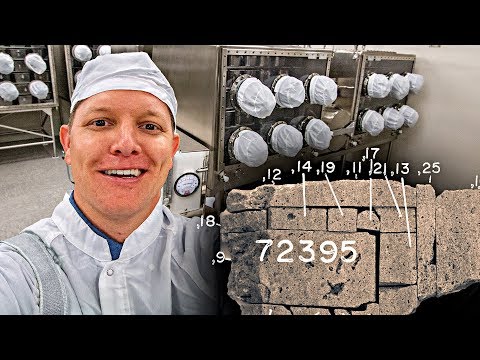
- The Pristine Sample Vault TourStorage SystemAll moon rock samples are stored in nitrogen-filled cabinets organized by Apollo mission, with each cabinet sealed and inventoried.Backup ProtectionA remote facility stores 15% of the samples as backup protection in case Johnson Space Center is destroyed.Documentation• Every sample has a security seal indicating inventory tracking • Database contains sample number, container number, weight, and description • Photographic index exists for all samples • Scientists select samples using composition informationSample OrganizationMoon rocks are numbered to show how many pieces they've been broken into, such as Apollo 15 sample 15499,179 indicating it has been broken at least 179 times.
- Vacuum Preservation and TransportationThe ChallengeMoon rocks cannot be contaminated by Earth's oxygenated atmosphere, which would change their chemical composition through oxidation.Original Solution• Two rock boxes carved from single piece of aluminum alloy 775 • Triple gaskets for sealing • Closed in vacuum on the moon surface • Remained in vacuum during return to EarthProcessing MethodNASA initially developed a reverse space suit with glove box arms for vacuum processing, but later switched to processing under dry nitrogen in positive pressure cabinets.Why It ChangedVacuum glove boxes were difficult to maintain due to leak risks. Positive pressure cabinets using dry nitrogen proved more practical for keeping rocks clean.
- Processing and Preparation ProceduresContamination Prevention• Every tool entering the glove box must be cleaned to insane specifications • Tools are triple bagged • Each bag is removed successively as tools get closer to moon rocks • Even second gloves are worn just to touch the second bagTool MaterialsMoon rocks are only touched with Teflon, aluminum, or stainless steel tweezers and gloves so any residue can be subtracted during analysis.Airlock Process• Tools are placed in airlock for five-minute purge • Airlock flow is turned off before retrieval • Tools are pulled in without contaminationDocumentationNASA provides detailed curatory orders with step-by-step procedures, and every action is recorded in datapacks that contain the complete history of the sample.
- Rock Cutting and Fragmentation TrackingInitial Steps• Rock is weighed to ensure it's within tolerance specifications • Bottom and top faces are photographed • Optimal saw line is marked on the rockCutting EquipmentA modified bandsaw (originally a meat cutter) with diamond edge blade is used; no oils or lubricants are used as they would contaminate the sample surface.Piece Tracking• Every time a piece breaks off, it must be stopped and photographed • Each fragment receives a new number • Pieces must be reconstructed like a puzzle • Complete history of each number must be maintainedData ManagementIf a rock breaks into 2000 pieces, photographs and paperwork alone allow scientists to know exactly where every piece came from and could reconstruct the entire rock.
- Orientation Cubes and Spatial DocumentationPurposeOrientation cubes show north, south, east, west, top, and bottom to maintain the exact positioning of samples relative to their location on the moon.Astronaut DocumentationAstronauts photographed samples on the moon and provided orientation information which is preserved during all sample processing.Rock FlippingWhenever a rock is broken and flipped, the orientation cube is also flipped to maintain accurate spatial tracking.Research Value• Indicates if sample was exposed to cosmic rays or solar wind • Shows whether sample was on moon surface or buried • Critical for research conducted by principal investigators
- Holding History - The Apollo 11 SampleSample DetailsApollo 11 soil sample number 10071,11 is presented, demonstrating that broken samples maintain numbering continuity (10071,12 and 10071,100 also exist).Fragment StatusThe sample being held is a returned sample that has been used for studies and analysis, potentially coming back from a single piece in multiple fragments.Handling ProtocolEven broken samples must be returned after research, maintaining the complete chain of custody and documentation.SignificanceDestin holds an actual Apollo 11 moon rock sample, experiencing a profound moment connecting him directly to humanity's lunar exploration.
- Conclusion and Further ResourcesGratitude• Thanks to Johnson Space Center for access to the facility • Thanks to Gordon and Andrea for their time and expertise • Thanks to US Space and Rocket Center for filming locationChannel PromotionViewers are encouraged to subscribe to Smarter Every Day for more content.Recommended Videos• Joe Hanson from "It's Okay To Be Smart" discusses what we learn from moon rocks • Brady Haran's "Objectivity" channel focuses on the Genesis RockTakeawayThe episode demonstrates the extraordinary level of care, precision, and documentation required to preserve and study samples from humanity's greatest achievements.