STRAPPED INTO A SINKING HELICOPTER (with U.S. Marines) - Smarter Every Day 201
This is an actual training scenario that I was assigned, and I had to go through in order to get certified to accomplish my mission.
8 capitulos
- Introduction to Helicopter Water DitchingBackground ContextDestin was assigned a mandatory training scenario as a U.S. government civil servant to get certified for a helicopter mission off the coast of Hawaii.The Physics Problem• Airplanes stay upright in water because long wings act as pontoons • Helicopters flip over because heavy engines on top cause them to capsize and sink • The training teaches survival techniques for this scenarioTraining ImportanceThis is critical training for U.S. Marines and offshore oil rig workers that saves lives.Instructor IntroductionCorey Catlett, an experienced helicopter pilot trainer from the Gulf of Mexico oil rigs, teaches this class of young U.S. Marines and Destin.
- Classroom Instruction and TheorySerious BeginningTraining starts by showing a fatal helicopter crash and explaining the environment people experience inside a sinking helicopter.Key Techniques• The rodeo grip: anchoring yourself to the seat • Exhaling all the way to the surface to prevent lung expansion (Boyle's law) • Using science and knowledge to escape safelyAssessmentStudents take an exam to demonstrate understanding of the material before proceeding to practical training.Group DynamicsSome marines express nervousness while others joke about their fate; notably, at least one marine cannot swim.
- Pool Training: Progressive Difficulty LevelsBeginner Tasks• Grab the seat using the rodeo grip • Find the exit and unbuckle the seatbelt • Pull yourself out of the simulatorIncreasing ComplexityInstructors progressively add obstacles: a hatch to break free from, and then a full regulator for breathing during exit.Breathing ChallengeDestin discovers that even with scuba certification, breathing from a regulator while upside down underwater is difficult when water floods the sinuses.Mental ComponentThe hardest part is overcoming the mental fear of inhaling water while simultaneously clearing the regulator to take a breath.
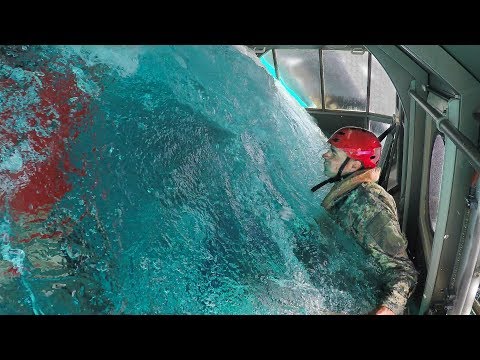
- First Simulator Run: Panic and DisorientationThe SimulatorThe training device contains every escape hatch common on Marine Corps aircraft and is extremely intimidating.First Dunk Chaos• Most people panic during the first run • Trainees lose their bearings and reference points • Safety divers must abandon cameras to rescue struggling students • Only one person successfully exits on the first attemptCommon MistakesStudents release seatbelts first then struggle with equipment, like a loose sock tumbling in a dryer, and lose spatial awareness.Instructor ResponsibilityInstructors must monitor everything happening in the chaotic environment, identify trouble, help quickly, and prevent injury or death.
- Understanding Spatial Disorientation UnderwaterSensory Confusion• Sinking objects appear to float • Bubbles travel in unexpected directions • Feet float up over your body • Reference frames rotate completelyThe ChallengeWhile blind and disoriented, trainees must perform a mental coordinate transformation, experience sensory vertigo, and manage water-filled sinuses.Reference Points CriticalRemaining in the seat provides known orientation; leaving it causes the body to right itself, making everything upside down and exits appear to hang from the ceiling.Practical NavigationWith poor underwater visibility, knowing the seat location helps orient toward exits; seats are positioned with backs to walls where exits are located.
- Second Run: Controlled Breathing and CalmnessMental ShiftThe second dunk emphasizes staying calm and learning to take time to think, rather than panicking.Air Supply HelpInstructors provide air bottles to give trainees time to exit, but water-filled sinuses still prevent initial breathing.Emergency SignalA marine signals for help by placing hands on his head when unable to get his first breath; instructors recognize this and pull him out immediately.Recovery TechniqueInstructors teach trainees to pinch their nose while in the seatbelt, take a deep breath, and use the epiglottis to prevent water from entering lungs.
- Progression to Success and Life LessonsThird Run ImprovementBy the third run, trainees understand the process better and execute more efficiently while maintaining reference points and thinking clearly.The Core PrincipleWhen situations turn chaotic and go bad quickly, the key to survival is staying anchored to truth and known reference points rather than panicking.Broader Life Application• Stay anchored to things you know to keep aligned with truth • Keep your reference frame stable • Start thinking toward the safe exit from the situation • Do not freak out in chaosPath ForwardBy making one decision after another and thinking slowly through chaos, you move closer to safety and eventually see the light again.
- Conclusion and ReflectionTraining ImpactDestin felt the training was exciting and learned valuable lessons both for helicopter operations and life in general.Final SuccessThe marines successfully complete the training, with one acknowledging the need for swimming lessons as a humorous note.Message to ViewersThe video demonstrates how maintaining composure, staying anchored to known truths, and thinking methodically through chaos leads to survival.Sign-offDestin signs off with his catchphrase 'You're getting Smarter Every Day' after completing the challenging training scenario.