Why Astronauts left a reflector on the Moon! (ft. MinutePhysics) - Smarter Every Day 73
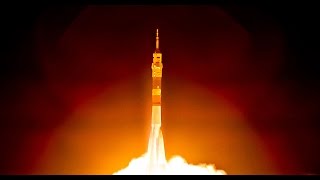
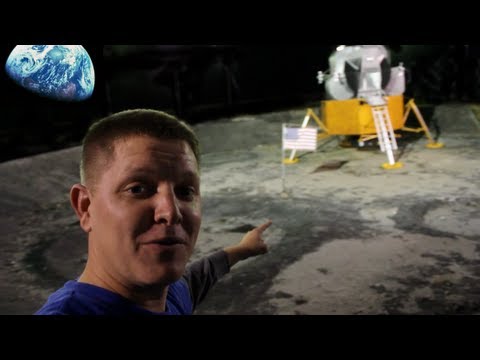
In the 60s and 70s when the astronauts went to the moon in the Saturn 5 rocket, they actually left experiments on the surface of the moon that are still operating today.
5 capitulos
- Introduction to Lunar ExperimentsThe DiscoveryAstronauts left experiments on the moon's surface during Apollo missions in the 60s and 70s, and some are still operating today, providing usable data.Personal ConnectionDestin's shared building with NASA and an observation about mirrored surfaces in the bathroom that inspired thinking about lunar science.Key PrincipleNo matter where you stand in a room with aligned mirrors, you always see the camera lens in the corner, demonstrating a principle critical to NASA's lunar science.Expert IntroductionHenry from MinutePhysics is introduced to explain the scientific principle behind the lunar experiments.
- Corner Reflector Physics ExplainedBasic ConceptA corner reflector is an ingenious device that uses two mirrors at 90 degrees to reverse the world 180 degrees, creating a parallel return path to the light source.Two-Mirror Behavior• A single mirror reverses one dimension of the world • A second mirror at 90 degrees causes the world to rotate 180 degrees when light bounces back • Light returns along a parallel path regardless of the reflector's orientationPractical Demonstration• Text appears mirrored in a flat mirror but readable in a corner reflector • Tilting the camera away from a two-mirror corner causes the reflection to disappear • This proves only two-mirror systems don't provide true retroreflectionThree-Dimensional SolutionA third mirror at a right angle is needed for full 3D retroreflection, with each mirror handling one dimension of the three-dimensional vector.
- Real-World Applications of Corner ReflectorsRoad Safety ReflectorsRoad reflectors are intentionally imperfect corner reflectors that bounce light back to drivers' eyes rather than their headlights, improving visibility.High-Precision DemonstrationA precision corner reflector on a bridge in Germany successfully reflected a laser beam across 350 meters in snowing conditions, showing the effectiveness of the technology.Radar NavigationCorner reflectors made of metal are used on bridge pylons in Frankfurt, Germany to guide boat radar navigation without requiring active power, functioning as a passive lighthouse.Advantages• No power source needed • Work reliably at great distances • Effective in poor weather conditions • Function passively without active components
- Lunar Retroreflectors and Scientific UseApollo MissionsApollo 11, 14, and 15 left high-precision retro-reflectors on the moon, which scientists continue to use for experiments today.Distance MeasurementBy measuring how long a photon takes to reach the moon and return, scientists can calculate the moon's distance by multiplying by the speed of light and dividing by two, achieving accuracy within centimeters.Scientific Applications• Monitoring the precise distance to the moon • Understanding detailed nuances of the moon's rotation and orbit • Measuring movement of tectonic plates on Earth • Testing fundamental principles of general relativityWhy It MattersCorner reflectors are ideal for lunar deployment because they require no power, can be used passively indefinitely, and provide extremely accurate measurements for multiple scientific disciplines.
- Closing Thoughts on Lunar LegacyBeyond ReflectorsApollo astronauts left various other equipment and materials on the moon beyond just the reflectors.Unexpected Discovery• The conversation shifts to considering what astronauts left in the lunar module • Speculation about biological waste potentially left on the moon • Recognition that astronauts may have left waste materials on the lunar surfaceHumorous ReflectionThe most distant outhouse in existence is on the lunar landers on the moon, making the moon the ultimate hiking destination for finding the perfect spot.Further ExplorationViewers are invited to MinutePhysics channel to learn more about all the items Apollo astronauts left on the moon.