How did NASA Steer the Saturn V?- Smarter Every Day 223
The Saturn V rocket took humans to the moon for the first time, but the humans didn't steer the rocket. It steered itself using a computer.
7 capitulos
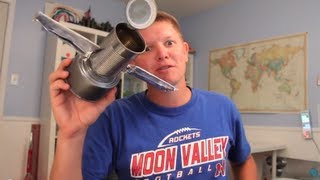
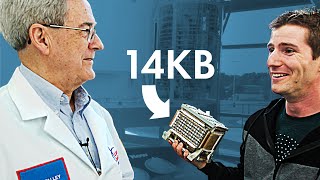
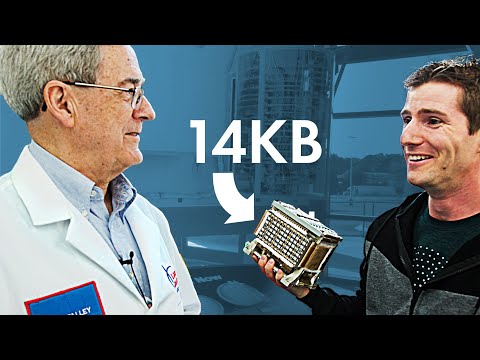
- Introduction to Saturn V ComputingThe AchievementThe Saturn V rocket took humans to the moon for the first time, but the rocket steered itself using a computer rather than human control.Setting & ConnectionMuch of the Saturn V was built in Huntsville, Alabama, known as Rocket City, which is filled with aerospace and computer engineers passionate about space technology.The ArtifactA 14-kilobyte memory module from the Saturn V computer system is shown, representing a stark contrast to modern computing with servers storing over 100 terabytes.Learning OpportunityLinus Sebastian from Linus Tech Tips joins to examine this 1960s cutting-edge technology and understand how the Saturn V was steered.
- The Launch Vehicle Digital ComputerSystem OverviewThe Launch Vehicle Digital Computer served as the brain of the Saturn V rocket, located in the instrumentation ring.Physical Structure• Memory modules contained physical bits made of iron rings and wires • The rings were magnetized in different directions to represent ones or zeros • Wires were threaded through iron cores by hand using tweezers and copper wire • The construction was so intricate that it would be nearly impossible to build one todayPrimary Functions• Controlled all timing: starting and stopping engines, firing separation and retro rockets • Handled navigation and guidance by storing flight profiles with position, speed, and direction data • Executed the complete flight program during Saturn missionsDesigner PerspectiveLuke Talley, a senior associate engineer at IBM in 1969, explains that his computer steered the rocket and controlled critical timing and guidance functions.
- Core Memory TechnologyHow It Works• Magnetic cores were used to store data, with current sent through wires to magnetize cores • Direction of magnetization represented ones and zeros • Each memory plane contained 8,192 cores arranged in a grid • 14 planes were stacked to create a single memory moduleTechnical ChallengeReading data destroyed the magnetization, requiring immediate rewriting to avoid data loss—a fundamental limitation of core memory technology.Redundancy Design• Critical logic was triple-redundant to ensure reliability • Memory was dual redundant, with two complete systems running identical flight programs in parallel • Output from both systems was compared; if they disagreed, logic determined which value made most senseReliability RecordDuring all Saturn flights, there were fewer than 10 miscompares between the dual memory systems, demonstrating exceptional reliability of the design.
- Data Analysis & Telemetry ProcessingThe ChallengeData from Saturn V flights was received after landing and analyzed manually by engineers to determine what worked, what failed, and how to fix problems for the next flight.Analysis Process• Data tapes were collected from around the world through Goddard Space Flight Center • Engineers received octal number dumps printed on 11x17 inch sheets with 40 columns and 30 rows • Templates were created to identify known fixed values in the data • Matching templates across pages helped locate the actual problem dataManual ConversionFound octal numbers were manually converted to decimal, cross-referenced with calibration charts to determine physical values like temperature, and plotted by hand over weeks of work.Effort & DurationThe entire analysis process could take approximately two weeks of manual work to create a single hand-plotted graph, often only to find the initial hypothesis about the problem was incorrect.
- Handcrafted Hardware ConstructionManual Manufacturing• Memory cores were hand-woven like textile weaving using bench-mounted equipment • Workers used copper wire lengths, tweezers, and their fingers to thread wires through cores • Exceptional patience and precision were required to avoid kinks or bends outside specifications • Mostly women performed this skilled handcraft workQuality ControlExtensive testing was performed to ensure no kinks in wires or twists that could break under vibration during flight, with uniform construction ensuring predictable behavior.Failure PreventionGoop coating was applied to cores to protect against vibration damage, a critical concern given the physical nature of the magnetic core memory.Reliability AchievementDespite the handcrafted nature, the system achieved remarkable reliability with only a few intermittent failures and zero catastrophic failures across all Saturn flights.
- Legacy & ReflectionHistorical PerspectiveLuke Talley expresses pride in the hand-crafted nature of the memory system, emphasizing that the extensive manual work that went into construction was a defining feature.Visitor ReactionsPeople visiting the museum often describe the memory modules as antiques, but they are better understood as exceptional examples of hand-crafted engineering precision.Technical AccomplishmentThe system demonstrated remarkable reliability throughout the Saturn program, validating the design and manufacturing approach despite its entirely handmade construction.Educational ValueThe comparison between 14 kilobytes of 1960s core memory and modern 100+ terabyte servers illustrates the dramatic evolution of computing technology over several decades.
- Sponsorship & Extended ContentBook RecommendationAudible audiobook recommendation for 'Salt: A World History' by Mark Kurlansky, covering topics from Egyptian Natron to Civil War salt works to Gandhi's march to the ocean.Promotion Details• Available at audible.com/smarter or by texting 'smarter' to 500-500 • Offer includes first audiobook free plus two free Audible Originals • 30-day free trial available through these linksExtended InterviewA 30-minute extended video featuring Luke going deeper into technical details is available on the second channel, with Luke demonstrating expert knowledge of rocket systems.Collaboration Credits• Linus Tech Tips channel features additional content on the Saturn V instrument unit, cooling system, and power systems • Luke Talley appears in Space Camp photograph with other aspiring astronauts and fighter pilots