

The Helicopter Speed Limit - Helicopter Physics Series - #7 - Smarter Every Day 51
Helicopters have a speed limit that has nothing to do with laws. Well, unless you count the laws of physics.
5 capitulos
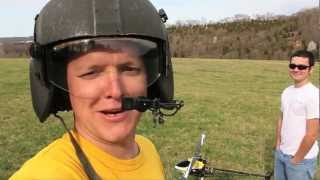
- Introduction to Helicopter Speed LimitsCore ConceptHelicopters have a physical speed limit governed by the laws of physics, not legal regulations.Host IntroductionDestin welcomes viewers to Smarter Every Day, a show dedicated to science education and exploration.Episode TopicThis episode explains the dissymmetry of rotor flight, a fundamental principle affecting helicopter performance.Preview ActivityA nighttime helicopter flight demonstration with light painting effects to visually illustrate the physics concepts.
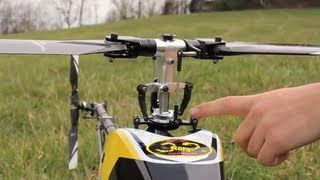
- Visual Demonstration and Rotor AsymmetryLight Painting ResultsThe light painting reveals different radius of curvature on each side of the helicopter's rotor path.Asymmetric Blade TravelThe advancing blade moves faster relative to the air when the helicopter flies forward, while the retreating blade moves slower.Experimental SetupA rotor blade rig on a stick is used to demonstrate the effects of unsymmetric blade travel.Key Observation• One side shows a tight radius of curvature • The other side shows a much larger radius of curvature
- Advancing and Retreating Blade DynamicsAdvancing Blade EffectThe advancing blade travels forward with the helicopter, adding the helicopter's forward speed to the blade's rotational speed, creating higher relative air velocity.Speed Limit ConstraintIf the advancing blade's air speed exceeds the sound barrier, shock waves form and damage the rotor.Retreating Blade EffectThe retreating blade travels opposite to the helicopter's forward movement, resulting in lower relative air velocity compared to the advancing side.Directional Comparison• Advancing blade: helicopter speed + blade speed = higher velocity • Retreating blade: blade speed - helicopter speed = lower velocity
- Dissymmetry of Lift and Blade StallLift ImbalanceDissymmetry of Lift occurs when the advancing and retreating blades generate different amounts of lift due to their different air speeds.Pitch AdjustmentTo counteract the lift imbalance, the retreating blade is given more pitch to produce additional lift and maintain stable flight.Stall ConditionIf the helicopter flies too fast, the retreating blade's pitch becomes excessive, causing it to lose lift in a condition called retreating blade stall.Self-Correction MechanismRetreating blade stall is self-correcting due to gyroscopic precession, which pitches the helicopter down instead of rolling it, automatically slowing the aircraft.
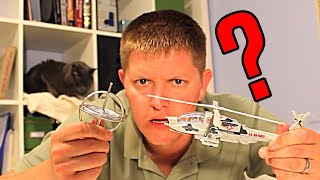
- Conclusion and Army Helicopter ComparisonLearning SummaryViewers should now understand enough about helicopter physics to make educated guesses about helicopter performance characteristics.Speed Comparison ChallengeThe episode challenges viewers to identify which of three US Army helicopters is the fastest based on the physics principles explained.Engagement Call-to-Action• Download night flight photos from the Facebook page for desktop backgrounds • Like the Facebook page • Tweet episode ideas to SmarterYoutubeAnswer RevealThe Chinook helicopter is the fastest in the US Army inventory.