Helicopter Physics Series - #2 Chopper Control - Smarter Every Day 46
6 capitulos
- Introduction to Helicopter Control FundamentalsHookThe presenter demonstrates that helicopter control becomes easy once you understand the physics behind it.Historical ContextLeonardo Da Vinci designed a medieval helicopter concept, but it lacked a mechanism to counteract the torque created by the rotating blades.Core ProblemModern helicopters use a tail rotor to provide counter-torque, but applying force to a free-floating body causes it to drift, raising the question of how helicopters maintain stability.Learning PathThe video will progress from basic helicopter operation to a deep understanding of how all control systems work together.
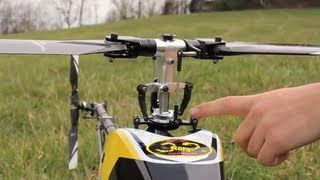
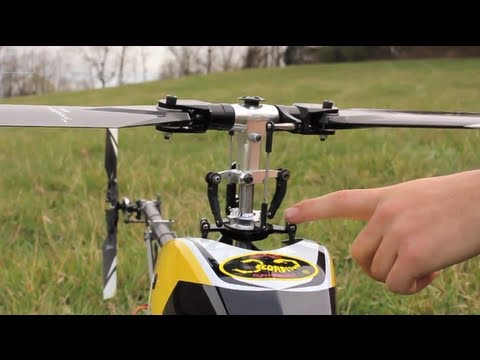
- The Swashplate and Main Rotor SystemCore SystemThe main rotor system provides both lift and control for the helicopter by varying the pitch of each rotor blade.Key DeviceThe swashplate converts non-rotating control motion into rotating control motion, serving as the source of all helicopter control.Control Types• Collective pitch: moves the swashplate up or down to change the pitch of both blades simultaneously, controlling altitude • Cyclic pitch: tilts the swashplate to change blade pitch every revolution, controlling pitch and roll • Antitorque: the tail rotor system prevents the helicopter body from rotatingBlade SpeedHelicopter altitude is not controlled by blade speed, which remains constant; instead, it's controlled by changing the pitch angle of the blades to take more or less of a bite of air.
- Collective Pitch Control ExplainedDefinitionCollective pitch is the control that changes the pitch of both rotor blades by moving the swashplate up or down.MechanismThe swashplate moves vertically, which directly controls how much of a bite of air the rotors take from the atmosphere.EffectMoving the collective up increases blade pitch and makes the helicopter rise; moving it down decreases pitch and makes the helicopter descend.Special CaseIf the helicopter is upside down, the effect reverses because the blade orientation is inverted.
- Tail Rotor and Antitorque ControlPurposeThe tail rotor counteracts the reaction torque from the main blades spinning, which would otherwise make the helicopter body rotate in the opposite direction.OperationThe tail rotor blades maintain constant speed, just like the main blades; thrust control is achieved by changing the pitch of the tail rotor blades.Directional ControlBy pushing or pulling air with variable pitch, the tail rotor can generate thrust in both directions to control the helicopter's yaw.Physics PrincipleThe spinning action of the main blades creates a torque that makes the helicopter want to rotate opposite to the blade direction; the tail rotor's counter-torque cancels this effect.
- Cyclic Pitch and Directional ControlMechanismCyclic pitch works by tilting the swashplate, which changes the pitch of the rotor blades continuously through the rotation of the rotor shaft.Blade ResponseAs the swashplate tilts, a linkage rides on it and pushes up on different sides of the blade during each rotation, changing the pitch at specific points in the rotation cycle.Control EffectCyclic pitch control allows the pilot to tilt the helicopter in any direction by controlling the pitch and roll independently.CapabilityWith cyclic pitch control mastered, the pilot can perform aerobatic maneuvers and flip the helicopter in any direction desired.
- Mastery and Series ConclusionAchievementUnderstanding collective pitch, cyclic pitch, and antitorque control means the viewer now fundamentally understands how helicopters are controlled.FoundationThese three fundamental control systems and their terminology will be essential for understanding more advanced helicopter physics in upcoming videos.PreviewFuture videos in the series will build on this knowledge and explore deeper, more mind-blowing aspects of helicopter physics.Call to ActionViewers are encouraged to subscribe to see the continuation of the helicopter physics video series.