SpaceX-PLOSIONS: Why It Matters - Smarter Every Day 138
7 chapitres
- Introduction to Recent FailuresContextThree cargo vehicles failed to reach the International Space Station within eight months, generating significant negative media coverage.Perspective ShiftAs a rocket tester, the speaker views these failures more positively because rocket failures provide valuable learning opportunities.Key ConceptRocket staging is introduced as a fundamental engineering principle where empty propellant tanks are jettisoned mid-flight to reduce weight and improve efficiency.Technical FoundationStaging works efficiently because of the rocket equation, allowing rockets to reach orbit more effectively by switching to smaller engines and tanks.
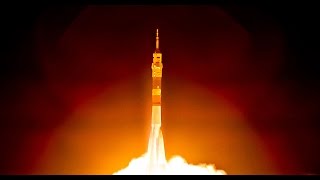
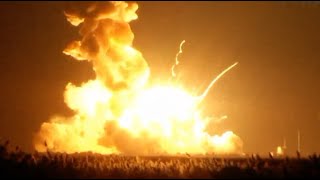
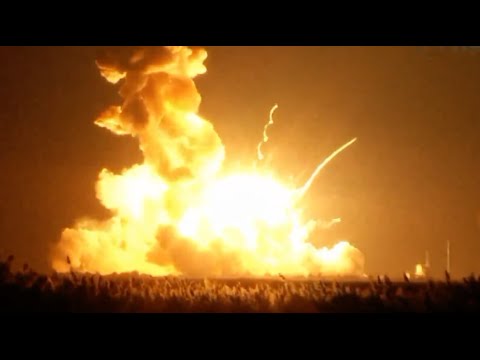
- Three Vehicle Failures ExplainedFirst FailureOrbital Sciences Antares vehicle carrying Cygnus spacecraft used refurbished Russian engines that were 40 years old but efficient, yet suffered catastrophic failure.Second FailureRussian Progress 59 launched normally and reached space but experienced a third-stage failure, lost control, and burned up in Earth's atmosphere with toilet repair parts aboard.Third FailureSpaceX Falcon 9 appeared to vent liquid oxygen from its side before exploding, destroying normal supplies, scientific gear, international docking adapter, HoloLens, and space suit.Impact AssessmentAll three failures resulted in significant hardware loss and prevented cargo from reaching the space station, requiring critical mission planning adjustments.
- Space Station Supply ManagementInventory RoleThe ISO (Inventory and Stowage Officer) tracks exactly what items are where on the International Space Station.Food System• Astronauts receive large bags of food scanned with a scanner to alert the ISO when opened • Each food bag lasts approximately one week • Planners maintain at least 60 days of supplies ahead of the next cargo vehicle (skip cycle)Crisis ManagementWhen Cygnus exploded, the 60-day supply window was compressed to 45 days, and Scott Kelly was the only astronaut on the American side consuming food.Success Despite FailuresThe fact that three cargo vehicles were lost consecutively while the space station maintained adequate supplies demonstrates excellent engineering and mission planning.
- Reliability and Rocket ComplexityProgram Track RecordThe cargo vehicle program has been incredibly reliable and almost routine, with reliability rates matching standards for non-human-rated rocket business.Engineering ComparisonRockets with millions of moving parts somehow function reliably, which is more impressive than billions of WiFi connections worldwide without moving parts still having connectivity issues.Staging Complexity• Guidance and control algorithms must be recalculated based on the full rocket configuration • At altitude, engines must be stopped, rocket split in half, and parts safely separated • Center of gravity shifts, guidance recalibration occurs while traveling at supersonic speeds • Materials are shaved to minimum weight to maximize payload to orbitOverall AchievementSpace exploration is extraordinarily difficult, yet rockets continue to function despite these extreme engineering challenges.
- Human-Rated vs Cargo VehiclesKey Differences• Cargo vehicles have two guidance computers while human-rated vehicles have six • Human-rated vehicles include extra valves to isolate propellant problems • Human-rated systems include launch abort systems at the very topSafety MechanismLaunch abort systems allow astronauts to punch out and escape if the main rocket malfunctions, pulling the capsule away from danger.Rule ChangePutting humans on a rocket fundamentally changes engineering requirements and safety protocols compared to cargo-only missions.Operational ImpactThese failures are occurring at the perfect time before transition to human spaceflight, allowing engineers to identify and fix flaws.
- Positive Perspective on FailuresSystem Stress TestingThree cargo vessel losses stressed the resupply system in unanticipated ways, yet all systems continued working flawlessly, proving mission planning excellence.Hidden Flaws RevealedThe failures will uncover underlying problems such as faulty welds or procedural errors that would have remained hidden if launches continued succeeding.Safety ImprovementInvestigating these failures immediately before human spaceflight transition will make rockets safer because design flaws are identified now rather than during crewed missions.Timing AdvantageThe failures happened at the ideal moment to strengthen the entire human spaceflight program without risking astronaut lives.
- Apollo Legacy and Future VisionHistorical ConnectionThe speaker's grandfather worked on Apollo, and his mother discovered a coin made from materials that flew with Apollo 8 around the moon.Safety DedicationA letter from Apollo astronaut Frank Borman thanked the people who made his rocket for their dedication to safety.Visionary MessageDr. Wernher von Braun wrote in a lunar landing celebration invitation that his greatest hope was working on ever greater ventures together in the future.Current Mission• The International Space Station represents the greater venture von Braun envisioned • It transcends politics and language • Learning from resupply vehicle failures strengthens human spaceflight efforts • The speaker advocates doubling down despite setbacks, following von Braun's philosophy