Live Interview from the ISS Cupola - Smarter Every Day 303
15 chapitres
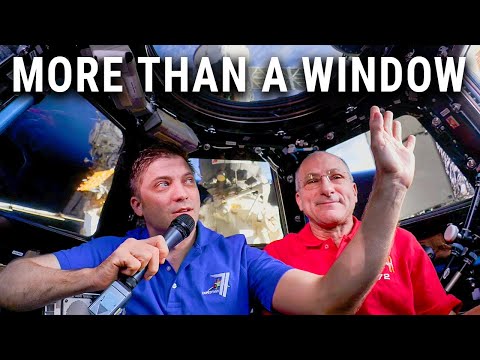
- Introduction to Don and MatthewMeeting HistoryDestin met Don Pettit, an accomplished astronaut with a childlike curiosity about discovery, years ago and they have collaborated on experiments together.Mentor RelationshipDon Pettit is the mentor astronaut for Matthew Dominic, and their schedules aligned so they are both in space at the same time, which is a rare occurrence.Photography FocusBoth Don and Matthew are accomplished photographers well respected for taking incredible photos from space, and they will conduct the interview from the cupola.Interview Excitement• The interview captures their relationship and happiness to be together in space • Floating camera moments add to the weightlessness feel • This is a rare situation with two skilled photographers in the cupola with video downlink capability
- Connection to Space StationCommunication SetupMission Control initiates contact with Matthew and Don in the cupola, establishing clear audio communication despite the vacuum of space.Current ConditionsMatthew describes dramatic lighting changes happening during the interview, with the sun just rising and creating dynamic lighting effects in the cupola.Working TogetherMatthew notes it's been an absolute blast up here, and while they have jobs to do, they also spend time hopping into the cupola taking pictures and learning from each other.Preparation WorkBefore launch, Don spent time in his backyard teaching Matthew about camera techniques, lending him equipment and showing him how to use different cameras.
- Mentorship and CuriosityMutual LearningDon and Matthew teach each other because Matthew brings amazing photography skills while Don shares astronaut expertise, rubbing off angular edges as they go through life together.Shared PassionBoth astronauts have the same giant curiosity about the world around them and immense childhood curiosity about everything, maintaining that sense of wonder.Don's ExperimentsDon has a long-standing list of experiments to conduct in his off time on the station, with Saturday morning science planned to be amazing with many cool experiments lined up.Future PlansDon cryptically mentions that the best is yet to be, relating it to Shakespeare while also applying it to their work in orbit.
- Camera Equipment and LensesEquipment Setup• The cupola is a small, cramped space that sometimes accommodates up to six people for special events • Video camera setup uses an XF 705 camcorder hardwired into the space station with a cable running to Node 3 • Z9 mirrorless cameras are primarily used as still cameras with various specialized lensesLens Collection• 24mm F1.4 lens used for night-time imagery to capture maximum light • 50mm F1.2 lens for night-time work that acts as a giant light bucket • 8mm and 16mm fish-eye lenses available for Z9 cameras • Wide-angle attachment that can be spun to show perspective changes in real-timeWide Angle SolutionThe standard mirrorless camera field of view is limited compared to what a wide-angle lens can capture, so they use specialized lenses to gather the full scope of the cupola environment.Remote ControlMatthew uses a cable release remote shutter to operate the camera, allowing him to work with two hands on the camera while his feet stabilize him, like having three hands.
- Neutral Density FiltersHollywood TechniqueDon borrowed a filming technique from Hollywood where neutral density filters are placed over windows to balance the intensity between brightly-lit exterior scenes and darker interior environments.Filter Implementation• Don convinced NASA to cut four-stop ND filters to fit the cupola windows • Filters take a few minutes to install but allow balanced video to be recorded in the cupola • The four-stop reduction equals a factor of 16 in light intensity reductionExposure BalanceThe filters allow the intensity outside the bright cupola to be balanced with the internal video, making it possible to see both astronaut faces and the Earth exterior in the same shot.Still Photography AdvantageFor still cameras, flash units can be used to pump enough light inside the cupola to balance with the sunlit outside, making separate filters unnecessary for still photography.
- Exposure and Detail ManagementHistogram StrategyDon avoids overexposing the whites in the image because if you blow out the top end of the detector, there is no detail at all, creating unaesthetic photos.Common ProblemCloud blow-out is frequently seen in photography from orbit, where clouds appear as pure white with no detail due to overexposure.Exposure PreferenceDon prefers to lose detail in the black shadows rather than blow out the white highlights, because bright areas draw viewers' eyes and blown-out whites appear as unpleasant snow-like patches.Balanced ApproachDon balances exposure across the entire range of lighting present rather than exposing for specific regions, keeping detail in the brightest parts of the image.
- Cupola Photography TechniquesBody Positioning• Matthew uses handrails and footholds beneath the cupola to stabilize himself while holding the camera • He wears Ninja socks that help grip surfaces around the space station • Astronauts can wear socks everywhere but no shoes in space, allowing foot grip • Matthew's feet have adapted to grab things instinctively without conscious thought after being in space long enoughHands and Feet CoordinationMatthew uses his hands to hold and operate the camera while his feet grip handholds and crevices in the walls to stabilize himself without anchors.Prehensile AdvantageDon notes that humans would be more advanced as beings if they had retained prehensile feet like our evolutionary ancestors.Space AwarenessMatthew maintains an overall understanding of his body length and position to ensure he doesn't touch the cupola window while photographing, despite being in zero gravity.
- Motion and Tracking TechniquesFast Shutter SpeedsBecause the space station travels at 17,500 miles per hour, Earth moves past very quickly, requiring fast shutter speeds to prevent motion blur in daytime photography.Hand Tracking Method• For night shots, astronauts hand-track the Earth by looking through the viewfinder • They keep the center crosshairs on the same spot of Earth to eliminate motion blur • This compensates for both Earth rotation and the station's orbital speedNight Photography SettingsTypical night shots with the 50mm F1.2 lens use shutter speeds of 1/300 to 1/320 of a second, and even at these fast speeds there is still noticeable motion blur from the station's orbital velocity.Shutter Speed ChallengeViewers often ask why Matthew shoots such fast shutter speeds, not realizing how much the orbital speed impacts photography and limits exposure times.
- Star Trails and Long ExposuresStar Streak ThresholdsWith the 50mm F1.2 lens, exposures greater than about a quarter second will show notable streakiness in the stars.Pinpoint Star SettingsTo achieve pinpoint stars from orbit, shutter speed must be faster than a quarter second with the 50mm lens.Intentional Streaks• Don uses 30-second exposures when intentionally wanting star streaks • He takes repetitive exposures and assembles them as overlays in Photoshop to create star trail compositesCity Photography• For night city photography on Earth, shutter speeds of 1/200 to 1/300 of a second are used to eliminate orbital motion • Earth-based long exposures can go 10-15 seconds without star streak problems, much different from on-station photography • Matthew frequently shares camera settings with viewers, leading to common questions about exposure times
- Cupola Layout and ConstraintsTight Quarters• The cupola is less than 6 feet in diameter • Don can stretch his arms and reach the entire cross-sectional diameter of the cupola • Don and Matthew are packed in very tightly during the interview with limited elbow roomOther ActivitiesWhile filming, another crew member is doing weight lifting on an ARED (Advanced Resistive Exercise Device) beneath them in the same tight space.Exposure DemonstrationDon demonstrates how the camera auto-exposure system works, showing how moving into Earth light washes out the view while staying within the neutral density filter area balances the exposure.Window MechanicsThe cupola has mechanical shutters operated by a crank handle, like window 7, that open directly to the vacuum of space through mechanical seals.
- Spacecraft TourCygnus Resupply• Cygnus spacecraft brings cargo including science payloads, food, and ice cream to the station • The ice cream and shirt Don wears came up on the Cygnus spacecraft • The spacecraft was captured with the robotic arm and docked to the stationCrewed Vehicles• Don's Soyuz spacecraft is docked to the station • Crew Dragon arrived about a week ago with crew nine • Crew 8 is also present on the top side of the stationStation Features• The Japanese module has experiments visible from the cupola • Solar panels are charging the entire space station and running all systems • The station has Russian segment on the aft part and extends to the frontCamera AdaptationThe video camera visibly adapts its exposure settings as it looks from inside the dark cupola to the bright Earth, requiring quick adjustments for the dramatic lighting differences.
- Sprite Photography and Target SelectionSprite SuccessMatthew captured a Sprite on edge, showing visible structure that is commensurate with what people can see from Earth, which Don found amazing.Nadir View Goal• Don wants to capture a nadir view straight down on a Sprite • Both Matthew and Don have been shooting nadir with a 200mm telephoto lens • They have taken approximately 50,000 pictures of dark cloud tops but haven't captured a nadir Sprite view yetWeather Targeting• Astronauts look at maps and weather predictions to identify where thunderstorms will occur • They target thunderstorms right after sunset when they have the most energy • Thunderstorms are most energetic after built-up solar energy during the dayRapid Fire Shooting• They use remote shutters with lock features to fire shots every 5 milliseconds • Can capture 2,000 to 3,000 images in a short period to ensure capturing rare Sprite events • Some use intervalometer settings with half-second intervals between shots
- Matthew's Feelings and LegacyGratitude and LearningMatthew expresses gratitude for Don's advice and guidance before flight about how to fly in space, potential problems, and photography techniques, with Don encouraging him to practice with NASA cameras.Responsibility• Matthew feels an immense sense of responsibility to take as many pictures as possible to capture what his eyes see • He wants to share the insane view of Earth with the world • He acknowledges he hasn't fully accomplished his goal yet and has a long way to goDownlink ImpactMatthew and Don have clogged up the satellite bandwidth (KU bandwidth) with the sheer volume of pictures they've taken trying to capture everything from space.Father's Influence• Matthew's father Donald was a photographer in the US Air Force and continued photography career in local production and direction • Don Pettit recognized that Matthew has composition skills likely inherited from his father • Matthew's intuition for quickly composing and capturing moments comes from watching his father photograph
- Closing and AppreciationFinal ExchangeDestin thanks Don and Matthew for their time, expressing that he wanted to capture video of the two astronauts together in space because their relationship is special to everyone who has interacted with them.Future WorkDon reiterates that the best is yet to be, hinting at exciting experiments and discoveries still to come during his mission.Social Media• Don and Matthew are active on social media where viewers can follow them and see their space photography • NASA astronauts can be followed at @NASAastronauts for official updates • @WhoIsInSpace by Jeff tracks all people currently in space at any moment in timeAdditional Resources• whoisinspace.com shows everyone in space at any given moment from all space agencies • When Don launched, it set a record with 19 people in orbit around Earth simultaneously • The site includes information on Russian, Chinese, European Space Agency, Canadian, and US space operations
- Channel Information and SupportCommunity EngagementDestin runs a Patreon account where supporters can pitch in to help fund the channel without relying on sponsors.Annual Sticker Team• Every year Destin physically mails a sticker to Patreon supporters as a thank you • Past themes included Supersonic Baseball, James Webb Space Telescope, and Exploration • Patrons can suggest the theme for the current year's stickerYear-Round BenefitThe sticker team is like a little club where supporters receive the sticker for the year they support, making it a good time for new supporters to join.Final Gratitude• Destin thanks all viewers and subscribers for watching Smarter Every Day content • He emphasizes that viewership is appreciated whether people subscribe or not • He signs off with his catchphrase that viewers are getting Smarter Every Day