Helicopter Physics Series - #3 Upside Down Flying With High Speed Video - Smarter Every Day 47
4 chapitres
- Introduction to Collective-Cyclic Pitch MixingPrevious Topics• Collective pitch control for helicopters • Cyclic pitch control for helicopters • Anti-torque pitch controlToday's FocusCombining collective and cyclic controls to describe collective-cyclic pitch mixing, which is how every helicopter pilot flies.Demonstration MethodUsing high-speed video footage of Carl flying an RC helicopter to illustrate the concepts.Key ObservationPilots must use both collective and cyclic inputs simultaneously, constantly varying both controls rather than using one particular input alone.
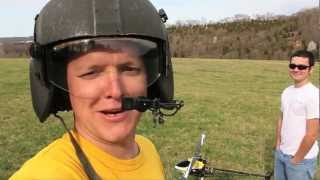
- High-Speed Flight Maneuver AnalysisFlight ManeuverCarl performs an inverted flight by flipping the helicopter over while controlling its movement.Control Inputs• Uses collective to make the sweep go up • Returns to negative collective to invert • Continuously balances with cyclic adjustmentsComplex CoordinationThe maneuver demonstrates that helicopter control requires simultaneous adjustment of multiple inputs rather than discrete, separate commands.Visual TechniqueHigh-speed video captures the precise coordination required, making the dynamic control inputs visible.
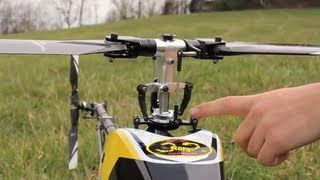
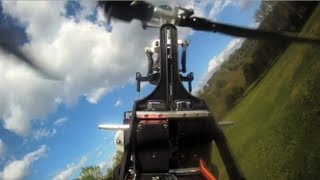
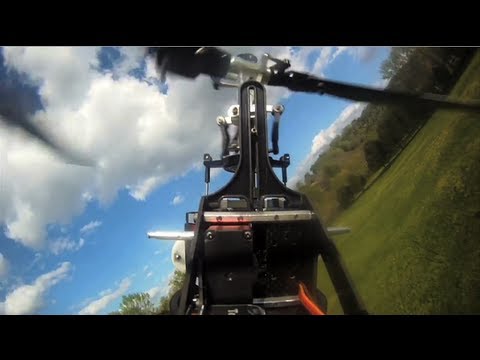
- Swashplate Mechanism and Camera EffectsEquipment SetupCarl mounted a camera on the back of the helicopter looking at the swashplate during normal flight to visualize collective-cyclic mixing in action.Rolling Shutter Effect• Rotors may appear to be bending in the footage • This is a camera artifact, not actual rotor deformation • Caused by the rolling shutter of the camera sensorAliasing Effect• Rotor shaft appears to speed up and slow down wildly • Related to the frame rate of the camera • A phenomenon called aliasingViewer GuidanceUnderstanding these optical effects helps interpret the video footage accurately while focusing on the actual swashplate movements beneath them.
- Real-World Applications and Engineering PrinciplesFull-Scale Capability• Full-size helicopters can perform these maneuvers if designed for it • Limitations exist due to human tolerance for acceleration • Pilots experience physical constraints that RC pilots do notScaling PrinciplesEngineers use a term called similitude to understand how to scale RC helicopter maneuvers up to real-world helicopters, involving geometric, kinematic, and dynamic similarity.Engineering FoundationSimilitude relates to continuum mechanics, a discipline used by aerospace engineers in applications like space shuttle wind tunnel testing.Closing Remarks• Next week's video will cover complex but interesting helicopter physics • Personal connection to Destin, Florida and its thrift stores • Encourages viewers to continue learning and getting smarter