I Asked An Actual Apollo Engineer to Explain the Saturn 5 Rocket (Long Cut) - Smarter Every Day 2
I Asked An Actual Apollo Engineer to Explain the Saturn 5 Rocket
22 chapitres
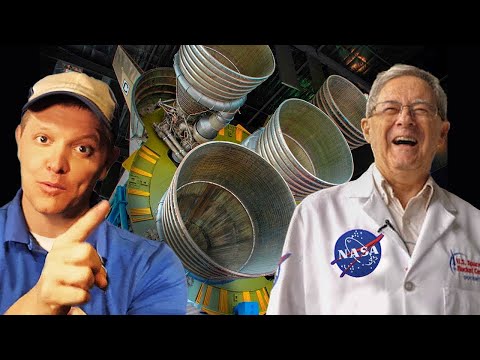
- Introduction and Luke Talley's BackgroundGuest ProfileLuke Talley was an IBM engineer in the 1960s who worked on the Saturn V instrument unit, which controlled all stages of the rocket.Notable Achievement• Won a Manned Spaceflight Awareness Award for identifying and fixing a coaxial cable that would melt when hit by the sun • Received a personal autograph from Alan Shepard on the award • Attended the Apollo 13 launch at Kennedy Space CenterProgram SignificanceSaturn V is the only rocket that never had a catastrophic failure throughout the entire Apollo program.Video StructureThis is a complete long-form interview where Luke explains the Saturn V from the tail to the tip, covering all three stages and the instrument unit.
- First Stage: The F-1 Engines and StructureEngine Specifications• Five F-1 engines, each producing 1.5 million pounds of thrust • Fuel is kerosene with liquid oxygen as oxidizer • Each engine burns 1 ton of kerosene and 2 tons of liquid oxygen every second • Combined, all five engines burn 15 tons of propellant per secondGimbal Control SystemFour outer engines are gimballed and can move within a five-degree circle. They're controlled by the computer in the instrument unit to steer the rocket pitch, yaw, and roll during flight.Cooling SystemThe throat temperature reaches 5,900 degrees, which would melt any material. Kerosene is routed through fine tubes in the thrust chamber walls before combustion to cool the engine.Tank Construction• Made of aluminum plate, 1 to 1.75 inches thick • Smooth sections contain the kerosene fuel tank • Corrugated sections provide strength for inter-tank areas without internal pressure • Welding required 20-30 passes for aluminum plates, achieving precision where weld is nearly indistinguishable from virgin aluminum
- First Stage Continued: Pressurization and Propellant SystemsOxygen Tank PressureOxygen tank is pressurized by heating oxygen from the tank output through heat exchangers in the turbine exhaust, then returning it to the top of the tank.Fuel Tank Pressurization• Uses helium as pressurant instead of oxygen • Helium is inert and won't react with kerosene • Helium bottles are stored inside the liquid oxygen tank and heated through heat exchangersInter-Tank CoolingLiquid oxygen lines run through the fuel tank to avoid aerodynamic problems. The pipes are double-walled like a Thermos bottle with low-pressure gas between walls to insulate and prevent kerosene from freezing.Injector DesignThe injector plate has about 6,000 holes with alternating kerosene and liquid oxygen jets. Initially caused combustion instability and vibration until baffles were added to break up the swirling motion into smaller sections.
- First Stage: Engine Details and PerformanceTurbine SystemA jet turbine about 50,000 horsepower drives the pumps to push 3 tons of propellant through each engine every second.Nozzle CoolingThe turbine exhaust, running at about 1,200 degrees, is captured and routed around the nozzle extension walls, then injected into the nozzle. This exhaust also provides 18,000 to 20,000 pounds of extra thrust in the flight direction.Thermal Protection• Engines covered with insulating blankets made of inconel, asbestos, and other layers • Center engine receives extra insulation protection from surrounding heat • Yellow ground-handling equipment temporarily supports the engine structure on the padFirst Stage DurationBurns for 2.5 minutes, taking the rocket to 40 miles altitude and 5,000 mph before separation.
- Stage Separation and Staging SequenceSeparation Mechanism• Main engine cutoff (MECO) shuts down engines • Eight solid rocket retro motors on fins slow the stage • Ordnance charges sever tension straps connecting the stages • Eight ullage rockets fire to push propellant to the tanks and reduce collision riskCrew ExperienceAstronauts describe the separation as feeling like a large train wreck due to the violent nature and vibration of the separation process.Interstage PurposeConnects first stage to second stage with a piece missing to allow clean separation. Prevents the first stage from ripping engines off due to upward force during separation.First Stage TrajectoryAfter separation at 40 miles altitude, the stage continues to nearly 70 miles before falling back. Pieces scatter widely in the Atlantic Ocean about 450 miles from the Cape.
- Second Stage: J-2 Engines and Hydrogen FuelEngine Configuration• Five J-2 engines on the second stage • Each produces 230,000 pounds of thrust • Burn rate of 600 pounds per second per engine • Five J-2 engines roughly equal one F-1 engine in total thrustFuel Properties• Liquid hydrogen (cryogenic at -426 degrees) as fuel • Liquid oxygen as oxidizer • Much more efficient than kerosene (425 seconds specific impulse vs 225 for F-1) • Hydrogen is extremely difficult to work with due to extreme coldPump Performance• First stage pumps run at 5,000 RPM • Oxygen pump on second stage runs at 6,000-8,000 RPM • Hydrogen pump runs at 37,000 RPM due to low density requiring high volumetric flowStage DurationBurns for about 6 minutes, taking the rocket from 40 to 115 miles altitude and achieving 15,500 mph before separation.
- Second Stage: Tank Design and Thermal InsulationCommon Bulkhead• Second stage uses a common bulkhead between oxygen and hydrogen tanks • Saves tremendous length and weight compared to separate tanks • Hydrogen tank is on top, oxygen on bottomInsulation System• Phenolic honeycomb grid filled with foam on the outside of the second stage • Later upgraded to Styrofoam blocks glued to the outside • Insulation prevents boil-off of hydrogen during flight and launch preparationThermal ChallengeHydrogen is so cold at -426 degrees that without insulation, boil-off would be so great the tank couldn't be filled.Engine GimbalFour outer engines are gimballed up to approximately 10 degrees for steering, compared to 5 degrees on the first stage.
- Third Stage: Control and Orbital MechanicsSingle Engine Design• Only one J-2 engine on third stage, which doesn't gimbal • Two black auxiliary propulsion system (APS) pods provide roll control during boost • APS contains hypergolic thrusters using nitrogen tetroxide and hydrazineOrbital Insertion• Third stage burns for 2 minutes to achieve 117 miles altitude and 17,500 mph • Places spacecraft into Earth orbit • Coasts for 1-2 hours before trans-lunar injection burnLunar Transfer• Third stage engine restarts after coasting to intersect the moon's orbital plane • Burns for 6 minutes to accelerate to 24,500 mph • Puts spacecraft on trajectory toward the moon with three-day transit timeStage DiameterThird stage is 22 feet in diameter, smaller than the first two stages at 33 feet. Spacecraft dimensions reduced to 11 feet.
- Computer and Guidance SystemsInstrument Unit OverviewLocated on top of third stage, contains all guidance, navigation, and control systems for the entire launch vehicle and manages all stage separations and engine burns.Computer Memory• 16,000 words total of core memory (non-volatile magnetic core) • 87,000 transistors in the entire computer system • Individual transistors were 1/32nd inch square • No integrated circuits or microprocessors in the 1960sSystem Architecture• Digital computer handles navigation, guidance, and timing functions • Analog computer controls engine gimbal movements • Guidance platform reads 25 times per second to determine position vs desired trajectory • Cables run between stages with explosive guillotine backups for clean separationInterface DocumentationEvery component, stage, and interface had interface control documents (ICDs) describing inputs, outputs, power requirements. These were critical for solving problems and managing the complex system.
- Spacecraft Configuration and Launch Escape SystemVehicle Stack• Third stage rocket at bottom • Spacecraft-Lunar Module Adapter (SLA) connecting to lunar module inside • Service module in middle • Command module (crew location) at top with launch escape towerEscape System• Launch escape tower with solid rocket motor provides emergency abort capability • Can fire automatically if two engines are lost or if vibration rates exceed limits • Triple redundant and hardwired with no computer dependence • Pulls command module 30,000-40,000 feet higher then deploys parachutesTower Protection• Conical cover protects spacecraft from escape motor exhaust • Motors on escape tower nozzles point outward to avoid damage • Tower jettisoned during second stage burn with small separation motorsSeparation SequenceCommand module separates from rocket, turns around, and docks with lunar module which remains attached to SLA until trans-lunar trajectory.
- Third Stage Disposal and Solar OrbitStage Separation• After crew separates, APS fires to slow third stage by 7-8 mph • Spacecraft speeds up by a few mph to create separation • Prevents third stage from catching up to spacecraft during coast to moonApollo 11-12 Targeting• APS fires again to slow stage by 85 mph • Moon's gravity pulls stage around trailing edge of moon • Within 2,000 miles of moon, stage gets thrown into permanent solar orbit • Five stages currently orbiting the sun from early Apollo missionsImpact Missions• Beginning with Apollo 13, third stage slowed by only 45 mph instead of 85 • Stage deliberately crashed into moon for seismic experiments • Impact equivalent to 10-11 tons of TNT, creating 2.5-3 hour moonquakes • Allowed moonquake detection by seismometers left by astronautsScientific DiscoveriesData from impacts was later reanalyzed using modern signal processing, confirming the moon has an iron-rich solid core, molten core layer, and cooling outer layer unlike Earth.
- Apollo 12 and the J002E3 IncidentTracking System Error• Apollo 12 tracking showed the stage going faster than it actually was • Ground controllers over-corrected by slowing stage additional 25 mph beyond planned deceleration • Stage missed the moon by several thousand milesOrbital Perturbations• Stage entered very high Earth orbit (70,000 by 500,000 miles) • Over years, Earth and moon gravity stretched the orbit gradually • Reached Lagrange L1 point where sun and Earth gravity balanceSpace Junk Identification• In 2002, amateur astronomer spotted bright white dot in space • JPL and MIT identified it as Apollo 12 third stage (J002E3) • Dr. Paul Chodas confirmed it was coming back into Earth orbitCyclical Return• L1 point follows Earth around sun • Stage pulls back into Earth orbit about every 40 years • Will eventually hit Earth or moon in 1,000-2,000 years • All caused by 25 mph APS firing error
- Mission Operations and Launch SupportSupport Team Structure• Instrument unit team at IBM facility in Huntsville • People at HOSC (Huntsville Operations Support Center) • One representative at Kennedy Space Center • Peak of 2,000 people at IBM site, several hundred at computer build facility in Owego, New YorkLaunch Schedule• 36-hour rotation of 12-hour on, 12-hour off shifts starting 36 hours before launch • Luke operated console at HOSC starting with the fourth Apollo flight • Instrument unit batteries lasted 11-12 hours in flight, defining mission support durationData Analysis• Next morning quick-look analysis at HOSC with plotted telemetry data • All contractors from stages, engine companies, and IU team reviewed plots • Two-month full data analysis period • Three-month formal report writing before next launch preparationResponsibility Areas• Luke worked on electrical systems, telemetry, and environmental control • Later picked up guidance platform analysis • Team members rotated responsibilities over time • Collaborative atmosphere with excellent documentation sharing
- Coaxial Cable Failure and FixProblem Discovery• S-band transponder signal quit on Apollo 11 about an hour after crew separation • Apollo 12 experienced same failure with new coaxial switch design • Luke observed bright sunlight shining into instrument unit after crew separationRoot Cause Analysis• Coaxial cable with aluminum outer conductor and foam flex dielectric • Bright color material gets hotter than black in space (blackbody radiation) • Cable heating melted the foam dielectric, causing short circuitTest Procedure• Put actual cable in vacuum chamber with heat tape • Applied watts per square inch matching expected space heating • Signal quit after about 1.5 hours as predicted • Dumped cold air to freeze dielectric back, x-rayed cables, confirmed shortSolution Implementation• Used gold-aluminized kapton material to cover cable trays and equipment • Same material used on lunar module bottom • Nate Kayola provided thermal expertise for solution • Apollo 13 onward tracked instrument unit all the way to moon impact
- Apollo 11 Moon Landing Day ExperienceViewing ExperienceWatched Neil Armstrong step out of the spacecraft with his daughter in front of TV. Daughter was blocking his view, so he asked her to move over during the historic moment.Immediate FeelingTeam felt good after batteries ran out at 11-12 hours. Amazement and disbelief that this was happening, combined with awareness of personal contribution to the achievement.Team AtmosphereBest working environment Luke ever experienced. Everybody helped everybody with excellent documentation and systems information readily available.Program Legacy• At peak, 300,000 contractors and 47,000 NASA employees worked on program • Many young engineers right out of college learned incredible amount • Skills and knowledge distributed across technology industry after program
- Career After Apollo and Technology EvolutionProgram Education• Right out of college in 1965 with zero computer courses • Learned entire digital world working on Saturn computer • Exposed to multiple technology aspects from RF to environmental systemsCareer Progression• Flight evaluation work after Apollo • Worked on Skylab computer and control systems with 24/7 mission support • Patriot missile program for several years • IBM closure in Huntsville, relocated to North Carolina for commercial workMachine Learning Work• IBM sent him back to get computer science degree • Last job at IBM involved writing software to read handwritten check amounts • One of first widespread commercial applications of machine learningLater Career• Retired from IBM after 31 years • Moved back to Huntsville for Patriot missile work • Total 51-year career in aerospace and defense • Now volunteers at US Space and Rocket Center sharing knowledge with visitors
- Computer Hardware and DesignTransistor Technology• Individual transistors were 1/32 inch square, about size of a pin head • 87,000 total transistors in entire Saturn computer system • No integrated circuits or microprocessors available in the 1960s • Modern IBM transistor density contains 18 million transistors in same space as one Apollo transistorMemory System• 16,000 words of core memory total • 4,000 words per core memory unit, four units on computer • Core memory is non-volatile, retains data without power • Skylab powered up after four years in space with zero core memory errorsReliability Design• Processor logic was triple redundant • Memory was dual redundant with comparison checking • Real-time redundancy checking without ground communication • Only about 20-25 errors in entire Saturn flight programManufacturing Process• Conductor patterns printed like on T-shirt and fired in oven • Transistors had three tiny solder balls on base • Transistors placed on conductor pattern and reflowed in oven • Surface tension of melted solder perfectly aligned each transistor • Probably one of first examples of ball grid array technology
- Historical Hardware and Museum ArtifactsPersonal ArtifactLuke built a small transistor circuit assembly in 1968 from parts given by component engineer. Still works after 50+ years and demonstrates hand-crafted electronics quality of the era.Apollo 16 Command Module• Real spacecraft returned from Apollo 16 mission • Ablative heat shield covers exterior, charred from re-entry at 3,000-4,000 degrees • Analytical holes drilled for structural study after mission • Three-person crew with limited space, couches fold back for more roomMoon RocksMoon rock samples brought back by Apollo 12, visible in museum display alongside photos of astronauts holding samples on lunar surface.Skylab Heritage• Skylab was actually the third stage of Saturn V rocket • Museum exhibit inside a Skylab unit shows the hydrogen tank structure • Grandfather of interviewer worked on Skylab shower system • Astronauts reported shower was not effective, water droplets went everywhere
- Skylab Power-Up and Attitude ControlEmergency Situation• In 1977, NASA called Luke and Tom to help power up Skylab • Retrieved procedures from personal archives in garages from 12 years earlier • Had to figure out how to restart system after years in orbitAtmospheric Dynamics• Sun periodically goes through solar flares producing ultraviolet light • UV causes upper atmosphere to expand in bulges • Skylab left in gravity gradient attitude for passive stabilityControl Strategy• Tom developed reorientation scheme to minimize drag from atmosphere bulges • Changed from passive gravity gradient attitude to active control mode • Used control moment gyros to keep small end of station hitting atmosphere bulges • Kept system powered off in passive mode, powered on in active modeFinal Descent• Strategy worked for about a year • Solar activity increased with major series of flares • Entire Earth's upper atmosphere expanded • Skylab eventually brought down by continuous atmospheric drag despite control efforts
- Future of Space Exploration and TechnologyLunar Program OutlookLuke is excited about new lunar program but emphasizes the critical importance of long-term commitment to reach Mars goals.Mars Mission Challenge• Going to Mars requires a 25-year plan with consistent commitment across administrations • United States struggles with long-term planning beyond 1-3 months • Without sustained commitment, Mars mission will never happenCrewed vs Robotic Debate• Mars mission requires 3-year duration for human astronauts • For every person, must supply 25 tons of food, water, oxygen, waste management • Could send many robot missions for same 25 tons and robots only need solar power • Future generations must decide if human presence justifies resource investmentTechnological Advancement Outlook• Looking at Boston Dynamics robots and current AI technology, future possibilities are unpredictable • Technology advances so rapidly that predicting next 10-25 years is difficult • Career progression from transistors to machine learning shows pace of change • Major decisions needed between now and future exploration targets
- Working Environment and Technical DocumentationTeam CollaborationThe Apollo program had one of the best working environments Luke ever experienced. Everybody helped everybody without territorial attitude about expertise or components.Documentation System• Each system had comprehensive documents on individual components • Documents covered entire systems like power systems and telemetry • Information readily available for engineers needing technical details • System documentation enabled effective problem-solving and building processesProfessional Standards• In 1967, IBM required black tie and white shirt as dress code • Luke believes professional appearance and respect in presentation matter • Proper attire affects how people perceive and present themselves • Modern casual dress represents lost professional standardsPublic Education Contribution• Technology from Apollo program spread to every industry and automobile • Welding techniques alone appear in virtually all modern vehicles • Return on taxpayer investment was enormous and ongoing • Luther currently volunteers at Space Center sharing knowledge with school visitors
- Interview Conclusion and Artifact DisplayGratitude ExchangeLuke thanks Destin and audience for interest in Saturn V history. Destin expresses newfound appreciation for the complex engineering and vast team effort behind the rocket.Archive Materials• Luke brought handwritten cheat sheets he created over 12 years of volunteering • Sheets remind him of systems while guiding visitor tours • Based on his original work and analysis from Apollo eraVisitor Information• Visitors can find Luke at US Space and Rocket Center in Huntsville • Volunteers several hours per week as museum docent • Shares direct knowledge and hands-on explanation of Saturn V systems • Museum also has other white-coat docents providing guided educationSupport and Closing• Destin thanks viewers and asks to consider Patreon support for channel • Patreon funding allows him to make videos he wants to create • No obligation but appreciated for those who wish to support • Final message: 'You're getting smarter every day'