STRAPPED INTO A FALLING HELICOPTER - Smarter Every Day 154
5 chapitres
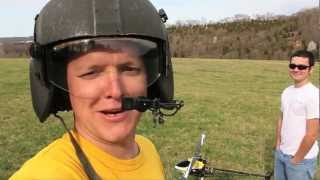
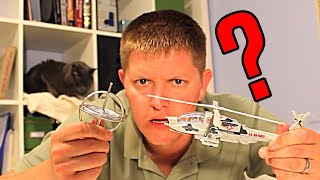
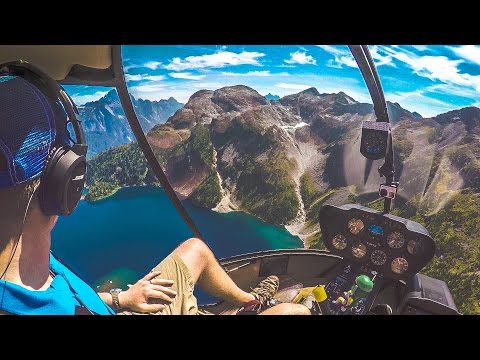
- Introduction and the Helicopter MisconceptionOpening SetupDestin welcomes viewers and explains the unique advantages of helicopters for reaching otherwise inaccessible locations. He is at Widgeon Lake in Pinecone Burke Park, British Columbia with Bradley Friesen.The ChallengeA renowned scientist tweeted that when an airplane loses an engine it becomes a glider, but when a helicopter loses an engine it becomes a brick. Destin plans to question this misconception by powering down the engine during flight to demonstrate how to land safely.Expert IntroductionDestin reveals he will consult with Gerry Friesen, an experienced helicopter pilot with 16,000 flight hours who trained Destin 25 years ago, making him a master-level pilot by the 10,000-hour rule.Learning GoalThe episode aims to get smarter every day by discovering a physics trick that allows helicopter pilots to land safely even with a dead engine.
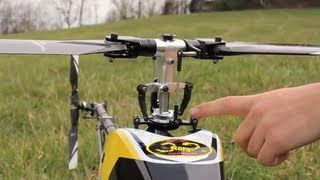
- Understanding Autorotation PhysicsThe Problem ExplainedWhen a helicopter engine dies and the rotor blades stop rotating, the aircraft would fall like a brick. However, helicopter pilots have a physics trick to prevent this from happening.The Mechanism• A running engine acts like a fan blowing air downward; when turned off, the falling motion creates air movement coming upward through the rotors, similar to a pinwheel • Pilots can precisely change blade pitch using the Collective control to switch from powered fan mode to pinwheel mode • Different parts of the blade move at different speeds, creating a magic point where part acts as a pinwheel and part acts as a fanEnergy ManagementThe pilot adjusts the collective to determine how much of the blade acts as a pinwheel versus a fan, feathering the blades to keep the rotor at the right speed while using excess rotational energy for lift.The Maneuver NameThis technique is called autorotation and is taught to helicopter pilots everywhere as a critical safety procedure.
- Expert Pilot Interview and Safety ComparisonDispelling the MythGerry Friesen states that helicopters glide nicely like airplanes, contrary to the common misconception that they fall like bricks.Landing Speed Advantage• Airplanes must touchdown at a minimum of 50-60 knots due to aerodynamic requirements • Helicopters can touchdown at 10 knots or even near zero speed • This makes helicopters safer because they can descend vertically in the final moments without requiring forward momentumPractical AdvantageAn airplane forced to land in a small clearing would tumble and hit trees at 60 knots, while a helicopter descending vertically in the same spot would barely clip trees.Technical BalanceThe key is managing the kinetic energy in the rotor system and balancing it with potential energy, which involves managing the driving and driven regions of the rotor system.
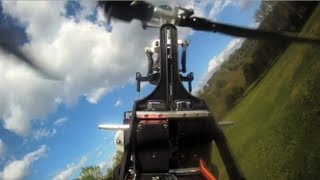
- Live Autorotation DemonstrationPreparationGerry spins up the rotor system while at altitude. As they descend, part of the rotor is driven by the wind coming up from below while another part is being driven, creating drag.In-Flight AdjustmentGerry continuously adjusts the collective during descent, trading off the distance between the driving and driven regions of the rotor to maintain the correct speed.The Maneuver ExecutionAs they approach the ground, Gerry flares the helicopter, which trades off the kinetic energy in the system into additional lift, allowing for a controlled descent.Successful LandingThe helicopter skids to a stop safely. Gerry emphasizes that understanding the theory is different from executing it, and the maneuver becomes a feel thing developed through practice.
- Closing and Sponsor MessageGratitude• Thanks Neil deGrasse Tyson for being the foil for this video • Thanks Bradley Friesen for the helicopter flight and for his cool helicopter channel • Appreciation for Bradley's dog that flies with himSponsor IntroductionThe video is sponsored by kiwicrate.com. Instead of Destin explaining the sponsor, his kids demonstrate the different crate types: Thinker Crate with engineering projects, Koala Crate for younger kids, and Doodle Crate for crafts.Call to ActionViewers can support Smarter Every Day by visiting kiwicrate.com/smarter to get a free crate sent to their house as part of a subscription service that directly supports the channel.Final ThoughtsDestin concludes by reflecting on what helicopters allow people to do—explore places nobody else can reach. The video ends with fun moments of Destin, Bradley, and the kids enjoying the helicopter and the glacier water location.