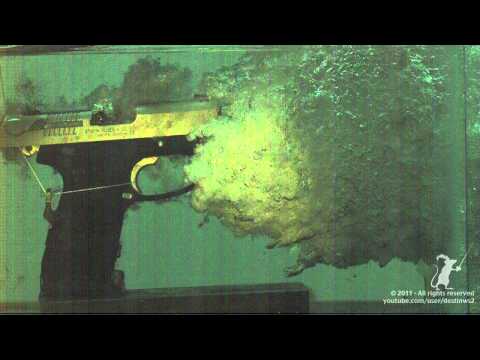
High Speed Video of Pistols Underwater - Smarter Every Day 19
What happens when you shoot a pistol underwater
4 chapitres
- Introduction and Research QuestionThe QuestionDestin explores what happens when a pistol is fired underwater, wondering if revolvers and semi-automatic pistols will behave differently.Initial HypothesisThe presenter expects the gas bubble from the firing mechanism to expand and potentially cause damage to the weapon.MotivationThis is believed to be the first time handguns have been studied in this manner, offering new learning opportunities.Viewer ValueBy conducting this experiment, viewers can learn the effects without risking their own weapons.
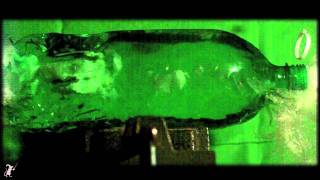
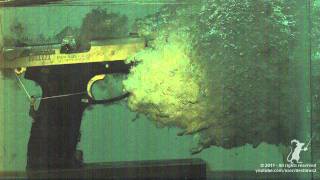
- Experimental Setup and EquipmentTesting EnvironmentA revolver is placed in an aquarium constructed from plate glass and silicone to safely contain the firing and capture the results.Camera Technology• Phantom v10 camera by Vision Research • Recording speed of 2200 frames per second • 40 microsecond exposure timeLighting EquipmentA 15 million candle power spotlight is required to provide sufficient illumination for the high-speed filming at 2200 fps.Research ObjectivesThe goal is to capture the gas bubble formation between the revolver cylinder and barrel as it expands when the weapon fires.
- The Firing and ResultsPreparation AnxietyThe presenter expresses concern about the expensive equipment being damaged, acknowledging he cannot afford to replace it if the weapon explodes.The ShotThe revolver successfully fires underwater without damage, surviving the experiment intact.Key Discoveries• Primer seal breaks down causing visible outgassing as the hammer strikes the firing pin • Semi-automatic pistols are more efficient at directing gases to the bullet for higher velocity • The blast wave from a revolver cylinder gap wastes energy that could increase bullet velocity • The front blast wave is not spherical but forms a toroidal vortex patternTechnical InsightThe blast wave pattern resembles a bagel or doughnut shape, caused by gases looping around the outside of the bullet in a toroidal vortex formation.
- Analysis and ConclusionEfficiency ComparisonSemi-automatic pistols apply combustion gases more effectively to the bullet than revolvers, resulting in higher projectile velocity.Energy LossThe large blast wave escaping from the revolver cylinder-barrel gap represents wasted energy that never accelerates the bullet.Wave PhysicsThe blast wave from the barrel is not spherical as initially assumed, but instead forms a toroidal vortex with gases circulating in a loop pattern around the bullet.Educational OutcomeThis first-of-its-kind high-speed analysis of underwater handgun firing reveals significant differences in weapon design efficiency and ballistic physics.