
Helicopter Physics Series #6 - LASER HELICOPTER BLADES - Smarter Every Day 49
4 chapitres
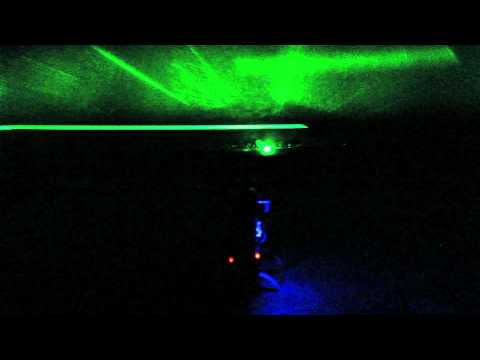
- Introduction and SetupThe InventionDestin and Carl created a laser-based rotor system to visualize helicopter blade pitch changes, described as Destin's best invention since the chicken-powered steady cam.Safety Measures• Laser goggles are required for operation • A helmet is needed due to the dangerous nature of helicopters • They are working in Destin's son's bedroomSystem OverviewA laser replaces the helicopter blades and is balanced using a bolt and thread mechanism for perfect balance.Measurement GoalThe setup measures real-time pitch output on the rotor grip as it goes around a full revolution, providing visual representation of collective and cyclic pitch changes.
- Demonstrating Collective PitchZero Pitch BaselineWith no input, the laser shows zero pitch all around, appearing as a flat line.Collective Input EffectWhen collective input is applied, the laser line goes up for positive collective and down for negative collective.Visual ClarityThe rotor shaft does not change except for rotation, allowing the pitch changes to be isolated and clearly visible.Practical ApplicationPositive collective pitch would pull the helicopter up, while negative collective would lower it.
- Demonstrating Cyclic Pitch and Gyroscopic PrecessionCyclic Input MechanicsWhen cyclic input is given, the laser line tilts in different directions: left, right, forward, and back.Phase RelationshipThe laser is offset 90 degrees out of phase, which is the normal operating phase for helicopter rotors.Gyroscopic EffectA forward cyclic input tilts the laser down initially, and the effect manifests 90 degrees later in the rotor revolution due to gyroscopic precession.Control Visualization• Left cyclic tilts the line left • Right cyclic tilts the line right • Forward cyclic tilts the line forward • Back cyclic tilts the line backward
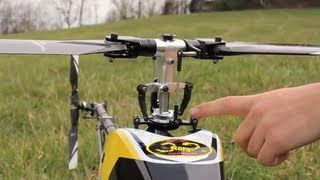
- Swashplate Demonstration and ConclusionsSwashplate FunctionThe swashplate can move up and down for collective input and tilt in all directions for cyclic input control.Combined Controls• Collective up raises the laser line • Collective down lowers the laser line • Tilting forward, back, left, or right changes the line orientationSpatial ReferenceThe helicopter front faces toward the camera's left, helping orient the visual representation of control inputs.Scientific AchievementThe laser visualization provides clear, real-time insight into helicopter rotor pitch dynamics and gyroscopic precession, making complex aviation physics easily understandable.