
Darren's Great Big Camera - Smarter Every Day 21
Today on Smarter Every Day you're gonna learn about big rockets and big cameras.
4 chapitres
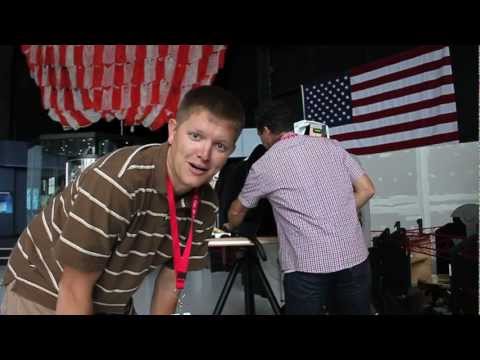
- Introduction to the Saturn V and Darren's CameraThe MeetingDestin is at the U.S. Space & Rocket Center with Darren, who has built a great big camera designed to film large subjects like the iconic Saturn V rocket.Why This MattersDestin contacted Darren after learning about his road trip, knowing that filming one of America's coolest things—the Saturn V rocket—would require special equipment.The CameraDarren has created a large-format camera specifically built for capturing high-detail images of massive subjects.ExcitementThe episode opens with dynamic footage of the Saturn V and expressions of enthusiasm from both Destin and Darren about the project ahead.
- Building the Large-Format Camera: Research and ChallengesPre-Build Research• Had to research extensively before construction to avoid costly mistakes • Needed to understand image circle and lens coverage requirements • Selected lenses that were large enough to cover the entire filmKey AdvantagesThe camera uses film that is 504 square inches, providing significantly more detail and information than any digital camera could capture.Technical Calculations• Had to calculate proper exposure settings (shooting at f/90) • Needed to determine chemistry amounts for developing large film sheets • Calculated extra coverage for camera movements like bellows drawThe Pressure and RewardAt 70 pounds, the camera is heavy and demands that every shot count, creating both pressure and greater rewards for successful photographs.
- Exposure and Metering TechniquesAperture SettingDarren uses an aperture of f/90 to photograph the Saturn V, an extremely narrow aperture requiring careful light measurement.Metering Process• Double-checks meter readings before each shot • Uses green number readings on the meter as the primary reference • Works through stop calculations to determine correct exposureStop CalculationsWith f/90 as the target, Darren demonstrates how exposure increments work, showing the progression from 64 to 128 to 90 through stop calculations.Exposure DurationFor the specific conditions, the exposure time is calculated as roughly 90 2/3 seconds at 8 seconds shutter speed, demonstrating the mathematical precision required.
- Mathematical Mastery and Creative ChallengesMath RevivalDarren had to revisit mathematical concepts like image circle and bellows draw that hadn't been actively used in a while to successfully design the camera.Chemistry KnowledgeBeyond the camera mechanics, he needed to understand photographic chemistry to properly develop sheets of film as large as 504 square inches.Intentional ShootingWith a heavy 70-pound camera, making every shot count becomes both a practical necessity and a creative driver.Finding JoyDespite the challenges and pressure, Darren views the difficulties as part of the fun, finding satisfaction in conquering complex technical and creative problems.