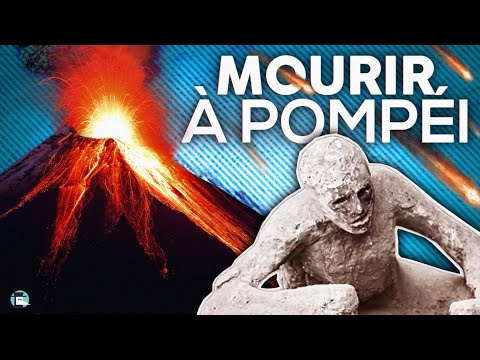
Éruption volcanique : 6 façons de mourir à Pompéi
You probably know Pompeii and its tragic history, but do you know how its inhabitants died during the devastating eruption of Vesuvius?
9 chapters
- Campania Before DisasterGeographic ContextCampania is a magnificent coastal region with beaches, fertile countryside and an ideal climate. Since the Etruscan era, several cities have been founded on the shores of the Bay of Naples and in the interior, in the shadow of Mount Vesuvius.Resources and Activities• Grain and olive cultivation in the plains. • Vineyards planted on Vesuvius's fertile slopes producing prized wine. • Intense maritime trade with goods and amphoras. • Presence of wealthy individuals from Rome and Latium.Warning Signs• Regular and frequent earthquakes in the region. • Major earthquake in 63 AD damaging Pompeii, Herculaneum and Stabiae. • Additional tremors in 70 AD. • Relative calm for about a decade before the eruption.Daily LifeOn October 24, 79 AD, inhabitants go about their business: shops open, workshops active, goods being unloaded, bakeries operating, artisans and painters at work.
- Vesuvius EruptsTriggering EventAround noon on October 24, a violent explosion rings out. Painters working on a fresco drop a bucket of white lime that falls to the ground, spraying the room—the first sign of catastrophe.Scale of Eruption• The eruption is one of the most violent in Vesuvius's history, lasting 48 hours. • The plume reaches 30 kilometers high after three hours. • Tens of thousands of cubic meters of debris are ejected. • Debris covers tens of square kilometers, more than 15 meters thick.Immediate DamageVesuvius is partially vaporized. At Herculaneum, the shoreline shifts several hundred meters. After two days, Pompeii and Herculaneum vanish, buried beneath a massive shell of pumice and ash.Sources of InformationHistorians have texts by Pliny the Younger, the cities themselves with monuments and homes, graffiti, election posters and thousands of bodies transformed into statues by volcanic debris.
- First Phase: Pumice RainPhenomenon Description• For the first seven hours, pumice stones rain down on the city. • Stones are initially white, then become darker. • They accumulate at 15 centimeters per hour. • In eight hours, the layer reaches 1.20 to 1.30 meters thick.Initial ReactionsInhabitants first seek shelter by staying indoors. A guard dog tied to a post spins in panic until trapped by its chain and suffocated under the debris.Progressive Dangers• Fear from the relentless noise of stones falling for hours. • Air becomes increasingly thick, hot and suffocating, reeking of sulfur. • Debris accumulation gradually blocks doors and windows. • Roofs not designed for this weight collapse, crushing occupants.Traps and DilemmasInhabitants are trapped indoors. Sheltering in cellars offers illusory protection against the weight of debris. Some seek refuge wherever they can, like a young woman found in a gladiator barracks among twenty other bodies.
- Flight Through Volcanic DarknessOutdoor ConditionsThe volcanic cloud is so thick it's as black as midnight. The air is saturated with dust and torches shed almost no light. Inhabitants are disoriented, breathing with difficulty and groping their way across unstable ground.Obstacles and Dangers• The pumice layer makes walking difficult and laborious. • Larger projectiles can easily fracture skulls. • Some tie a cushion to their head—a pitiful precaution. • In 2018, an apparently decapitated skeleton was found hit by a 300-kilogram block, but the intact skull found later reveals a different cause of death.Fatal DecisionsThose attempting to flee must quickly grab their possessions. A doctor takes his bag, a family takes gold jewelry, keys and money. A couple is found under pumice near a tomb; other groups collapse with weapons, keys and jewelry boxes.Possible EscapeSome inhabitants manage to leave the city before dying of asphyxiation. This may closely resemble the fate of Pliny the Elder, who dies the next day at 56, likely from asthma and foul air, lying as if asleep.
- Second Phase: Pyroclastic FlowsPyroclastic PhenomenonWhen the smoke column is no longer powerful enough to support its load, it collapses on itself, creating a pyroclastic flow: a massive wave of incandescent material capable of surging at hundreds of kilometers per hour.Impact Timeline• Herculaneum is struck first around 1 a.m. on October 25. • Herculaneum receives the hottest wave as it lies 2 kilometers from Vesuvius. • Pompeii is hit slightly later in the day by two flows. • The final wave around 8 a.m. kills everything still breathing.Archaeological Discoveries• Until 1980, few bodies had been found at Herculaneum. • Excavations reveal several dozen bodies on an ancient beach. • In the old boat houses, 340 bodies are discovered. • These victims show direct effects of the pyroclastic wave.Scientific DebateResearchers debate whether victims died instantly or suffered prolonged agony. Dr. Petrone believes the 500 to 600°C wave killed them instantly, their organs boiling and evaporating in ten minutes.
- Extreme Heat Death MechanismsThermal Explosion TheoryDr. Petrone believes Herculaneum's inhabitants exploded from post-mortem heat. Their organs boiled before evaporating, which would have cracked and shattered their bones and skulls.Physical Evidence• Study of victims' ribs showing characteristic damage. • Several skulls appear to have shattered with fragments scattered around. • Many bodies were found in curled positions, contracted by heat. • Muscles appear to have been burned rapidly by extreme heat.Alternative DebatesSome researchers believe skulls fractured from crushing rather than thermal explosion. Others question whether a human skull can shatter in this way.2020 DiscoveryDr. Petrone's team finds black glass fragments near a victim at the College of the Priests of Augustus. According to their analysis, this is brain matter vitrified by a pyroclastic flow estimated above 500°C, though some researchers remain skeptical of this identification.
- Slow Death in Boat HousesAnalysis of 152 Victims152 bodies are found in Herculaneum's boat houses. English researcher Tim Thompson analyzes their remains to understand the conditions of their death.Relative Protection• Thick walls partially protected victims from the pyroclastic flow. • Pressed against each other, their body mass created a barrier. • The structure acted as an oven, trapping heat. • They probably did not all die in an instant.Temperature and DurationTim Thompson's team estimates the temperature at around 260°C, well below the 500°C affecting victims outdoors. This temperature equals oven setting 8 on a home oven—insufficient to properly bake bread but effective for cooking living people.Implications of SufferingUnlike beach victims potentially killed instantly, boat house inhabitants likely endured prolonged agony, suffocated by increasingly hot air in a confined space.
- After Disaster: Looters and RecoveryRecovery Efforts• The Roman emperor forms a special team of senators and former magistrates. • Crews of laborers clear still-recognizable public buildings. • The goal is to recover marble, lead and bronze from structures. • Surviving inhabitants also attempt to reclaim their homes.Evidence of LootingEverywhere, archaeologists find traces of looters. Holes punched in walls, some just large enough to peek through, others wide enough for an accomplice. Poorly written Latin graffiti "dommous pertousa" warns: house already looted.Three Unlucky Looters• In the House of Menander, the bodies of three hardened criminals are found. • One was a child, probably recruited for his small size. • They died when a weakened ceiling collapsed on them. • They had stopped less than 20 meters from a room with treasure.Macabre IronyThe three looters died near a room containing around 30 kilos of luxury silverware: plates, goblets, dishes and spoons. Killed by a volcano that had shown no threatening signs for weeks, months or years.
- Legacy and PreservationTime CapsulePompeii and Herculaneum become large-scale time capsules. An entire section of Roman Campania is frozen in time, preserved by the same volcanic shell that destroyed it.Historical Sources• The cities are frozen with monuments, homes, shops and taverns intact. • Frescoes, sculptures and daily objects are magnificently preserved. • Graffiti and election posters have survived. • Two to three thousand bodies retain death's details.Scientific ValueHistorians have used these remains for decades to understand daily life and the functioning of Roman society in the 1st century of the Empire. Plaster casts of bodies reveal touching details: necklaces, hair, curved arms frozen in final gestures.Modern ExperienceToday's visitors are catapulted twenty centuries back, into the streets of a small Roman town where life must have been pleasant in 79 AD. It is a unique gateway to the ancient past.