Pourquoi le Sphinx a perdu son nez ?
Why did the Sphinx lose its nose?
8 chapters
- Announcement of the 4th volume of Nota Bene comic on Egyptian mythologyNew projectRelease of the 4th volume of Nota Bene comic dedicated to Egyptian mythology, in collaboration with Soleil publications.Content covered• Understanding the beliefs of ancient Egyptians • Debunking clichés about ancient Egypt • Exploring mummification and the secrets of the pyramids • Discovering the journey of the dead toward eternityCreative teamCollaboration with screenwriter Mathieu Mariolle, illustrator Phil Castaza and colorist Joël Odone to combine historical accuracy and humor.AvailabilityAvailable from November 24 in bookstores, FNAC-type stores and online through resellers such as Amazon.
- Presentation of the Great Sphinx of GizaLocation and contextThe Great Sphinx is located on the Giza Plateau in Egypt, near Cairo, alongside the world's most famous pyramids, notably the pyramid of Khufu.Nomenclature• The word "sphinx" comes from a Greek term used by ancient travelers • In Arabic, it is called Abou al-hôl, meaning "the Father of Terror" • The original name given by the ancient Egyptians remains unknown, no contemporary source mentions itMonumental dimensionsMeasuring approximately 20 m high by 73 m long and 14 m wide, with a head of 5 m by 4 m, it is the largest known Sphinx in Egypt.Physical characteristicsThe body is disproportionate to the head, with some natural fissures, suggesting potential fragility and reinforcement work dating back to antiquity.
- Construction and materials of the SphinxConstruction techniqueThe Sphinx is carved directly from the rocky foundation of a quarry that supplied blocks for the pyramids of Khufu and Khafre, while the paws were built in masonry.Form and symbolism• Represents a lion with a human head, a motif that would become recurring later • Among the oldest sphinxes in Egyptian history • The head wears a nemes, a colored fabric crown similar to Tutankhamun's maskRoyal ornamentsThe Sphinx wears a uraeus, a rearing cobra protecting its wearer, and was completed by a false beard, found in fragments and preserved at the British Museum.Mysteries of compositionThe reasons for the disproportion between the head and body remain uncertain, perhaps an architect's concern about the fragility of a properly proportioned head.
- Debates on the attribution and dating of the SphinxAcademic consensusEgyptologists agree on a dating of the Sphinx during the Fourth Dynasty of Egypt, between 2600 and 2500 BCE, with three pharaohs competing: Khufu, Djedefre and Khafre.Khufu hypothesis• Supported by specialists such as Eugène Warmenbol and Rainer Stadelmann • The Sphinx's facial features resemble those of Khufu: square face, prominent eyebrow arch, protruding ears • The nemes resembles that of the early Fourth Dynasty, not that of his successorsKhafre hypothesis• Defended by Christiane Zivie-Coche and Mark Lehner, it is the most favored hypothesis • The Sphinx fits better within Khafre's funerary complex by its location • The rock strata used for the Sphinx correspond to those used for Khafre's templesRefutation of extreme hypothesesTheories placing the Sphinx before the Fourth Dynasty or around 6000 BCE are invalidated by archaeological discoveries and the overall context of the Giza Plateau.
- Erosion and clearing of sand from the Sphinx throughout historyRefuted theoriesThe erosion marks on the Sphinx do not result from torrential rains from an ancient epoch, but from sand that covered the statue multiple times throughout history.Successive sandburials• The Sphinx was regularly covered by sand, sometimes up to the neck or even completely • Each sanding led to clearing work dating back to antiquity • The statue was finally cleared of sand and protected in 1925Ancient clearingThutmose IV, pharaoh of the Eighteenth Dynasty around 1400 BCE, recounts on a stele having ordered the clearing of the Sphinx, then identified with Horus, at the statue's own command in a dream.Absence in Greek accountsThe Sphinx is absent from the accounts of Greek travelers of the 4th and 3rd centuries BCE, probably because it was buried in sand and invisible.
- Religious function and worship of the SphinxTemple of the SphinxLocated facing the Sphinx and oriented toward the East, the temple was built with blocks from the same strata as the statue, suggesting simultaneous construction attributed to Khafre.Uncertain function• The temple could be a place of worship dedicated to the Sphinx • Its East-West axis with sanctuaries at both ends suggests a function linked to solar worship • No traces of casing indicate the temple was never completed or usedWorship and divinityThe Sphinx is formally identified with a deity, Horemakhet (Horus in the Horizon), a form of the god Horus associated with Ra the sun god, only from the 15th century BCE onward, in the New Kingdom.Role as guardianAs a solar deity, the Sphinx became a sort of guardian of the necropolis of Giza and the plateau in general, a role it may already have held at the time of its conception.
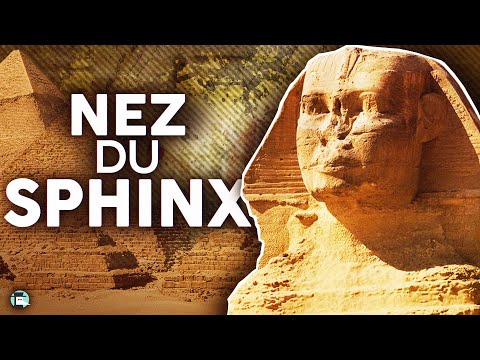
- Legends surrounding the loss of the Sphinx's noseNapoleonic mythContrary to popular legend, it was not the cannons of Napoleon Bonaparte's soldiers during his Egyptian campaign in the late 18th century that destroyed the Sphinx's nose.Historical evidence• Drawings and engravings predating the Egyptian expedition show the Sphinx already mutilated • A drawing from 1757, 40 years before Bonaparte, depicts the Sphinx without a nose • Depictions from the 16th and 17th centuries showing the Sphinx intact come from artists who never visited EgyptAccusation of the MamluksThe responsibility of the Mamluks, military rulers of Egypt for three centuries, proved false, being rather a slur intended to discredit them and sway public opinion.True culpritAccording to historian Ahmad al-Maqrîzî of the 14th and 15th centuries, the Sphinx's nose was broken by Saïm al-Dahr, an iconoclast of the 14th century, so that peasants would stop honoring this pagan figure.
- Religious context of the mutilation and conclusionsReligious motivations• Peasants and Bedouins of Giza continued to make offerings to the Sphinx to ensure good harvests and prosperity • Saïm al-Dahr reportedly ordered the destruction of the nose to end the worship of this pagan idol • The mutilation dates back at least 600 to 700 years agoDating the lossThe Sphinx's nose was definitively lost at least 600 to 700 years ago, this absence becoming one of the monument's major characteristics.General synthesisThe Sphinx of Giza was probably commissioned by Khafre around 2500 BCE, later identified with the solar deity Horemakhet, and likely served as guardian of the pyramids and temples of Giza.Modern restorationSince the 20th century, the Sphinx has benefited from restoration and consolidation work to prevent its collapse, while Egyptologists continue studying this iconic monument to uncover the truth about its existence.