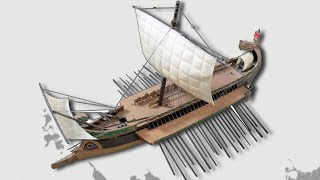
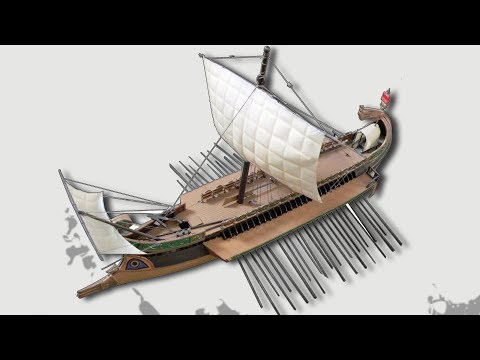
Les navires de guerre antiques (trirème grecque)
7 chapters
- Introduction and Context of the TriremeOverviewThe narrator visits the Piraeus in Athens to discover the Olympia, one of the rare replicas of an ancient Greek trireme. This visit is part of a shoot for the game Assassin's Creed Odyssey, which takes place during the Peloponnesian War.Nature of the ShipThe trireme is an ancient warship designed for naval combat. It is a key element of Athens' military power during the Peloponnesian War.Historical ContextDuring the Peloponnesian War, Athens possessed an enormous fleet of triremes while Sparta had very few, conferring a significant advantage on the Athenians.Purpose of ExplorationThe goal is to explain how this type of ship was organized, how it functioned, and what combat tactics were used in ancient times.
- Composition and Crew of the TriremeTotal CrewThe trireme could accommodate almost 200 crew members to ensure full operation.Roles and Numbers• Approximately 170 rowers organized in three tiers • About fifteen people for combat (hoplites) • Around ten archers • A few members to maneuver the sail • 3 or 4 people to command the crewSpatial OrganizationThe rowers were organized in three stacked tiers: the upper tier, the middle tier, and the lower tier below the hold. This arrangement allowed three rows of oars to row simultaneously without touching or colliding.Coordination and PowerThe three-tier organization was essential for obtaining power and coordination, preventing the oars from tangling during maneuvering.
- Archaeological Research and Reconstruction of the OlympiaLack of Historical SourcesFor many years, there were few documentary sources for knowing what a trireme really looked like, which necessitated significant archaeological experimentation.Creation of the OlympiaThe Olympia was created in the 1990s after decades of research, study of iconography, and debates among scholars about the dimensions and internal organization of the trireme.Practical Challenges Identified• On the central deck, air circulates well and rowers can breathe properly • At the rear of the ship, rowers quickly suffocate, creating a serious problem for the crew • Modern oars are too large for spaces designed for 5th-century men measuring about 20 cm shorter • Positioning and striking difficulties make achieving real historical speeds challengingLessons from ReconstructionThe practical reconstruction of the Olympia revealed details about life aboard that were not found in written sources, allowing a more complete understanding of the ancient ship.
- Details of Organization and Life AboardRower EquipmentRowers very often brought a cushion that supported their buttocks for more comfortable rowing. The feet positioned themselves just behind the body of the person in front, creating a compact and efficient organization.Rhythm CoordinationMusicians, notably a drummer, marked the cadence so that the 170 rowers rowed in synchronization and produced maximum force.Row ConfigurationThe three tiers of rowers allowed a very compact organization where each person had limited space, with each person's feet placed directly behind the rower in the previous row.Comfort ChallengesAlthough practical, this organization made the space aboard very cramped, and modern rowers discover that significant adaptation is needed to function effectively in these reconstructed ancient ships.
- Geopolitical Context and Fleet FinancingAlliances During War• Athens led the Delian League with many allied cities • Sparta led the Peloponnesian League with cities like Corinth and other allies • These two rival coalitions fought each other during the Peloponnesian WarPersian InterventionThe Persians, defeated in the Greco-Persian Wars in 480 BCE, saw an opportunity for revenge by financing Spartan and Corinthian triremes to combat Athens' powerful fleet.Shift in Power BalanceOver the course of the Peloponnesian War, the situation reversed. Sparta succeeded in developing a fleet thanks to Persian financing and coastal shipyards like that of Epidaurus. The Peloponnesian League gradually gained the maritime advantage over the Delian League.Athenian Financing ProblemTriremes deteriorated very quickly and required constant investment. In Athens, wealthy citizens were responsible for maintaining triremes, which sometimes created situations where some posed as poorer than they were to avoid these costly obligations.