LES EMPEREURS ROMAINS SONT-ILS TOUS FOUS ?
8 chapters
- Introduction and Republican ContextTopic PresentedThe video examines the mental health of Roman emperors and their comparison with contemporary politicians, raising the question of whether these ancient emperors were truly mad.Historical Warning• Ancient historians like Suetonius and Tacitus did not seek objectivity • Disentangling truth from falsehood in their accounts proves complex • Ancient authors unscrupulously destroyed the image of personalities they dislikedStructure of RomeUntil 27 BCE, Rome is in principle a republic, but in reality an oligarchy where noble families share power. Since the mid-first century BCE, Rome experiences a state of quasi-permanent civil war between two factions.Introductory ConclusionContemporary historiography has nuanced and dismissed certain absurdities reported by ancient historians, which will be examined at the end of the video.
- Julius Caesar and the Transition to EmpireCaesar's RiseFrom 59 to 44 BCE, Julius Caesar eliminates his political adversaries to consolidate his authority and attempts to pervert Roman dictatorship by having himself named perpetual dictator in 44 BCE.Institution of DictatorshipRoman dictatorship confers absolute powers on an individual for six months to address a civil or military crisis. At the end of his term, the dictator returned power to the Senate.AssassinationCaesar is assassinated by a band of conspirators including his adopted son Brutus after 23 stab wounds, an end that triggers a moment of political uncertainty.Octavian's SuccessionOctavian, another adopted son of Caesar, wins the succession by applying a more cautious strategy: he apparently restores republican institutions while actually concentrating power in his own hands.
- Augustus and the Establishment of Imperial RuleTitles ObtainedIn 27 BCE, Octavian obtains from the Senate the titles of princeps (first among citizens) and Augustus, comparable to the term augur, signifying that his word held sacred value.Serene ReignAugustus's reign proceeds smoothly despite the concentration of power. He satisfies the senators through a policy of restoring traditional Roman grandeur and the people through major urban projects.Personal CharacteristicsSuetonius, particularly cruel toward Augustus's successors, finds almost nothing to criticize in Augustus except his short stature.Established LegacyAugustus establishes a stable framework for his successors that appears republican but is truly imperial. His death in 14 marks the beginning of complications for subsequent emperors.
- Tiberius and Accusations of DebaucheryMilitary SkillsTiberius enjoys an established reputation as a military strategist, crowned with numerous successes in Iberia, the Orient, Germania, and Illyricum. At 56, he logically becomes Rome's second emperor.Ancient Accusations• A disproportionate passion for wine leads him to grant provincial governance to his drinking companions • Hypocritically, he publicly reprimands an old libertine before secretly asking him for banquets with naked girls • He permanently withdraws to the island of Capri in the middle of his reign, which damages his popularitySupposed DebaucheryHis Capri villa supposedly harbored a colony of enslaved persons prostituting themselves for his pleasure. Suetonius suggests that young children were forced to swim naked in the pool. Tacitus adds that Tiberius had young boys abducted and sexually assaulted parents who complained.Death Welcomed with JoyTiberius's death is welcomed with joy by the Roman people. Although a natural death is probable given his advanced age, Tacitus suggests he was smothered under pillows.
- Caligula and the Archetype of MadnessName's OriginsSon of the popular general Germanicus, Caligula owes his nickname to his childhood in military camps where he wore a mini soldier's uniform with tiny sandals (caliga). Upon his father's premature death, he becomes a logical candidate to lead Rome.Sadistic Cruelty• As a teenager, he watches the torture of condemned prisoners with extreme curiosity • As emperor, he tortures prisoners during banquets for his entertainment and kills them slowly • He uses criminals rather than beasts for wild animal spectacles • He massacres a senator in public and drags his dismembered corpse through RomeTroubling Eccentricities• He accompanies his kisses on his wife's neck with remarks about his ability to make that head fall • He laughs at a banquet saying he could have his friends' throats cut with a gesture • He replaces the heads of divine statues with his own • He gathers the army to harvest seashells at sea • He builds his horse Incitatus a marble stable with palace and slaves, considering making him a senatorEnd of ReignHis reign lasts four years during which he manages to turn everyone against him. The praetorians, his close guard, kill him along with his wife and daughter before he can realize his project of making Incitatus a senator.
- Claudius and the Complicated SuccessionAccidental ProclamationClaudius is proclaimed emperor by chance, having hidden behind a tapestry in fear during Caligula's assassination.Visible DisabilitiesClaudius is lame, stammers, and has a propensity to fall asleep unexpectedly, which makes him apparently unfit to govern according to ancient historians.Agrippina's InfluenceHe marries in his fourth marriage Agrippina, daughter of Germanicus and mother of Nero. This woman pushes aside Britannicus, Claudius's legitimate son, forces Nero's adoption, and poisons Claudius using mushrooms.Actual EvaluationAlthough lame and stammering, Claudius was in reality a wise administrator, an aspect ignored by ancient historians who ridiculed him.
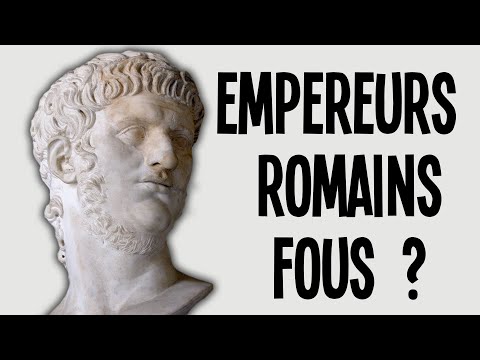
- Nero and the Fire of RomeEarly ReignAt 17 years old in 54, Nero is named emperor. The early years go well with peaceful relations with the Senate, although his mother Agrippina and his tutor Seneca probably make the political decisions.Elimination of Rivals• Nero poisons Britannicus before he comes of age • He lures his mother to Messina and lends her a rigged galley to sink at sea • His mother survives by swimming and reaches his villa • Exasperated by the plan's failure, Nero simply sends soldiers to finish her offFire of RomeIn 64, a great fire ravages Rome for six days. Rumor claims that Nero started it, watching from his terrace while playing the lyre to clear space for his Domus aurea (Golden House), a palace of nearly 200 rooms with fountains and mosaics.Fall and SuicideUpon his return from Greece where he entertained his guests with his music and poetry, Nero discovers he has lost all support. The Senate removes him and he must flee in disguise. Realizing all is lost, he commits suicide repeating: "What a great artist perishes with me!"
- Modern Historical ReassessmentTiberius Rehabilitation• He implements an economic policy that refills the Empire's coffers • His military experience allows him to avoid costly campaigns • He creates a set of vassal states guaranteeing border security • No concrete evidence supports the supposed horrors of CapriCaligula RevisionCaligula was probably a victim of his direct opposition to the Senate. His supposed madness is merely a posthumous slander.Nero's Reality• He pursues a successful policy of monetary revaluation • He organizes several victorious military campaigns • The emperor was absent from Rome during the fire • He lost many pieces of his art collection • He opened his palace doors to citizens whose homes had burnedHistorians' Motivations• Suetonius has a pronounced taste for scandal, like contemporary tabloid press • Suetonius and Tacitus both belong to the senatorial class • Their works have a political aim: to destroy the memory of emperors who undermined Senate authority • They are steeped in ideology and require cross-referencing sources to restore truth