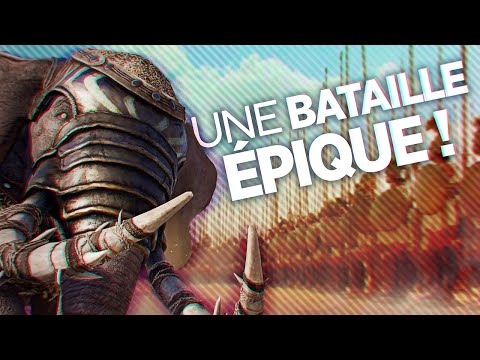
Alexandre le Grand VS les éléphants indiens du roi Poros : la bataille de l'Hydaspe
12 chapters
- Introduction et contexte géopolitiqueSettingThe year is 326 BCE in the small kingdom of Paurava in present-day Pakistan, at the gateway to India. The Hydaspe River is swollen from Himalayan snowmelt.The Confrontation• Tens of thousands of soldiers from various nations appear under Alexander the Great's command • Across the river, King Poros' army emerges with 60,000 infantry and hundreds of war elephants • This unexpected encounter will determine the fate of the Indian subcontinentHistorical SourcesThe battle was documented by two eyewitnesses: commander Ptolemy and engineer Aristobulus, whose accounts were preserved by ancient writers, making this one of Alexander's most legendary conquests.StakesLocal inhabitants witness preparations for what appears to be an unimaginable clash of two formidable armies.
- Les motivations d'Alexandre pour conquérir l'IndeImperial AmbitionsAt only 29 years old, Alexander already rules Greece, Asia Minor, Egypt, the Near East, Persia, and southern Asia Central. He decides to pursue India as the next conquest, continuing his eastward expansion.Mythical Appeal• India is legendary in Greek eyes as the homeland of Dionysus • Heracles supposedly traveled there and defeated terrible dangers • The land is rumored to overflow with gold, ivory, pearls, and precious stonesScientific QuestAlexander learned from his teacher Aristotle about an ocean far to the east that could allow circumnavigating Asia and Africa to return to Greece. He aims to discover this passage personally.Political Necessity• Keep the army occupied to prevent internal conspiracies • A recent conjuration led by page Hermolaos was discovered and suppressed • Macedonian veterans grow restless from inactivity and criticize Alexander's obsession with oceanic discovery and incorporation of non-Greek soldiers
- L'armée macédonienne et le voyage vers l'HydaspeTroop Composition• 120,000 soldiers assembled, the most cosmopolitan army in history • Macedonians form only a small core, supplemented by Greeks from conquered cities • Includes Thracian mercenaries, Mesopotamians, Iranians, and mounted archers from Central Asian steppesLogisticsThe army travels with thousands of support personnel: women, children, physicians, administrators. The imperial capital moves entirely on foot, by wagon, and horseback wherever the emperor goes.Campaign Progress• Army crosses the Hindu Kush mountains in present-day Afghanistan, marking the border between former Persian empire and Indian subcontinent • Multiple battles fought, cities pillaged and burned by those resisting • Several Indian kings voluntarily pledge allegiance and provide guides and reinforcementsStrategic AdvantageKing Omphis offers hospitality in exchange for eliminating his rival King Poros. Alexander accepts, positioning this conflict as an opportunity to secure his eastern flank before advancing further.
- Poros et son royaume : le Jech DoabTerritoryPoros rules the region called Jech Doab today, a portion of Punjab delimited by the Hydaspe (modern Jhelum) and Akesines (modern Chenab) rivers.Military ForcesThough a small kingdom on the vast subcontinent, Poros commands an impressive army with cavalry, war chariots, and numerous elephants.Diplomatic ApproachAlexander sends an emissary asking Poros to meet at the kingdom's border and recognize his authority. Poros, audacious and reluctant to submit, accepts the meeting but vows to bring his entire army and defeat the self-proclaimed 'king of kings'.PreparationAfter 8 years and 5,000 kilometers from home, the Macedonian army arrives at the Hydaspe River, which marks the boundary between the two kingdoms. The inevitable confrontation is about to begin.
- L'armée de Poros et le dilemme macédonienEnemy Strength• 200 war elephants, formidable creatures never encountered by the Greeks • 4,000 cavalry and war chariots • 30,000 infantry soldiers • King Poros himself mounted on an exceptionally massive elephant adorned with gold and rich draperiesPsychological ImpactPoros' towering appearance on his gilded elephant creates a supernatural impression that frightens Alexander's men. Fear and perplexity spread through the Macedonian ranks as soldiers question the viability of crossing the swollen, violent river.Natural ObstaclesThe river is hundreds of meters wide with violent currents. Poros' forces occupy the far bank, preventing any crossing. Early attempts by bold swimmers to reach the island in the river result in heavy casualties from arrows and sling stones.Crisis PointThe Macedonian soldiers begin to doubt whether crossing ice-cold water to be trampled by enraged elephants is worth the sacrifice. Morale reaches a critical low.
- Le stratagème d'Alexandre : la ruse du débarquementDiversionary Plan• Commander Attale, who resembles Alexander, wears his clothing and positions himself in view of Indian scouts • He erects the royal tent and commander pavilions facing the enemy • Ptolemy stations himself downstream and conducts false embarkation preparations with cavalry noise throughout the night • Craterus leads the main army and receives orders to cross only when the elephant threat is neutralizedCovert MovementAlexander travels upstream with approximately 10,000 infantry and 5,000 cavalry opposite an island with trees providing cover. A storm blocks the first crossing attempt, but favorable fog at nightfall enables the crossing with minimal losses.Enemy MiscalculationWhen Poros learns of the crossing the next morning, he believes it is merely a feint. He remains convinced Alexander is still on the original side with his main forces, so he sends only a small cavalry and chariot detachment led by his son.Initial VictoryThe previous day's storm left the soil muddy, immobilizing the heavy Indian chariots carrying six-man crews. The Macedonians achieve a massacre, killing Poros' son. This success prompts Poros to react by establishing a defensive line rather than pursuing the supposedly retreating force.
- La formation de défense de Poros et l'erreur stratégiqueDefensive Array• Elephants positioned in the first line, spaced approximately 30 meters apart • Infantry battalions fill the gaps between elephants • Cavalry and chariots deployed on the flanksCritical DecisionPoros remains immobile, fearing that moving will mire his remaining chariots and elephants in the muddy terrain. This stationary defense appears strategically sound but becomes his greatest mistake.Macedonian Advantages• Experienced cavalry capable of maneuvering around enemies • Exceptionally skilled mounted archers from Central Asian steppes • Phalanx formations with very long sarisses (lances) for infantry supportTactical ApproachAlexander refuses to charge the elephants frontally. Instead, he divides his cavalry to envelop the flanks of the Indian army, targeting the weaknesses in Poros' formation rather than engaging the strongest points.
- La bataille : manœuvres et chaos des éléphantsCavalry DominanceThe flanking maneuver and destabilization strategy succeed brilliantly. Poros' infantry becomes exposed and retreats precipitously around the elephants, compressing the Indian army's available space dramatically.Elephant Chaos• The long lances of phalanx infantry irritate the elephants, and Indian soldiers at their feet become targets • Alexander's horses, terrified by the barrissements, refuse to advance further • Light infantry specialists keep the elephants at distance with arrow barrages • Heavy infantry pierces them with lances, causing panic in the war beastsUnintended DamageThe panicked elephants charge blindly, crushing many Greek soldiers but inflicting even greater casualties in their own ranks. The creatures become as dangerous to Poros' army as to Alexander's.Turning PointAs Alexander's initial detachment begins tiring, Craterus executes the master plan by crossing the river with the main Macedonian army. This massive reinforcement reignites the assault with fresh energy.
- L'achèvement de la bataille et la retraite de PorosRelentless CombatAttack and retreat cycles continue for hours despite the elephants' phenomenal endurance and numerous wounds. The Macedonians eventually resort to cutting the elephants' legs with axes as if felling trees.Poros' ResistancePoros refuses to flee, repeatedly reorganizing the remaining troops. Wounded but determined, he finally sounds the retreat from his magnificent elephant with only his personal guard.Legendary PursuitAlexander pursues on his faithful horse Bucephalus in a chase against the great elephant. The aging, wounded destrier collapses from exhaustion. The legendary horse dies, as does the elephant.Merciful ConclusionGreeks encircle Poros' last guards. Instead of executing the defeated king, Alexander offers clemency. Wounded and exhausted, Poros accepts surrender rather than fight to death.
- Conséquences : la consolidation et la mutinerieGovernance StrategyPoros, having proven his valor in combat, is spared and retains his sovereignty, becoming an ally. Alexander recognizes that supporting existing power structures is simpler than direct administration.Continued Advance• The victorious army covers hundreds more kilometers • Crosses a second affluent of the Indus • Razes the city of Sangala • Reaches the third affluent, the Hyphase RiverThe Soldiers' RealizationAs they advance, the Macedonians comprehend that Poros' kingdom was merely a tiny fragment of a vast continent. They are not approaching the Ocean as imagined, but rather the Gange, India's greatest river.Insurmountable Challenge• King Dhana Nanda's empire lies ahead with 20,000 cavalry, 200,000 infantry, and thousands of war elephants • Poros confirms these numbers are accurate • Soldiers are devastated, exhausted by monsoon rains, depleted supplies, and reduced numbers • Officer Coenos delivers an emotional plea to retreat, declaring India too vast, too populated, and too distant
- Le retour et l'héritage de la batailleAlexander's DecisionThe conquerer does not explode in anger but withdraws to his tent to reflect. After three days, he acknowledges the soldiers' complaints are reasonable and continues would be suicidal.Retreat and RouteThe formidable army departs after one final look toward the rising sun. They turn south, descending the Indus toward the Indian Ocean. Alexander's expedition only grazes India's periphery, never reaching its heart.Historical ParadoxThe exhausting Battle of Hydaspe becomes a magnificent paradox: Alexander's victory actually causes him to abandon his objectives. This single encounter determines the boundary of his eastern conquests.Lasting Impact• Numerous cities are razed • New knowledge established about routes connecting Europe to India • Greek pottery with characteristic patterns later discovered in the Gange valley, proving intense trade along these newly mapped routes • Alexander erects oversized altars and statues at the river to commemorate the expedition for future generations
- Conclusion : les deux mondes qui se heurtentThe ClashAlexander versus Poros represents the improbable meeting at the Himalayan foothills of two individuals opposed in every way: an old king defending ancestral lands against a young conqueror seeking eternal glory.Cultural CollisionThe sudden and violent eruption of the Greek world into the Indian world occurs as a complete surprise, as the two civilizations had never previously encountered one another.Transformative Consequences• Cities destroyed in the conflict • New knowledge about Europe-India trading routes established • Cultural exchange evidenced by later discoveries of Greek-patterned ceramics in the Gange valleyLegend BornBy reaching farther than any previous conqueror, Alexander achieves one objective: immortality in legend. The oversized altars and statues erected suggest only superhuman giants could accomplish such an epic journey.