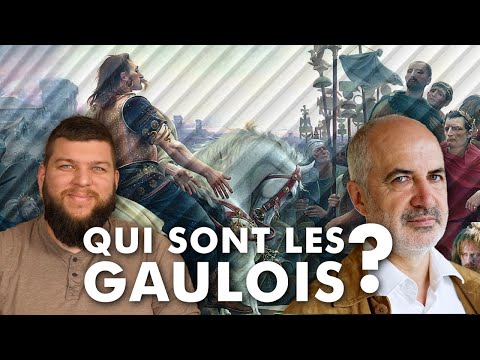
Qui étaient vraiment les Gaulois ? - Entretien avec Dominique Garcia
An interview with Dominique Garcia, doctor in archaeology and president of INRAP
30 chapters
- Introduction and guest presentationWelcomeWarm opening with presentation of the event in partnership with INRAP during European Archaeology DaysExpert profile• Doctor in archaeology and professor in the chair of national antiquities • President of INRAP (National Institute of Preventive Archaeological Research) • Specialist in European protohistory and the Gallic periodAccomplishments• Research conducted around the Mediterranean from Greece to Syria • Over 250 published articles and about twenty books • Recently: 'The Gauls with naked eye' with latest knowledgeCurrent contextPeriod of European Archaeology Days allowing the French public to discover their archaeological heritage and the behind-the-scenes of archaeology
- Etymology and origin of the Gallic termWord originThe term 'Gallic' comes from Gallic itself, with a root 'galles' meaning 'valiant' or 'sturdy'. A Celtic people named themselves this way to enhance their statusRoman transmission• The Gauls did not possess writing • The term was reported by Romans in Latin • Initially limited to a small people, it expanded to the entire territoryTerritorial generalizationLike Christopher Columbus calling all American peoples 'Indians', Romans imposed the term 'Gallic' on all peoples of this territory, encompassing other tribes with different namesDistinctionCelts and Gauls are not synonymous: all Gauls are Celts, but some Celts are not Gauls. Celtic territory is older and larger than Gaul
- Geographic definition of Gaul by CaesarModern inventionThe definition of Gaul as the territory of present-day France is a relatively recent invention attributed to CaesarStrategic delimitation• Caesar delimits his battlefield • South and west: seas (Atlantic, Mediterranean) • East and north: Alps and Rhine (beyond, the Germans)Lasting impactThese borders defined by Caesar for a temporary military objective became permanent geographic limits of Gaul and marked European historyHistorical consequencesThe Rhine boundary, created arbitrarily by Caesar, sparked centuries of conflict between France and Germany over this non-existent frontier
- Diversity of French ancestors and geographic limitsMultiple origins• Humanity comes from Africa • Neolithic migrations beyond Africa • Populations from Near East and Mediterranean • The Gauls are only part of French rootsGallic extensionsThe Gauls are not exclusively ancestors of the French: Belgic Gaul in Belgium, Helvetii in Switzerland, and Galatians in present-day Turkey share the same rootsGallic absenceIn Corsica, in overseas territories and certain areas, there were never Gauls despite integration into national territoryColonial contextReference to colonial discourse where children of conquered lands learned 'our ancestors the Gauls', illustrating the imposition of a fictional identity
- Gallic cultural and linguistic unityCommon language• Extremely similar languages from Danube to Atlantic • Celtic roots in British Isles, France, Spain, Hungary • Inter-tribal communication possible through common dialectsLinguistic proofWhen Caesar sends a southern Gaul (southern accent) to negotiate with northern tribes, they can communicate despite distance and different accentsArtistic culture• Characteristic Celtic artistic abstraction • Little human or animal representation • Similar evidence traces across entire territoryPolitical absenceNo Gallic political unity or state before the Gallic Wars, unlike Rome or Greek city-states which had state structures
- Gallic contacts with the Mediterranean worldFundamental difference• Greeks and Romans: sedentary city-states with established urban life • Gauls: semi-sedentary populations practicing demographic dispersal • Technology of wood and earth, not stoneRoman perceptionGauls perceived as barbarians speaking another language, migrants not fixed to a place, without territorial rules, unlike urban civilizationsRelational conflicts• Brennus invasion of Rome in 390 BCE • Approach to Delphi around 270 BCE with religious cultural shock • Persistent negative memories of Greeks and RomansBiased sourcesGauls left no writings, so all knowledge comes only from Greek and Roman texts, partial and incomplete, comparable to using only military reports to know a culture
- Founding of Marseille and early principalitiesGreek creations• Phocaeans from Turkey founded Marseille in 600 BCE • Settlement at Rhône estuary, communication axis to Celtic world • Creation of trading post between coast and hinterlandUrban domino effect• Marseille created a phenomenon of Celtic principalities • Cities created at Vix, Bourges, probably Lyon • Interfaces between Mediterranean and European river spacesTechnological exchange• Etruscan-type fortifications brought by Greeks • Prestigious gifts: Vix crater and large cauldrons • Wine introduced, manufactured product unknown to GaulsGallic enrichmentGallic populations sedentarize, enrich themselves and benefit from trade between Mediterranean and Asian world, leading to inter-ethnic unions
- Euro-Mediterranean trade and resourcesBronze and tin• Copper present in Mediterranean • Tin absent: needed in Morvan, Brittany, British Isles • Euro-Mediterranean trade created for this critical resourceOther exchanges• Cereals for expanding Mediterranean cities • Baltic amber, rare and prestigious product • Slaves captured during inter-Gallic conflictsMediterranean offerings• Wine and military technologies brought by Greeks and Romans • Jewelry and specific ceramics • Ramparts and fortifications to ensure tradeAncient globalizationConnected territory from Danube to Atlantic functioning in commercial network, with peoples knowing travelers and linked by commercial and cultural contacts
- Gallic mercenaries and introduction of currencyMilitary service• Gauls served as mercenaries in Greek and Roman armies • Common practice of ancient times, not specific to Gauls • Gallic presence in Mediterranean battles documentedPayment in currencyGauls paid in gold and silver for their services, leading to learning and use of currencyNumismatics• First Gallic coins copy Philip of Macedon's staters • Currency acquired by mercenaries who fought alongside Greeks • Currency introduction linked to this military activityCultural exchangesGauls borrowing Greek and Latin letters to write their own language, demonstrating adaptation and exchanges without constant conflict
- Cultural exchanges and Greek influencesLanguage learning• Alphabets found on ceramics at Lattes near Montpellier • Greek and Latin writings used to learn the alphabet • Fragments with sometimes clumsy learning exercises of children or apprenticesHuman contacts• Phocaeans in Marseille married local women to colonize • Inter-ethnic marriages creating lasting population ties • Unions of Gallic women with Greek menDocumented tradeHundreds or thousands of amphorae found at Bibracte proving extremely important and sustained tradeCommercial priorityArchaeology demonstrates commercial and cultural activities prior to conflicts, territory first conquered commercially before Roman military conquest
- Romanization and political transformationContested termTerm 'Gallo-Roman' rejected by contemporary specialists as vague and imprecise in meaningMixed realities• Romans came to Gaul: military, auxiliaries, traders, merchants • Gauls married to Romans • Combined civilization, not simple assimilationFrench civilizationModern concept of 'Roman' linked to civilization and progress, Gallic term linked to popular roots, specific French historiographic distinctionAmbiguous vocabulary• Romans described as 'romanizing', Greeks as 'hellenizing' • Gauls described as 'migrants' or 'invaders' when they are at home • Terminological inversion revealing historians' colonial bias
- Construction of Gallic identity in the 18th centuryRevolutionary break• Before revolution: French history = history of Frankish kings, divine lineage • After revolution: French history = history of French people • Search for ancestors for the common peopleChoice of Gauls• Gauls first peoples named in Greek and Roman texts • Attribution to French as ancestors of the earliest named • Artificial creation of an ancestral popular layerPrehistoric amalgamation• All ancient elements attributed to Gauls: dolmens, menhirs • Modern dating system (radiocarbon) invented only in 1950 • Before: impossible to distinguish prehistoric from GallicObelix symbolSchool textbooks represented Gauls with dolmens and menhirs, explaining Obelix's image as menhir-carrier in Asterix comics
- Figure of Vercingetorix and national identityMagnificent loser• Vercingetorix attempting to unite Gallic populations during Gallic Wars • Some successes but many defeats • 52 BCE: defeat at Alesia, capture, death in Rome prisonRevisited hypothesisPossibility that Vercingetorix was a Gallic chief promoted by Caesar to justify difficult campaign and obtain troops and money from Roman SenateMeager archaeological record• Few archaeological elements on Vercingetorix • Almost sole source: Caesar himself • Attributed qualities (intriguing, unifying) possibly invented by CaesarIdeological legacy• National narrative values 'worthy loser' against 'cold victor' • Parallel Tour de France: we admire 2nd-3rd place riders rather than winner • Gallic spirit: willpower and courage but inability to unite and conquer
- Napoleon III and Gallic archaeologyFounding vision• Napoleon III constructs his own history of French people • Excavations at Alesia and Bibracte with rigorous methods • Gathering of territorial documents at national antiquities museum (Saint-Germain-en-Laye)Political message• French people can rise if they accept Roman civilization • Broken Gallic people must accept Roman reform • Construction of popular national identity around GaulsHistoriographic production• Historians like Thierry and Michelet write Gallic history • Paul Vidal de la Blache invents geographic concept of 'pays' from Gallic 'pagus' • Armand Colin maps spread image of Gallic France in schoolsPivot school textbook• Petit Lavisse distributed from 1884 to 1950s to all schoolchildren • Several million copies • Begins with 'our ancestors the Gauls' and Vercingetorix as leader image
- Gauls in school and national imaginationPedagogical questionsPetit Lavisse asks child: prefer evil Caesar or valiant Vercingetorix? Would you defend your homeland?Revanchist context• Children after 1870 defeat reading school textbooks • Questions about Gallic identity facing eastern border to reclaim • Forging revanchist and nationalist spiritAsterix continuity• Uderzo and Goscinny create Asterix close to school representations • Gallic quarrelers, banquets, druids, dolmens • No field archaeology available but descriptions faithful to ancient textsCultural persistence• Asterix still published, new album planned • Imaginary Gauls: clever versus powerful organized Romans • French spirit: diversity, freedom but inability to complete and conquer
- Contemporary political uses of GaulsModern reinterpretationGallic image evolved 70 years after 1950, archaeology transformed understanding, but political discourse still repeats old elementsGeneric language• Gallic terms used politically: 'our ancestors the Gauls', 'Gallic jests' • Broad and accessible vocabulary to address the people • Popular discourse not necessarily populistSymbolic dimensions• Beer, Gauloises cigarette pack, Gallic imagination in general culture • Part of broad French cultural vocabulary • Attempt to unify different populations around common historyScientific intentions• Mitterrand creates Bibracte archaeological center 1981 inspired by Goudineau and Lang • Valuing national heritage through scientific approach • Each use also referring to heritage and archaeology
- Preventive archaeology and renewal of knowledgeDiscipline evolution• Napoleon III excavated military sites to illustrate history • 1970s-80s-90s: preventive archaeology along highways, TGV, developments • Practiced by INRAP and territorial authoritiesInnovative concept• Reconciles two actions: land development and heritage preservation • Excavation where tomorrow's history is built, not only where texts say to dig • Discovery of roads, fields, quarries, mines, necropolises, sanctuariesNew archives• Soil archives allow rewriting Gallic history • Economies, cultures, burial practices documented • Overcoming limits of partial and incomplete Greek and Roman textsLong duration• Study over long time, not only battle times • Regional variations in Gallic culture • How culture implanted, influenced, accepted, rejected
- Recent Gallic archaeological discoveriesCeltic principalities• Vix, Lavau, Bourges sites excavated by INRAP, CNRS, universities • Tintignac votive deposit with extraordinary Gallic helmets • Carnyx trumpets cited in ancient texts, multiple archaeological evidencePaleoenvironmental studies• Coring and pollen spectrum analysis show vegetation • Gallic grain storage methods known • Agricultural and demographic expansion documentedUrban discoveries• Oppidum in Charentes recently discovered during development • Gallic city nearly unknown affected by suburbs and economic zones • Several oppida still to be discovered in landscapeGallic statuary• Paul statues with warrior published in exemplary monograph • Archaeological contexts now known, not isolated • Latène art transforming Mediterranean art into Celtic
- Gallic environment and economy archaeologically documentedLandscape transformation• Long image of 'great Gallic forests' with small clearings • Preventive excavations with coring show transformed landscapes • Neolithic and Iron Age: significant clearings documentedEconomic production• Economic history possible through environment studies • Major demographic growth in Iron Age • Growing populations controlling and disturbing Mediterranean tradersRoman motivations• Narbonnaise Province created 121 BCE after century of Roman presence • Warriors follow traders to ensure pacified space • Gallic Wars follow established commercial logicReinterpretationArchaeology allows reviewing Roman imperialism: war guarantees economic space, not gratuitous conquest
- Importance of major archaeological discoveriesPrestigious excavations• Lavau discovery of the century for Dominique Garcia • Moulin-à-Vent oppidum important • Lattes near Montpellier rich teaching sitesRecent research• Paul monograph published recently, exemplary • Gallic statuary progressively discovered and documented • Gergovie and Bibracte exemplary continuing excavationsContextualizations• Archaeology gives contexts and sets to previously isolated objects • Landscapes reconstituted around discoveries • Documents integrated into learned monographsInterpretive conclusion• If Gauls not strictly ancestors, today sufficient documents to be reference points • Knowing history, location, how to operate in territory • Helps inhabitants better understand contemporary space
- Gauls and contemporary European identityContinental perspectiveGauls part of broader Celtic territory: collaboration with researchers from Hungary, Poland, GermanyBeyond nationalism• Gallic ancestors historically gave revanchist momentum • Today: scientific cultural vocabulary to collaborate with neighboring countries • Shared identity rather than conflictualCommon valuesCulture and heritage differentiate and unite Europe in shared common experienceCommitment continuityINRAP 20 years in 2022, promise of field exchanges, conferences, archaeology exhibitions for all
- European Archaeology DaysAnnual event• Three-day encounter of citizens with archaeology • Organized by Culture ministry entrusted to INRAP • Unites national archaeological activityAccessibility• Preventive excavations open three days • Ephemeral shows: excavation sites disappear fifteen days after • Frequent classic museums, discover preventive sitesRich programming• Nearly 600 events three days across France map • Special backstage: Cosquer cave workshop, C2RMF virtual visit • Alesia, Gergovie exhibitions, community servicesDirect contact• Archaeologists and CNRS university researchers present directly • Archaeology villages with tents and presentations • INRAP co-produces thirty exhibitions and conferences
- Volunteer participation in archaeological excavationsSite registration• Culture ministry website lists volunteer-open excavations • List accessible mecu.culture.fr • Summer periods generallyWelcomed profiles• History and archaeology students • Enthusiasts wanting to give time in professional setting • All energy and skills welcomeReal nature of work• Outdoor laboratory, not 19th-century laborer excavation • Physical, intellectual, cultural activity • Personal investment required but enrichingCurrent opportunities• Some excavations authorized late 2021 • Many CNRS university colleagues seeking volunteers in summer • Real scientific work proposed to participants
- Living history and archaeological reconstructionsInterest in reconstructions• Samara sites reconstruct Gallic villages • Learning gestures and techniques through object fabrication • History experimentation of techniques importantEducational values• Rampart restitution Bibracte Gallic-type shows construction • Ground traces often sunken, little visible without restitution • 3D imagery and watercolors aiding pedagogical understandingGallic techniques• Samara siderurgy shows furnaces, wood volumes needed, charcoal • Gallic boats reconstruction still navigates today • Experimentation clarifies complicated gesturesPublic questioning• Reconstructions engage public to question even if wrong • Encourages looking at terrain and real archaeology • Sensitizes difference between hypothesis and direct archaeology
- Contemporary Gallic heritagesFrench vocabulary• Chariot, yoke, dog, fir, trout Gallic • Ambassador from Ambarri Gallic tribe origin • Larks word also GallicLinguistic proportion• Several thousand identifiable Gallic words in modern French • Proportion: mainly Latin, but Gallic heritage remains non-negligible • Before: tendency to deny this heritageLost Gallic languageGallic language completely disappeared into French, die-hard Bretons speak it partiallyCurrent sociology• No specific documented Gallic societal heritages • Perhaps Gallic landscapes and natures slightly different • Finistère, confines creating particular atmospheric landscape
- Status of Gallic womenHistoriographic cautionGallic societies surely patriarchal, not to idealize imaginarilyMarseille legend• Two ancient texts report Marseille founding • Segobriges chief's daughter chooses Phocaean husband at banquet • Father cedes territory young couple to found new cityFemale power• Lady of Vix buried with crater, cauldron, jewelry, precious vessels • Woman probably Celtic principality chief • Geopolitical power space occupied by womanText mediation• Inter-Gallic conflicts: women intervene to stop fights • Debate restart when men fight • Specific place as intermediaries in Gallic society
- Gallic shoes and material remainsStatuary representations• Paul, Trémuson statues, Retournac discoveries little foot detail • Truncated earth statues, feet not represented • Clothing data: bracelets, trousers, cuirassesLimited sourcesDominique García knows little about Gallic shoes, detail rarely represented in archaeologyArchaeological traces• Lattes muddy street: bogged chariot sand gravel added • Traces of hooves, wheels, Gallic feet preserved • Gallic removed shoes: absence of shoe evidenceAbsence documentationAbsence of archaeological data not proof: shoes can disappear from organic materials
- Death tolls in Gallic WarsLe Bohec estimateRoman army specialist proposed 1 to 3 million deaths in Gallic Wars broad documented rangeBloody war• 20 years of truly bloody war • Important battles documented • 1-3 million range plausibleCaesar bias• Caesar texts not neutral, probably exaggerate • Responsible for Rome reports: interest in inflating enemy losses • Contemporary parallel: own losses weigh on mentalityVictory legitimationCaesar had interest reporting enormous Gallic death numbers to Roman Senate to justify troop and money necessity
- Bibliographic recommendations and resourcesKey works• Exhibition catalog Cité Villette Matthieu Poux François Malrieux • The Protohistory of France Jean Guilaine Dominique Garcia • Gauls with naked eye (Dominique Garcia) • Gallic Wars Caesar new Belles Lettres translationEssential authors• Christian Goudineau simple, effective, intelligent works • Jean-Louis Brunaux publications Gaul Vercingetorix specialist • Laurent Olivier Celtic Countries, Caesar versus Agérix • Stéphane Fichtl Gallic peoples, Gallic citiesInstitutional publications• Bibracte.fr Gaul information • Hydra.fr archaeological center elements • FETAF association Celtic archaeology enthusiasts: fetaf.orgSource caution• Documentation exists via good channels • Beware of strange New Age information • False Alesia sites can mislead
- Conclusion and archaeological perspectivesSynthesis of whole• Gauls not exclusive French ancestors • Sufficient archaeological documents for identity reference points • Knowing history, location, how to live, functionEuropean dimensions• Gauls part of collaborative Celtic territory • Researchers from multiple countries work together • Shared identity rather than revanchistFuture commitment• INRAP 20 years in 2022, promises field engagement and sharing • European Archaeology Days public access to discoveries • Summer excavation volunteering for all enthusiastsCall to action• Discover heritage this weekend archaeology European days • Bring children to discover excavations, museums, exhibitions • Participate volunteer excavations summer for professional immersion