3 coutumes anciennes étonnantes - Nota Bene #28
4 chapters
- Roman Religious Practices and the Hell DoorReligious Importance• Religion was central to both private and public Roman life • The Republican Roman calendar contained 45 religious holidays per year • Games were organized to celebrate the Gods and temples were built for worship • Priests had different specialties including reading animal entrails and interpreting bird flightsSacrifice RitualsSacrifices could involve plants, animals, or humans depending on the deity. Roman literature explains rituals precisely but provides limited information on killing methods. Human sacrifices were performed, likely for the last time during the Second Punic War towards the end of the third century BC.The Hell Door• Hierapolis in present-day Turkey was built by Romans starting in the 2nd century BC and was renowned for hot springs • Apollo had a dedicated temple, but Pluto's sanctuary was forbidden to the public and spat out foul-smelling boiling water • Priests led sacrificial animals to the cave entrance and they dropped dead without being touched, which was attributed to Pluto's clemencyScientific Explanation• Hierapolis was built on seismic fault lines releasing large quantities of CO² and toxic gases • A research team led by volcanologist Hardy Pfanz confirmed that gas layers about 40cm thick at dawn were enough to asphyxiate animals in minutes • Priests likely survived by being taller and less exposed to the gas layer, covering their faces, or holding their breath
- Incan Society and GovernanceExpansion and Size• The Incas settled in Cusco between the 12th and 13th century and expanded through war and diplomacy • At their peak, their territory covered around 950,000 km² (about 1.5 times the size of modern France) • The empire lasted only 2-3 centuries due to its war-prone history • Cusco was inhabited by more than 60,000 people and the empire welcomed no less than 12 million individuals at its heightPolitical Organization• The empire was hyper-centralized and pyramidal, with all power flowing from the top down • Villages were organized around extended family groups called Ayllu, with a dominant Ayllu called a Chiefdom • The Curaca was the chief of a Chiefdom, accountable to the regional governor Tucuyricuy • Four regional governors (Apukunas) served the Emperor, who was called the Inca and incarnated the Solar God IntiCultural DiversityThe Incas spoke Quechua to communicate between peoples but not everyone shared the same language. Each Ayllu had its own local deity (Wak'a) alongside common core deities, and local religious practices were customized.Civilization Decline• In 1532, conquistadors led by Francisco Pizarro invaded Incan territory • Spanish military superiority and the diseases brought by Europeans created a bacteriological shockwave that decimated the local population • The Incan population dropped from approximately 12 million to only 600,000 within a century due to slaughter, slavery, and illness
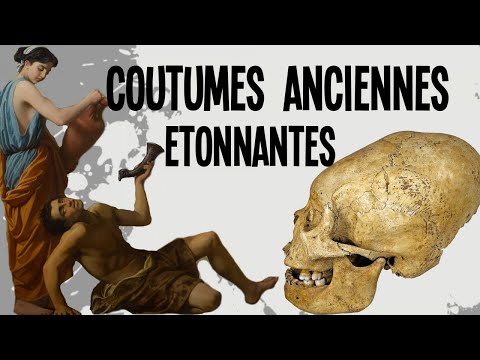
- Incan Voluntary Skull DeformationThe Practice• Conquistadors were surprised to see Incas with excessively flat or elongated skulls • The Incas practiced voluntary skull deformation using tight fabric strips or wooden vices to exert constant pressure on children's skulls • The practice was applied until age 6 when skull bones were still malleable, creating flattened, elongated, square, or triangular shapesSpiritual Reasons• For the Incas, the head was the seat of spiritual energy and it was vital to protect that spirit from escaping the body • Deforming a child's head was believed to protect him and his soul • The deformation could mark a rite of passage, dedicating the child's social integration into adulthoodSocial SignificanceSkull deformation served as a social marker, allowing individuals to claim belonging to specific groups permanently since the deformation was irreversible. Each group had its own deformation style.Broader Context• Voluntary skull deformation was not unique to the Incas but found in many civilizations across time and geography • Evidence exists in Iraq from 45,000 BC, Mexico from 7,000 BC, and South America from 3,000 BC • The practice was also found in Asia among the Huns from the 1st century, in Africa, and in Europe among Germanic clans like the Burgundians and Franks • Even in 19th-century France near Toulouse, cranium deformation was practiced