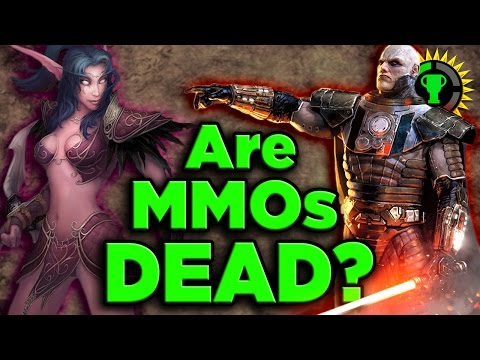
Game Theory: Is the MMO genre DYING? (Sponsored)
MMOs aren't dying they're evolving
7 chapters
- The Death of MMOs: Examining Recent FailuresProblem StatementGaming publications have been discussing the death of the massive multiplayer online genre, with major titles like Lord of the Rings MMO being canceled and Star Wars: The Old Republic struggling since months after launch.Industry Decline• Blizzard canceled Titan, their big Warcraft follow-up after 7 years of development • World of Warcraft subscriptions are at their lowest since 2005 • Elder Scrolls Online largely underwhelmed at launchGenre ComparisonMMOs are being compared to other dying genres like rail shooters, suggesting they may become obsolete.Alternative PerspectiveBefore concluding that MMOs are finished, there is reason to believe a future exists for these games as they are evolving rather than dying.
- The Origins: Early MMOs and Text-Based GamingFirst GamesThe first true MMOs were MUDs (Multi-User Dungeons) in 1978, where players entered commands for the game to execute in a text-based format similar to Dungeons and Dragons.Technical Foundation• Players accessed games through ARPANET, a pre-internet computer network available only at universities like MIT and Essex • ARPANET wasn't always active, limiting gameplay to 2:00 a.m. to 8:00 a.m. and weekends • Games like Uber required dungeon parties to even survive, establishing cooperative gameplay as a genre stapleCultural ImpactMUDs earned the nickname Multi-Undergraduate Destroyer because they would ruin college students' lives, establishing the reputation of MMO players gaming all night in dark rooms.Early ChallengesPlayers faced extreme costs through TELNET, paying $7 per hour for internet access plus long-distance charges, making gameplay prohibitively expensive.
- The Subscription Era: Graphical MMOs and Cost EvolutionGraphical AdvancementBy 1985, graphical MUDs emerged with basic images and pictures, introducing visual elements beyond pure text.Subscription Introduction• Early internet service providers like CompuServe partnered with games to charge players subscriptions • Costs ranged from $6 to $12 per hour depending on connection speed, allowing only one command every 10 seconds • Shadow of Yserbius cost $119 per month, making MMO gaming extremely expensive for most playersPlayer ConcernsPlayers worried that high subscription costs would kill all game subscribers, prompting developers to seek ways to make MMOs more accessible.Pricing Breakthrough• The 1990s brought multiple ISPs offering MMOs like Neverwinter Nights with dedicated servers supporting hundreds or thousands of players • Subscription prices dropped to approximately $15 per month with occasional expansion packs • This model was far superior to previous pricing and allowed millions of new players to try MMOs
- The Modern Crisis: Development Costs vs. Revenue ModelRising Budgets• Star Wars: The Old Republic cost nearly $200 million to make, the fourth most expensive game ever made • Destiny cost $500 million, the most expensive game ever made • Disney Infinity cost $100 million to createFinancial PressureDevelopers must create vast, open-ended worlds that feel alive and constantly changing, requiring enormous investment with high risk that people may not like the final product.Player FeedbackStar Wars: The Old Republic slashed subscription fees after EA's CEO stated that 40% of exiting players were turned off by the monthly subscription requirement.Solution EmergesMany players indicated they would return if MMOs offered a free-to-play model, repeating the demand from the 1990s when players wanted games untethered from ISPs and costing less than $100 per month.
- Subscription Fatigue: The Free-to-Play RevolutionModern ChallengePlayers experience subscription fatigue, paying for internet, Netflix, Spotify, Twitch, and Patreon subscriptions simultaneously, making additional gaming subscriptions increasingly unwelcome.Player Data• Players are far more likely to try a game if it's free than if it costs money • People want games they can try before buying or invest in at their own comfort level • Even World of Warcraft has started offering in-game transactions instead of charging players for the first 20 levelsStigma vs. RealityWhile gamers treat free-to-play as a dirty word, the numbers show it is clearly the model players actually want and prefer.Mobile Future• The future of MMOs truly lies in mobile gaming • Smartphones are becoming more ubiquitous with improving data rates and graphical capabilities • Hardcore gaming on phones and tablets will become the norm
- Game of War: The Evolution of MMO DesignGenre RootsGame of War maintains roots in the oldest parts of the MMO genre by focusing on real-time PvP action and requiring players to form alliances with people around the world to defend their cities from destruction.Modern Innovations• Content is distributed in real time with no need to download patches or updates • Servers are no longer segregated by language, with an in-game crowdsourced translator enabling global engagement • The game is accessible to millions of players from casuals to hardcore gamersAccessibilityInstead of requiring players to commit days in front of a computer, Game of War is played in short bursts, matching how modern audiences consume content.Financial ModelGame of War represents a free-to-play model that people seem to prefer over subscriptions, offering a living, breathing, evolving world to millions of players.
- Conclusion: MMOs Are Evolving, Not DyingReframed PerspectiveThe MMO genre is not going anywhere and is actually the most resilient gaming genre, simply entering the next phase of its life as a free-to-play system.Model LimitationsThe free-to-play model is not perfect, and players will complain regardless of whether games are free-to-play or paid, as there is no model that satisfies everyone.Practical RealityFor a game genre that needs to cater to millions of people offering a living, breathing, evolving world, the financial model that Game of War represents is one that people prefer over subscriptions.Future UncertaintyThe genre will continue evolving in response to player demands, and within a few years, players may ask the genre to change again, just as they did when demanding free-to-play models.