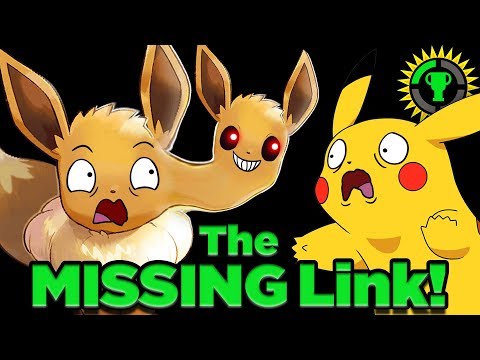
Game Theory: Why Eevee is the MISSING LINK to Pokemon Evolution!
This episode finally solves the mystery of Pokémon evolution
9 chapters
- Introduction to Eevee's Unique Evolutionary SystemEevee's SignificanceEevee is the first Pokémon to have branch evolution, allowing it to evolve into multiple different Pokémon rather than just one.Evolution Varieties• Originally had three options: Jolteon, Flareon, and Vaporeon • Now has eight possible Eeveelutions across multiple generations • Range from different elemental types and aesthetic stylesEvolution MysteryWhile we understand that Pokémon evolution is not like real-world evolution, we've never been able to accurately label what is really happening until now.Research FoundationEevee is identified as the key to solving what Pokémon evolution actually is, with pieces of the puzzle fitting together through examination of its unique abilities.
- The Problem with Traditional Evolution ExplanationPokédex DefinitionEevee is described as a rare Pokémon that adapts to harsh environments by taking on different evolutionary forms.Darwin's Evolution Issue• Real evolution happens over hundreds of generations as organisms change traits to adapt to their environment • Pokémon evolution happens instantaneously when exposed to an item like a colored stone • This is fundamentally incompatible with natural evolutionary processesReal-World ComparisonTaking a turkey to the North Pole and having it instantly evolve into a penguin would be the equivalent of Pokémon evolution, which doesn't happen in nature.Scientific GapEvolution alone cannot explain how Eevee's physical changes happen, requiring an alternative scientific explanation.
- Introduction to EpigeneticsDefinitionEpigenetics is the phenomenon by which animals are born with one set of genes, but have parts of their DNA that are locked at birth and can later be unlocked by environmental factors.DNA Complexity• Humans have 2.9 billion base pairs of DNA in their body • Not all DNA is working at the same time • Specialized proteins turn off and on different genes throughout a lifetimeGene Expression ChangesAs children grow, genes for bone growth, brain building, and hormones are activated. Later in life, some genes are locked, causing metabolism to slow and hair to turn gray.Personal ExampleA child can have blonde hair while parents have brown hair because melanin-producing genes are turned off, but activate later as the child ages, changing hair color.
- Epigenetics in Nature: Honey Bees and MiceHoney Bee Model• Female bee larvae can grow into either a queen bee or a worker bee • Royal jelly fed to larvae determines which form they become • Queen and worker bees look vastly different as adults but are identical as larvaeBee-Eevee ParallelLike Eeveelutions, two bees start genetically identical but end up with different appearances due to environmental triggers (royal jelly), despite having the same DNA.Agouti Mouse Example• Two genetically similar agouti mice have different appearances due to nutritional differences • One develops with lighter fur and obesity, the other normally • Same DNA sequence produces different phenotypes based on environmental factorsBroader ImplicationsEpigenetics explains how identical genes can produce vastly different physical characteristics based solely on environmental conditions.
- Human Applications: Genetics vs EnvironmentDiabetes Paradox• Diabetes is described as both a genetic disease and an environmental condition • Parents and grandparents with diabetes increase likelihood of inheritance • Poor diet and lack of exercise can cause diabetes developmentGenetic PotentialYou might inherit genetic potential for diabetes encoded in your DNA, but the disease only activates if triggered by a bad diet.Both Factors RequiredSomeone without genetic predisposition won't develop diabetes regardless of diet, while someone with predisposition can avoid it through good diet and exercise.Epigenetic PrincipleThis demonstrates that genes can remain turned off throughout life if environmental triggers are absent.
- Eevee as Epigenetic ModelDual Requirements• To become a Vaporeon, Eevee needs genetic potential (being born as Eevee) and environmental trigger (water stone) • Pikachu won't become Vaporeon with water stone because it lacks the genetic potential • Both genetic and environmental components must be presentSpecies ConsistencyThe DNA sequence remains unchanged through Eevee's transformation; only gene expression changes. Eevee fundamentally stays the same species despite physical changes.Breeding Evidence• Eevee lays Eevee eggs, not Jolteon eggs, when breeding with other Pokémon • Jolteon lays Eevee eggs, not Jolteon eggs • No Eeveelution reproduces as its evolved formGenetic InheritanceEeveelutions don't pass phenotypic traits to offspring, but pass genetic potential to express those traits, explaining why eggs revert to Eevee form.
- Expanding to All Pokémon EvolutionUniversal PrincipleEpigenetics explains evolution across all Pokémon species, not just Eevee. What we call Pokémon evolution is actually epigenetic gene expression.Charizard Example• If Charizard were true evolution, breeding two Charizard would produce Charizard, not Charmander • Charizard eggs are Charmander because the base DNA remains unchanged • Gene expression for larger, more powerful traits has been activatedEnvironmental TriggersFor Charizard, the environmental trigger is battle stress and leveling up, not a stone. Stressful situations affect gene methylation and phenotype expression.Behavioral EvidenceResearch on lab rodents shows exposure to aggressive social interactions causes animals to become either threat-avoidant or stronger, mirroring Pokémon level-up growth.
- Why Evolved Forms Are Rare in the WildBiological Costs• Evolved Pokémon like Blastoise and Venusaur are rarely found wild • Larger bodies require more food and stronger legs • There are more ants and termites than elephants because smaller forms are more sustainableSurvival StrategyA wild Squirtle benefits from a small body requiring less food, making it evolutionarily advantageous in nature.Trainer Capture EffectWhen captured and forced into battle by trainers, Squirtle's environment changes, making evolution into larger, stronger forms advantageous for survival.Gene Activation LogicGenes for giant turtle machines remain unexpressed in wild Pokémon but activate when battle stress becomes the dominant environmental factor.
- Conclusion and Real-World ApplicationsScientific SummaryPokémon evolution is not evolution but epigenetic signaling where phenotypic gene expression changes in response to environmental factors.Real Biology Connection• The principle fits real biological models of unexpressed traits • Animals are born with genetic potential that unlocks with environmental factors • Leaf stones triggering Leafeon is no different from nutrition causing Agouti Mouse color changesEevee's RoleEevee is the key to understanding Pokémon evolution because its multiple evolutionary paths perfectly mirror epigenetic gene expression principles found in nature.Broader UnderstandingThis theory applies to all Pokémon across all games, providing a unified biological explanation for what was previously inexplicable within real-world science.