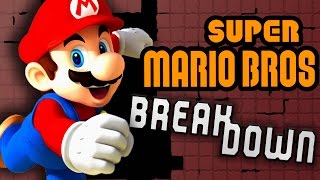

Super Mario Bros Break Down: Mario ALMOST Had A Gun?
6 chapters
- Mario's Legacy and Nintendo's VisionIndustry ImpactSuper Mario Brothers is one of the few gaming franchises that has touched almost every aspect of the gaming industry and continues to carry that influence today.Development Goals• Create a swan song title for Nintendo's older cartridge-based family computer system • Showcase what could be done with cartridges before moving to disc-based systems • Further Nintendo's foothold in Dynamic athletic gamesCreative TeamShiru Mamoto served as creative lead with co-designer Tekashi Tzuka Mamoto leading the design team.Design PhilosophyThe team pitched diverse ideas that fell into two categories: simple and linear designs, or complex and complicated designs, eventually splitting them into two distinct projects.
- From Rectangle to Mario: Early DevelopmentInitial ConceptThe game began with an unmoving pitch black screen and the player controlling a big rectangle with no enemies, no objectives, and no jumping ability.Mario's Selection• Tzuka befriended the head of Nintendo's sales and marketing division • Noticed that Mario Brothers for the Famicom was selling consistently well despite being released over a year prior • Suggested using Mario as the player character due to his popularity and fit for the dynamic new gameCombat FocusEarly versions featured heavy combat gameplay with the A button used to attack, B to run, and up on the d-pad to jump, allowing Mario to obtain various weapons including a rifle and beam gun.Evolution ProcessDevelopment shifted focus from shooting to jumping, with guns evolving into power-ups, bullets into fireballs, and kicking into jumping on enemy heads.
- Refining Gameplay and Camera DesignCamera ProblemDuring development, Mario was quite large and the screen was relatively close to him, but play testers wished to see more of the stage.Design Solution• The camera was pulled out to show more of the stage • Mario was shrunken down to accommodate the expanded view • A new power-up item was added that gave an extra hit point and increased Mario back to Miyamoto's preferred sizeGameplay InnovationThe modest mechanics combined with the new focus on jumping allowed the team to craft beautifully structured level design with proper difficulty progression.Level Design MasteryEarlier levels introduced mechanics, later levels offered complex challenges, and intermediate levels bridged the two seamlessly creating a nearly perfect difficulty curve.
- Building Mario's World and IdentityCharacter Evolution• Mario originated as Jumpman in the arcade game Donkey Kong • His distinguishing features were added out of practicality rather than design intent • Mario Brothers gave him a name, a younger sibling, and the beginnings of a world with pipes and turtlesWorld CreationHeavy influence was taken from European folklore with mushrooms as the general theme, resulting in the Mushroom Kingdom with eight different worlds each containing four levels.Story FrameworkPrincess Toad Stool was held captive by Bowser the evil King Koopa, and the player must defeat Bowser and his army to save the princess and restore peace.Personality and PolishThe game received a complete identity with a world to explore and a kingdom to save, bringing Mario from a practical character design to a full protagonist.
- The Iconic SoundtrackComposer SelectionThe team brought on Koji Condo, a relative newcomer, to compose the soundtrack based on a prototype.Musical Development• Initial compositions were much slower than final versions • Tracks were adjusted and sped up as development continued • Condo received commentary from play testers during the composition processMemorable ThemesThe ground theme is cheery and bouncy and encourages fast gameplay; the underwater theme adds high seas adventure with waltzes; the underground theme retains bounciness with playful mystery.Cultural ImpactSeveral tracks from this game are among the most recognizable in all of video gaming, with the ground theme evolving into Mario's main theme and becoming perhaps the most instantly recognizable piece in gaming.
- Legacy and Critical ReceptionCommercial SuccessSuper Mario Brothers was packed with the North American NES release and sold over 40 million units on the NES alone, making it one of the highest selling games of all time.Critical AcclaimThe game was a massive hit with both critics and audiences, consistently appearing at the top of various best games of all time lists alongside The Legend of Zelda.Design InfluenceSuper Mario Brothers' take on the platformer inspired an untold number of other games and remains a pillar of the gaming industry.Lasting AchievementDespite crude pixel art and minimal story, the game's charming and fun interactive experience remains revolutionary because the developers focused on making gameplay special first.