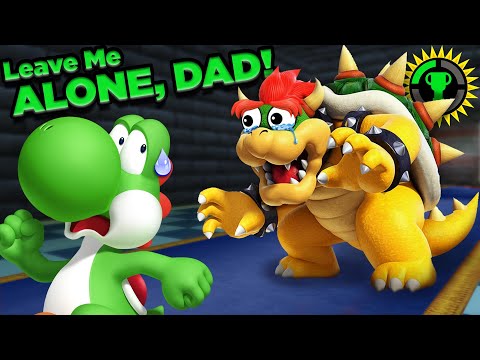
Game Theory: Bowser's LOST Child...Yoshi!
6 chapters
- Introduction and Previous Yoshi TheoryOpening SetupThe Game Theorists team searches for a new video idea that is fun, upbeat, and mainstream with nostalgia. Yoshi eagerly suggests himself as the topic.Prior Research• In a 2020 episode, Yoshi was determined to be related to the monolophosaurus based on physical features like face shape and red frill • The monolophosaurus is a medium-sized bipedal dinosaur with similar characteristics to Yoshi • This conclusion seemed definitive at the timeMissing ContextThe previous theory glossed over a major debate in the community: whether Yoshi is a dinosaur or actually a dragon.Official Classification• Nintendo's official Super Mario World guide refers to Yoshi as a dinosaur • Super Smash Brothers games explicitly refer to Yoshi as a dinosaur • Dinosaur Land is named after dinosaurs, suggesting Yoshi belongs in that category
- The Dragon vs Dinosaur ContradictionEvidence for Dragon• Super Mario World features a sign showing Yoshi calling himself Super Dragon Yoshi • Yoshi appears on Dragon Coins in the same game • The Super Mario World manual refers to Yoshi as 'a dragon named Yoshi' • In Super Mario Galaxy 2, a sign identifies Yoshi as 'the space Dragon' • Yoshi's Final Smash in Super Smash Brothers Brawl and 4 Wii U is called Super Dragon and causes him to sprout wings and breathe fireEvidence for Dinosaur• Yoshi lives in Dinosaur Land • Official Nintendo guides classify him as a dinosaur • The dragon references initially seemed like translation errors or older game quirksPattern RecognitionThe dragon classification appears consistently across different eras, from older games like Super Mario World to recent games like Super Mario Galaxy 2, suggesting it's not merely a translation issue or outdated reference.Mystery DeepensWith contradictory evidence on both sides, the simple answer of dinosaur or dragon classification becomes impossible to determine.
- Comparative Analysis of Similar CreaturesRelated Creatures• Dory is a plesiosaur first appearing in Super Mario 64 who has increasingly resembled Yoshi over time • Pie from Super Mario 3D World (2013) is actually based on a nothosaur, an ancestor to the plesiosaur, not a plesiosaur itself • Bahamut is a massive ancient dragon from Super Mario RPG (1996) who shares Yoshi's bulbous head, color pattern, and bipedal stanceFamily Tree Theory• Semi-aquatic plesiosaurs gave rise to two branches: one went fully aquatic becoming Dory, the other went fully terrestrial becoming Yoshi • All three creatures share the Japanese name ending 'shei': Dory (Dorī), Pie (Poresi), and Yoshi • English releases only kept Yoshi's Japanese nameScientific ClassificationPlesiosaurs and nothosaurs are not technically dinosaurs but rather saurian reptiles, ancient marine reptiles thought to be ancestors to dinosaurs, making Yoshi a descendant of marine reptiles rather than a true dinosaur.Dragon ConnectionBahamut shares the same Japanese name (Dorī) as Dory the friendly plesiosaur, creating an unexpected lineage connection between peaceful water creatures and an aggressive fire-breathing dragon.
- The Hybrid HypothesisHybrid Biology Basics• Mules are hybrids of female horses and male donkeys, combining strength with endurance • Other animal hybrids include ligers, polar bears, and wolphens • Hybrids are possible when animals come from the same genus with similar DNAInherited TraitsHybrids inherit traits from both parents including appearance and behaviors coded into DNA, such as birds developing unique migration routes combining those of both parent species.Yoshi as Hybrid• Yoshi doesn't fit neatly into either dragon or dinosaur category because he inherited traits from both sides • He took the main form of Bahamut but lost the wings due to mixing with flightless creatures Dory and Pie • Rex is an example of a dinosaur-like creature with dragon wings, showing hybrid characteristics can appear in the game seriesSolution ProposedNintendo's inability to decide whether Yoshi is a dinosaur or dragon is resolved by recognizing he is technically both through hybrid ancestry, combining characteristics of dragons, plesiosaurs, and nothosaurs.
- The Shell and Koopa ConnectionShell vs Saddle Debate• Original 1993 artwork labeled the object on Yoshi's back as a saddle and its flat appearance supports this • In modern appearances, this object has become more raised, smaller, and rounded • Nintendo Japan's official website currently refers to it as a shellKoopa Connection• Shells in Mario Kart are confirmed to belong to Koopa Troopas • Dry Bones (a Koopa skeleton) and freshly hatched Yoshi have similar tooth-like bumps in their mouths that disappear as they grow • Koopas have major species variations including Boom Booms, Hammer Brothers, and BowserSize and OriginsYoshi's small size compared to dinosaurs and dragons could be explained by hybrid ancestry with Koopas. In the 2010 Super Mario history book, creator Shigeru Miyamoto states that Yoshi was originally supposed to be a type of Koopa.Scientific Name Evidence• Yoshi's official scientific name is T yoshisaur munchakoopas from the 1993 Nintendo character guide • The word 'Koopa' is literally in Yoshi's official name, providing a major clue about his origins • This classification supports Yoshi being part Koopa
- Final Theory and Dark ImplicationsComplete ClassificationYoshi is a hybrid creature combining dragon, dinosaur, plesiosaur, and Koopa ancestry, which explains why he cannot be cleanly categorized into a single type.Design Evolution• Recent interviews emphasize the shell rather than saddle distinction • The design has clearly shifted toward a shell-like appearance over time • Multiple interviews specifically reference Yoshi's Koopa connectionDarker InterpretationMario has repeatedly subjected Yoshi to mistreatment by jumping off him to reach higher platforms or leaving him in pits. Despite being Koopa-descended, Yoshi has remained loyal to Mario rather than siding with Bowser.Ominous FutureThe accumulation of mistreatment could eventually cause Yoshi to turn evil and embrace his Bahamut and Koopa roots, finally taking his rightful place at Bowser's side against Mario.