Comment la montée des eaux va changer la France (plus que prévu)
Here in the middle of the Pacific sits the first entire nation that could disappear due to rising seas.
7 chapters
- Introduction: Rising Waters, a Risk Far From DistantContextAn entire Pacific nation could disappear due to rising sea levels, as climate warming continues to worsen.Common MisconceptionMany think this problem only affects remote small islands, not countries like France.Key Questions• How much will water levels rise? • How could this change landscapes and lives in France? • Who will be affected: coastal areas, cities?ApproachThe author visited a small flooded town earlier this year to understand how to adapt to flooding, France's primary natural risk.
- Why Sea Level Is Actually RisingCorrected MisconceptionMelting sea ice or icebergs doesn't raise sea level, because that water is already in the ocean (like an ice cube already in a full glass).Real Causes• Melting of land-based glaciers, adding new water to the sea • Thermal expansion of water: the warmer it gets, the more water molecules move around and take up spaceKey Figures• 1.6 mm/year on average between 1900 and 1990 • 5.9 mm in 2024 alone (expansion + glacier melting) • By 2050, up to roughly 50 cm rise possible under the +3° scenarioConsequenceEven 50 cm would be enough to affect hundreds of millions of people worldwide, and in France too.
- Indonesia: An Extreme Preview of Our FutureStriking CaseIndonesia is relocating its capital to Nusantara because Jakarta, the world's largest capital city, has become too exposed to flooding.Aggravating Factors• 40% of Jakarta's urban area lies between 50 cm and 1.5 m above sea level • Tides that intermittently raise water levels • Extreme events (hurricanes, storms) occurring more frequently • Massive concrete development and city subsidence under construction weightHuman CostBy end of 2025, flooding in Indonesia caused over 1,000 deaths and 1.2 million displaced people.Long-term ImpactBeyond immediate damage, soil salinization from saltwater permanently disrupts the balance needed for crops; according to the IPCC, once-in-a-century climate events could occur every 10 years.
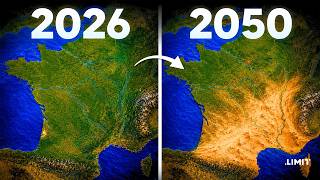
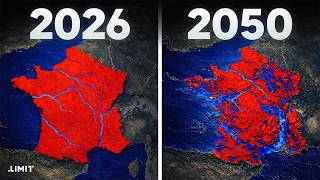
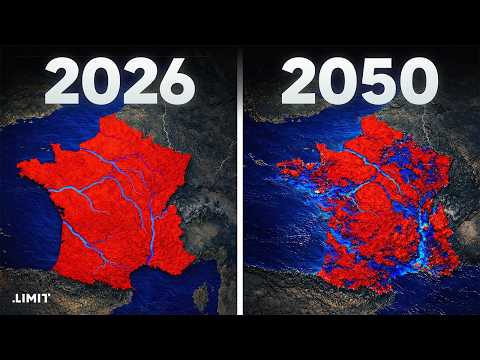
- France Facing Its Primary Natural Risk: FloodingHistorical PrecedentIn 1910, a major flood submerged Paris, mixing sewage and floodwater; it took 35 days to return to normal.Current Situation• Flooding is France's primary natural risk • One quarter of French people exposed, one third of jobs potentially impacted • Coastal population up 45% in 60 years2050 Projections• Thousands of homes affected • 4,500 homes at risk • 87 billion euros in real estate value under waterTwo Flood TypesMarine flooding from rising sea levels, but also flooding from intense rainfall and river overflow, which also affects inland areas far from coasts; soil damaged by concrete development and overuse no longer acts as a sponge.
- Briolet, a Town Facing the 2026 FloodGeographic ContextBriolet, near Angers, is bordered by two parallel rivers, the Sarthe and the Loir, making it highly vulnerable to flooding.Traumatic PrecedentIn 1995, a historic flood reached 7.22 m and nearly forced complete evacuation of the town, remaining etched in everyone's memory.2026 Flood• Water level reached: 6.75 m, about 50 cm short of the 1995 record • Extremely rapid and unexpected rise: up to 2–3 cm per hour • Of 1,300 homes, approximately 130 houses affected by seepage, pipe damage, or groundwater pressureResidents' ObservationThe speed of the water rise surprised everyone, unlike typical floods that rise slowly.
- Adapt Rather Than Suffer: Possible SolutionsLimits of Traditional SolutionsBuilding dikes, dams, and canals to artificially control water doesn't address root causes: climate warming, concrete development, destruction of wetlands.Actions in Briolet• Public meetings, exhibitions, and films to raise awareness of flood risk • Crisis management drills • Education for newcomers and schools • Investment in sustainable mobility and cycling paths • Removing impervious surfaces from schoolyards and parking lots, adding vegetationNatural Solutions at Larger ScaleRestore wetlands, capable of absorbing water, and preserve strategic floodplains as buffer zones.Local SolidarityAbout a hundred volunteers mobilized via a crisis hotline to help residents move furniture up and down during the flood, showing strong community spirit.
- Conclusion: Hope Without Denying RealityKey MessageThe situation is dire, but fatalism is not an option.Mobilized ActorsElected officials, scientists, and citizens continue fighting for a sustainable future, and mutual aid often emerges in difficult moments.Channel's CommitmentThe LIMIT channel will continue documenting problems while showing how to live in a world that respects planetary boundaries.Call to ActionPossible future episode on beavers rewilding rivers; the channel can be supported via the link in the description.