IL VIENT DE SE PASSER QUELQUE CHOSE... #Glacier #Thwaites #Apocalypse
What happens in Antarctica doesn't stay in Antarctica.
10 chapters
- Introduction: A Glacial ObituaryShocking announcementScientists drafted a press release obituary announcing the death of an ice shelf, unsure whether it will happen within months, years to come, or as soon as tomorrow.The ice shelf• 350 m thick, 15 times the size of Paris • Over the past 6 years, its movement speed has tripled • It sits in front of Thwaites Glacier, nicknamed the doomsday glacierStated risks• Enough ice to raise all the world's oceans • Cities like Dunkirk, the Camargue, Bordeaux, New York, Shanghai, London are threatened • The Netherlands and other countries could vanish from the mapGuestGlaciologist Frank Pattyn, professor at ULB, participates in the video and also composed part of the episode's music.
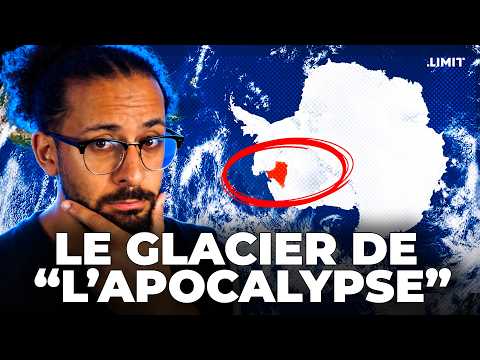
- Thwaites and the Shelf That Gives WayGlacier overview• Thwaites flows into the Amundsen Sea in West Antarctica, spanning 192 km² • It accounts for 4 to 5% of global sea level rise • It is losing ice 5 times faster than in the early 1990sIce shelfTwo floating platforms sit in front of the glacier: the western one already in tatters, and the eastern one held only by a single anchor point like a bridge pillar.Measured acceleration• Since 2020, the shelf has been melting from below and growing thinner • January 2020: it advanced 700 m per year • January 2026: over 2 km per year, three times faster in 6 yearsScientific alertRob Larter of the British Antarctic Survey warned that final rupture could happen suddenly, prompting the preemptive obituary press release.
- Is 'Apocalypse' Really the Right Word?Nuance on obituaryAccording to Frank Pattyn, burying a glacier makes sense because it doesn't easily return, but burying an ice shelf doesn't really make sense since the glacier can form a new one.Real cause• It's not warm air heating the surface, which barely melts even in summer • It's relatively warm (2 to 3°C) salty deep water called Circumpolar Deep Water that erodes the shelf from below • This phenomenon is linked more to wind circulation changes than to warm water directly tied to climate warmingImmediate consequenceIf the shelf breaks, it has no direct effect on sea level because it's already floating, like an ice cube in a glass.What truly worries usThe real concern is what the shelf was holding back, or thought it was holding back: Thwaites Glacier itself.
- A Name Born Before the DataOrigin of nicknameThe name 'Doomsday Glacier' appeared in 2017 in a Rolling Stone report by Jeff Goodell, later picked up by the New York Times, the Guardian, and the BBC.Scientists' viewAmong colleagues, scientists agree: they dislike the name, even though it helped publicize the issue.Historical roots• 1978: John Mercer speaks of a 'threat of disaster' in Nature about West Antarctica • He predicts that if the atmosphere warms, shelves will disappear and the ice sheet will empty into the ocean (5 m) • 1974: Johannes Weertman theorizes instability of ice sheets resting below sea level • 1981: Terry Hughes calls the region the 'soft underbelly' of AntarcticaMeasurement delayThwaites is isolated (nearest station 1500 km away); only in 2018 did a submarine robot, via a 600 m hot-water borehole, enable the first human view of where the glacier leaves the ground.
- Why West Antarctica Is the Weak LinkBedmap 3 projectIn March 2025, the Bedmap 3 project, of which Frank Pattyn is co-author, enabled precise mapping of what lies beneath Antarctic ice.Two Antarcticas• East: a true continent, rock mostly above sea level, protected from the ocean • West: basins plunging 2 km below sea level, a 'marine ice sheet' resting on the seafloor • Beneath Thwaites, bedrock slopes into the continent's interior, down to over 2 km below sea levelInstability mechanismThe thicker the ice at the grounding line, the greater the discharge flowing through it—like a bike with no brakes accelerating downhill until a tipping point called collapse.Key figuresThe ice sheet's peak reaches nearly 4800 m above sea level, while Thwaites' base lies over 1 km below the sea surface.
- The Scientific Debate: Collapse or Not?Erin Pettit's viewIn December 2021, the glaciologist announces the shelf could break 'like a windshield' within 3 to 5 years, and if it fails, the glacier behind will accelerate.Hilmar Gudmundsson's viewIn 2023, this glaciologist and colleagues calculate that the shelf holds back almost nothing: its disappearance wouldn't noticeably change ice losses over the next 50 years.ReconciliationFrank Pattyn believes both approaches aren't in disagreement: one examines local ice fragility, the other global glacier dynamics.The real signalThe shelf acts as a thermometer: it's not the problem's cause but evidence that warm water is already melting the glacier's base from below.
- Sea Level Rise Numbers58 metersRise if all of West Antarctica melted completely: a theoretical figure no model suggests on a human timescale.3.30 metersRise from complete collapse of the West Antarctic marine ice sheet, with a tipping point around +1.5°C warming, over roughly 2000 years; triggering may already be underway.65 cm and 6 cm• 65 cm: rise from Thwaites alone if all its ice reaches the ocean, over centuries • 6 cm: what Thwaites will actually contribute by 2100, with real acceleration risk after 2080WarningEach figure is true separately, but mixing them wrongly suggests catastrophe arriving tomorrow.
- Antarctica Isn't the Only PlayerScience Advances studyA May 2026 study details for the first time how sea level rise budget has been distributed since 1960.Current breakdown• 43%: thermal expansion of water (water expands as it warms) • 27%: melting mountain glaciers (Tibet, Nepal...) • 15%: Greenland melting • 12%: AntarcticaChanging driverThe sea was rising mostly through thermal expansion, but now rises increasingly from continental ice melt, the largest potential reservoir being West Antarctica.New 2026 studyEarly 2026 in Geophysical Research Letters, researchers calibrated models on actual Thwaites data (2004-2017) and projected to 2067.
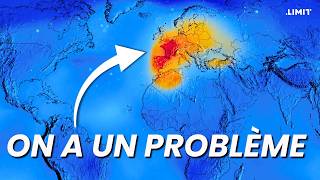
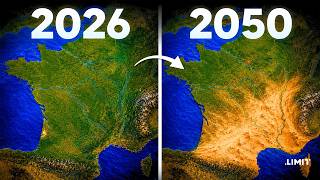
- Why Europe Is AffectedModel results• By around 2067, Thwaites alone could lose 200 billion tons of ice per year, equal to all current Antarctic losses • Model versions that best reproduce past observations also project the strongest lossesGravitational attractionAn ice sheet is so massive it attracts water around it like an ocean magnet, making sea level locally higher than it would be without it.Counterintuitive mechanismWhen the ice sheet melts, its attraction weakens: sea level drops near the poles, but released water causes stronger-than-average rises in distant zones, especially the northern hemisphere, hence Europe.Coastal impactCities like Dunkirk, Ostend, the Camargue, Poitevin Marsh, and the Gironde estuary are affected; each centimeter of average rise raises the storm surge baseline, turning a once-in-a-century storm into a far more frequent event.
- Conclusion: What Really MattersWhat's overstatedThe dying shelf won't raise the sea because it's already floating, and models agree it held back almost nothing: no sudden doomsday glacier collapse to expect.What's trueWest Antarctica's tipping point, around +1.5°C, may already have been crossed according to Frank Pattyn, triggering a 3.30 m rise spread over centuries and unstoppable once the loop starts.What we can still doDirection is already set, but the slope remains adjustable: each degree avoided buys decades to prepare cities for adaptation.Final messageFrank Pattyn stresses humans are responsible for observed cryosphere changes, never succumb to eco-anxiety, and net-zero emissions are essential.