Pourquoi la France se réchauffe plus vite que le reste du monde ?
Years go by and climate warming only gets worse, but some countries will suffer the consequences far more than others.
10 chapters
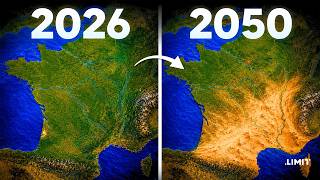
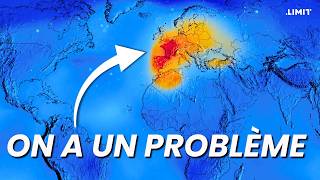
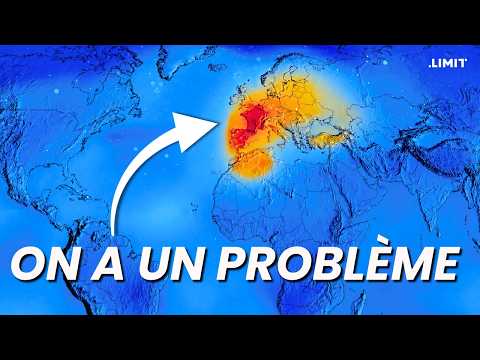
- Introduction: A map that raises questionsObservationA climate warming map shows a red spot over France and Europe, a sign that the region is warming faster than the rest of the world.Key figures• The world is warming by +1.5° • Europe is warming by +2.5° • A differential of +1° that approaches extreme catastrophe scenariosVideo objectiveExplain the four factors behind this temperature difference and what it means for the future.TeaserThe video promises to explain how this situation could be a huge opportunity for France to make a change.
- Temperature evolution since 1945DataSince 1945, global average temperature has risen from +0.2° to +1.5° compared to pre-industrial levels.CauseThis increase is explained by human activities that release greenhouse gases, with approximately 40 billion tonnes of CO2 emitted per year.Europe comparisonUntil 1990, Europe followed the global trend, then diverged sharply to reach +2.5°, or 1° more than the rest of the world.StakesEach additional degree multiplies certain natural disasters by 2, 4, 8, 10 or more, making this 1° gap enormous.
- Factor 1: CO2 emissions, a false leadHypothesis testedSince CO2 and temperature are correlated, one might think Europe emits more CO2 than the rest of the world.Reality of figuresEurope actually emits far less CO2 than China and the United States, yet its temperature rises faster.ExplanationCO2 mixes throughout the atmosphere in 1 to 2 years, so a tonne emitted in Lille or Shanghai warms the climate identically.ConclusionThe European CO2 hypothesis doesn't explain the warming difference; four other factors will be presented, starting with aerosols.
- Factor 2: Aerosols, a counterintuitive effectDefinitionAerosols are tiny particles from cars and factories, on the order of a micrometre.Umbrella effectThese particles reflect solar radiation, creating a local cooling effect.Pollution cleanup consequence• Since 1990, Europe emits less and less CO2 and aerosols • Sunshine levels in Europe are at their highest since satellite measurements began in 1983 • Polluting less therefore causes temperature to rise fasterNuanceAerosols don't really cool the climate; they mask the true warming from greenhouse gases, like makeup; they remain harmful to health and should be avoided.
- Factor 3: The albedo effectMetaphorLike a black t-shirt absorbs more heat than a white one, the colour of Earth's surfaces influences warming.Role of iceArctic ice and snow act like a white t-shirt, reflecting solar energy back into space.Melting and consequencesAs ice melts, it gives way to ocean or dark rocks that absorb much more heat.ImpactEven if this melting occurs hundreds of kilometres away, it still impacts Europe and France.
- Factor 4: The jet stream slowdownDefinitionThe jet stream is a giant air current that crosses the planet from east to west, nicknamed the weather conveyor belt.MechanismIts engine is the temperature gradient between the equator and poles; as the Arctic warms faster, this gradient shrinks, slowing the jet stream.Effect on EuropeThis slowdown disrupts air flows and compresses air masses, particularly over Europe.ConsequenceIt creates heat domes: warm air gets stuck on the ground without renewal, multiplying the intensity of heatwaves in Western Europe.
- Main factor: The land-ocean differenceMetaphorLike sand heats faster than water at the beach, land warms faster than oceans.ExplanationEarth is 70% water while Europe is solid continent, hence its faster temperature rise.FiguresIf counting only continents (without oceans), average warming reaches +2°, compared to +2.5° for Europe.Future projectionWithout CO2 emission changes, a global +3° scenario would equal +4° for France, with multiplied risks of heatwaves, wildfires and flooding.
- Turning danger into opportunityQuestion posedFacing these risks, the question is whether all is lost.Ilian Moundib's answerNo, it's not hopeless: grassroots organised institutions can scale up and make society more resilient, and the timing is right to shift things because climate change effects are becoming visible in France.France contextHistorically a major polluter but little impacted thanks to a mild climate, the natural disaster risk ranking shows France has moved in less than 5 years from low-risk to high-risk country.StrategyWe must use crises to politicise the issue, prepare a plan B, strengthen climate risk adaptation and move away from an extractivist model.
- Antifragility and personal commitmentAntifragility conceptLike muscle building breaks fibres that return stronger, antifragility means taking advantage of crises to transform the system.EtymologyThe word crisis (wēijī) in Chinese is composed of two characters meaning danger and opportunity.Johan's testimonyAt 25, he gave up his finance career about 2 years ago to join Limite, first as full-time volunteer then paid minimum wage through donations and support.MessageEveryone can act at their scale on climate but also biodiversity, health or food, by investing their time or money in the right direction.
- Conclusion and call to supportLimite's missionProvide understanding keys to the world to empower viewers, without preaching or talking down.ResourcesOther videos on tomorrow's alternatives and where to live in France in 2050 are mentioned in the description.Donation appealVideos are published free on YouTube; support of €1, €5 or €10 would help continue this independent work.Final wordJohan thanks viewers and invites them to do their best at their scale and take care of themselves.