L’été 2026 a changé la France pour toujours (mais le pire est à venir)
This summer, France was far too hot.
6 chapters
- Introduction: An Unprecedented SummerContextThis summer, thousands of people died during heat waves, waterways dried up, and unprecedented wildfires devastated entire regions.Official StatementThe president stated that France adapted to climate warming but not to a peak without equivalent in Europe or in its history.Question RaisedHas France truly adapted, or is it falling behind in the face of tomorrow's disasters?ObjectiveWith Ilian Mundy, climate resilience expert, revisit three major summer events—heat waves, droughts, and megafires—to determine whether France is prepared for the coming climate.
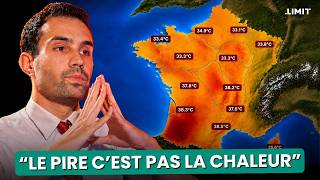
- Heat Waves and Inequality in Risk ExposureScaleFrance experienced three times the historic 2003 heat wave in a single summer, with peaks at 40°C, longer waves, and temperatures that don't drop at night.Risk Concept• Climate risk combines hazards, exposure, and vulnerability—not just weather. • Exposure depends on where you live: living in cities or under roofs amplifies effects. • In 2003, mortality under roofs was four times higher than elsewhere. • Vulnerability depends on health: elderly people, young children, comorbidities.Class and Gender Effects• Climate change kills proportionally more elderly women. • A Madrid study shows a 28% increase in femicides during heat waves. • Heat waves increase miscarriages and harm mental health. • In Paris, 88% of those who died in the 2003 heat wave lived alone. • In Seine-Saint-Denis, mortality was 160% higher than elsewhere in 2003 due to overcrowded housing and lack of access to public services.Urban Heat IslandConcrete in cities absorbs heat during the day and releases it at night, preventing bodies from recovering; Paris is Europe's deadliest city for heat waves, with about 6000 excess deaths in 2026 and a record night of 21.6°C on June 23.
- Heat Waves' Impact on the WorkplaceExposed OccupationsAccording to Oxfam, the most heat-exposed occupations are construction workers and farmers, who work outdoors in the heart of the urban heat island.Concrete Dangers• Heat-reduced cognitive capacity causes more errors and workplace danger. • France lacks a clearly defined right to withdraw in cases of extreme heat. • Climate leave proposals were mocked despite addressing real endangerment.Public Services Under Strain• Schools have minimal air conditioning, exposing children in playgrounds. • Public hospitals lost a quarter of their beds since the 2000s. • Emergency plans, once tied to winter flu outbreaks, now trigger May through August due to heat waves.Class DimensionPeople working in air-conditioned offices are not exposed the same way as construction or farm workers.
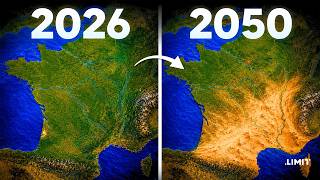
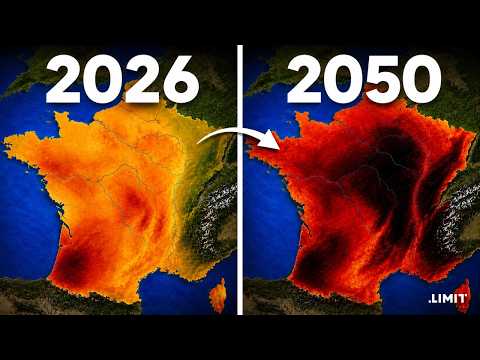
- Understanding DroughtThree Dimensions• Meteorological drought corresponds to a precipitation deficit: -55% in June-July. • Agricultural drought affects soils, forming a crust that prevents water infiltration. • Land use (water-intensive crops) can worsen drying. • Aquifer recharge becomes harder, reducing river flow.Projections at +4°CSouthwestern and western France (French Catalonia, Occitanie, Brittany) will be severely parched in summer, while the north and northeast will suffer extreme autumn-winter precipitation.Marine Heat WavesThe nearly enclosed Mediterranean rapidly warms (about 4°C above average), fueling Cévenol episodes and destroying posidonia meadows that sequester carbon.Concrete Consequences• Significant river flow reduction expected by 2050, especially in the southwest and on the Rhône. • Clay shrink-swell affects over 12 million homes (40% of housing stock) and cracks buildings. • This phenomenon is now the top cost item forecast for insurers, ahead of flooding.
- Megafires and the Landes ForestInsufficient ResourcesFrance has 12 Canadair water bombers about 30 years old (production ended in 2015), with 11 operational, reflecting public service cuts amid growing needs.Fire Ignition ConditionsThe 30/30/30 rule (30°C, under 30% humidity, 30 km/h wind) creates fire-prone conditions; 1% of fires cause 50% of damage through self-sustaining megafires.Landes History• The Landes forest, once wet and agropastoral, was drained under Napoleon III via an 1857 decree. • Maritime pine monoculture for timber production made the forest highly flammable. • In 10 years, trees' carbon sequestration capacity halved, with dead wood volume doubling.Timber PolicyThe low-carbon strategy (SNBC2) planned to triple timber production to decarbonize energy and building, weakening forests by accelerating harvests in an increasingly unstable climate.
- Conclusion: Collective ResponsesSummer SummaryHeat endangered health and work, drought weakened agriculture and infrastructure, and forests became more vulnerable to fires.Paralysis RiskFear paralyzes us like a rabbit in headlights; media and ecological coverage too often focuses on individual consumption rather than production and collective action.Collective Paths• Invest in collective infrastructure rather than individual guilt alone. • Example: a food security system to create a protected market for virtuous producers. • Identify collectives already organizing solutions and scale their knowledge.Final MessageCiting Émile Zola on the bitterness of a hopeless present, we must open breaches of hope and possibilities for transformation; an episode on adaptation is coming soon.