
Comment les incendies vont changer la France (plus que prévu)
Images of fire in the Landes appear straight out of hell. Yet they are perfectly real.
7 chapters
- Introduction: France on FireContextImages of fires in the Landes show an extraordinary situation, while for the first time significant fires are also affecting northern France: the Vosges, Brittany, and Île-de-France, with a fierce fire on the edge of Fontainebleau forest.Key figures• 91,000 hectares burned in France since January • Over 8 times the average of the past 20 years • At the global level, burned areas are decliningQuestion raisedWhy is the global trend declining while France's situation is worsening, and is this linked to a specific climate problem?Plan overviewThe video will analyze how climate change is devastating landscapes, demonstrate the State's failure to protect the population despite long-standing warnings, and propose concrete solutions for the short, medium, and long term.
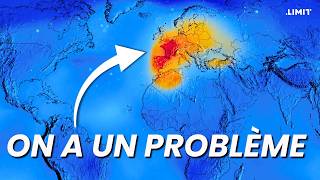
- The Paradox of Global FiresFindingSince the 2000s, burned areas worldwide have declined by half even as climate change intensifies.Africa explanation• Africa accounts for the majority of active fires visible on NASA maps • These fires are linked to slash-and-burn agriculture, an ancient land-clearing and soil-fertilization technique • Africa represents approximately 50% of global fire-related emissions • Slash-and-burn agriculture accounts for 70% of burned area annually worldwideReal cause of declineThe global decline is explained by demographics: more people in Africa means more fields, villages, and roads that fragment the territory and block fire spread, not a milder climate.Hidden reality• Only a few regions out of 42 studied by the JRC show climate-driven decline • 29% increase in burned area in southeastern South America • 22% increase in northern Australia • 18% increase in western Siberia • Europe joins this list of affected regions
- Why Warming Worsens Fires in FranceEuropean situationSpain, Portugal, Algeria, the Netherlands, and the United Kingdom are exceeding their fire records, and France has counted over 91,000 hectares burned, 8 times the average of the past 20 years.Human origin9 out of 10 fires in France are of human origin (cigarette butts, barbecues, construction sparks, arson), but the real question is why these sparks now cause blazes 10 times larger than 30 years ago.Climate mechanisms• Milder winters that kill fewer pests, creating combustible dead wood • Rainy winter and spring followed by dry summer turning vegetation into fuel • Accelerated summer drying: 99 out of 101 departments under water restrictions by July 15, 2026 • Fires no longer extinguish at night as the heat/humidity barrier weakensConsequencesThe fire season could stretch from May to October instead of June to August, with risk zones moving northward, as at Fontainebleau where 2,000 hectares burned compared to an average of 15 hectares per year.
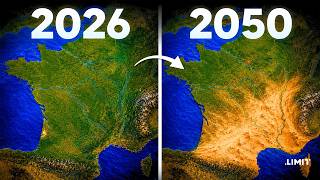
- The Landes, a Bomb Ready to ExplodeForest historyTwo hundred years ago, the Landes were a flat, poor land of wetlands; in the 19th century, Napoleon III had maritime pine planted massively for the wood and resin needed for industrial progress.High-risk monoculture• 1.2 million hectares, Western Europe's largest forest • 80% of trees are maritime pines • Maritime pine is pyrophilic: resin (turpentine) is highly flammable • Dead dry needles and pinecones explode and are projected tens of meters • A fire can cover up to 1,000 hectares in one hourThe 30-30-30 ruleWith warming, the rule feared by firefighters (humidity below 30%, temperature above 30°C, wind over 30 km/h) is met more and more easily.Ignored warnings• 2010: interministerial report warning that nearly half of metropolitan forests face high risk by 2050 • 2022: the Senate estimates a possible 80% increase in burned areas in the Mediterranean by 2050 • Map from the Ministry of Ecological Transition: 1/4 of territory at risk today, 50% by 2050, all of France at high risk by 2100 under the +4°C scenario
- The State's Failure Against FiresReduced resourcesUnder Macron's terms, ONF staff fell from 12,000 to 8,000 agents, and legal fuel-clearing obligations remain largely unenforced.Response after 2022After the Gironde fire in 2022 (32,000 hectares burned), Macron promised to replant trees, but mainly the same maritime pine species for the timber industry—a communications strategy rather than a real solution.Broken promises• 42,000 hectares burned in Gironde and 3,600 at Biscarrosse/Landes in 2026 • None of the four Canadair aircraft and helicopters promised in 2022 were delivered by 2026 • A 52-million-euro budget cut signed by Gabriel Attal led to the cancellation of two Canadair ordersPolitical controversyGabriel Attal defends himself against criticism from Jean-Luc Mélenchon; firefighters who demonstrated for more resources had been repressed, and Macron's political group voted against hiring more firefighters in July 2022.
- How to Protect Against FiresShort termCreate vegetation-free buffer zones around homes, with reintroduction of grazing (sheep) to maintain low vegetation sustainably.Medium termRehydrate the Landes by neutralizing current drainage that channels water toward rivers, by blocking old drains and restoring wetlands and lagoons.Long term• Diversify tree species by replacing maritime and Aleppo pines with fire-resistant species like holm oak and cork oak • End monocultures • Create a mosaic of production forests, natural forests, vineyards, grasslands, and agricultural areas to slow fire spreadSystemic problemFires reflect the overshoot of planetary boundaries by economic growth; critical infrastructure like nuclear deterrent sites in Gironde are now threatened by fires.
- Conclusion: Commit CollectivelyCollective needIndividual actions are necessary to inspire, but a collective shift is essential, driven by strong policies, businesses, leaders, and media.Action paths• Support an NGO like Canopée that protects forests • Participate in your municipality's town council meetings • Join a local community-supported agriculture farm for sustainable farmingEmotional messageAnger and helplessness at the incompetence of leaders are legitimate, but must serve to build alliances and show that alternatives are possible.Coming upThe channel will dedicate more time in the second half of the year to documenting solutions, with a future video on the state of French forests and how to improve them.