
Cannibalisme et naufrage : l’histoire vraie du Radeau de la Méduse
A human tragedy caused by sheer incompetence, set within a specific political crisis.
9 chapters
- Introduction and political context of the RestorationHistorical stakesAfter Napoleon's defeat in 1814, Louis XVIII returns to power and attempts a compromise between ultra-royalists seeking a return to the Old Regime and those desiring a liberal parliamentary monarchy.Political tensions• Ultra-royalists multiply symbolic and physical provocations • The country faces severe financial difficulties with an unpopular austerity policy • A large portion of the army is placed on half-pay • The Raft of the Medusa represents a historical blind spot despite its cultural influenceKey events• Napoleon's return in March 1815 and the Hundred Days period • Defeat at Waterloo in June 1815 • Louis XVIII's return with an ultra-royalist majority in the Chamber of DeputiesCultural significanceThe Raft of the Medusa inspired many artistic works, notably Brassens' song and Géricault's painting, but few know the true story of this human tragedy caused by incompetence.
- Hugues Duroy de Chaumareys and his political appointmentCaptain's background• Born in 1763, naval officer who became an émigré at the Revolution's start • Attempted to join the Quiberon landing in 1795 to regain power • Amnestied in 1802 by Napoleon and lived quietly under the Empire • Had not been to sea for nearly twenty years before his 1814 appointmentRoyalist rewardsIn 1814, Chaumareys receives the Legion of Honor and a naval command thanks to his networks and commitment to the royalist cause, despite his lack of recent experience.Political influenceHis appointment is strictly political, backed by the comte d'Artois, the king's brother and leader of the ultra-royalists, who control the Chamber of Deputies.Social contrastChaumareys embodies the old ultra-royalist world, in stark contrast to his subordinates aboard the Medusa, largely comprised of sailors who had careers under the Empire.
- Composition of the expedition and fleetFleet vessels• The Medusa: frigate commanded by Chaumareys • The Echo: corvette whose commander is equally ranked but more experienced • The Argus: brig • The Loire: old gabarre carrying bulky cargoPassengers and crew• Governor Schmaltz with his wife and daughter • Explorer Charles Picard with nine family members • Scientists such as botanist Leschenault de La Tour • Engineers intended to outfit the colony • Nearly 160 soldiers and non-commissioned officers aboard the Medusa • Approximately 400 people crowd onto the frigateMission objectivesThe Senegal expedition aims to regain control of a colonial possession after years of war against the English, transporting everything necessary: equipment, supplies, colonists, scientists, and garrison.Departure and early problems• Departure delayed to June 15, 1816 due to contrary winds • Set sail on June 17 for a journey estimated at three weeks • Sailing complicated by speed disparities between vessels • Chaumareys quickly decides to abandon group navigation
- The raft's abandonment and driftInitial promiseThe governor assures the raft's occupants that the boats will tow them to safety.Boat dispersal• Two boats, including the commander's, remain at sea and reach Saint-Louis on July 8 • These two boats are the luckiest of the affair • Other boats land in the desert in difficult positions • The raft's fate is far worse: it is abandoned to driftCircumstances of abandonmentTestimonies conflict: did the rope break or was an order given? After discussion between Governor Schmaltz and Captain Chaumareys, it is decided to make no attempt to recover the raft.Officers' justificationBoth officers feared being overwhelmed by the raft's occupants, representing the social underclass aboard the Medusa. This fear of uprising and mutiny echoes the Great Fear of 1789, and the victims of the drama were not designated by chance.
- Thirteen days of horror on the raftDuration and rescueFor the 150 raft occupants begins an ordeal lasting nearly two weeks. Only on July 17 does the brig Argus find the survivors, then reduced to 15 people. Four of them die in the hospital shortly after.Social divisions• Clashes erupt between two groups • One group led by officers accompanied by some passengers and sailors occupies the center • The other group comprises the remaining occupants: soldiers and sailors • Social position plays a decisive role in tensionsExtreme conditions• Food runs critically short • To drink: five barrels of wine and two of water to ration • A sack of flour recovered at sea provides strange food, quickly exhausted • A few flying fish allow the castaways to subsist • Lack of water under scorching sun is genuine tortureCannibalism• Driven by hunger and terror, survivors are forced to eat the flesh of the dead • This act deeply traumatized the survivors • Human flesh is dried and salted to make it more acceptable • Testimonies report despair facing this inhumane extremity
- The fate of other survivors and catastrophic tollBoats wrecked in desertFour of the six boats were wrecked on Saharan shores. Over 150 people, including the Picard family, wander the coast to reach Saint-Louis, needing to travel over 250 kilometers.Desert ordeals• Thirst, hunger and exhaustion strike the survivors • Deaths are counted during the crossing • Moors come to meet them with fluctuating attitudes • Some Moors rob them while others save them hoping for ransom • Different groups of castaways eventually reach their destination after many ordealsMedusa survivorsOn August 20, Lieutenant Reynaud finds the Medusa and discovers three men still alive after one and a half months of isolation. Of the 17 men who remained aboard, a dozen die attempting to reach land by raft, two others also perish. The three survivors live without water, under the sun and in disturbing isolation.Human tollThe affair's toll is catastrophic on a human level. Of 150 embarked on the raft, only 11 survived. The Senegal expedition is compromised with a series of disasters, and it is not until January 1817 that Colonel Schmaltz takes possession of the colony.
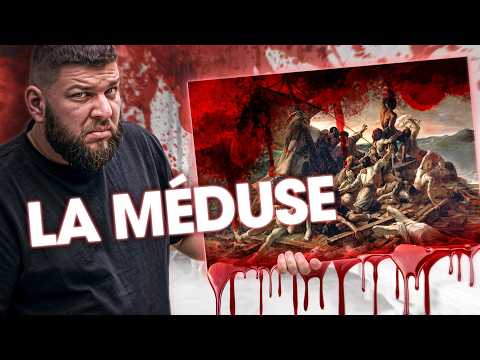
- Political consequences and artistic legacySocial and political shock• The affair makes headlines and accounts stun public opinion • Cannibalism episodes are particularly shocking as the cannibal represents the savage in contemporary thought • There is something unnatural about French officers being driven to this extremity • Chaumareys' mismanagement is immediately pointed outRevolutionary symbolism• Chaumareys represents ultra-royalist tendencies seeking to erase the revolutionary legacy • Denouncing his conduct carries major political weight • Through him, the entire old world deemed obsolete is called into question • The liberal press elevates survivors as heroes and martyrs • Summer's end sees Louis XVIII dissolve the Chamber and gain a more moderate majorityTrial and punishmentIn January 1817, Chaumareys is sentenced to three years in prison, stripped of his Legion of Honor and struck from the rolls. Released in 1820, he spends his remaining days trying to recover his past honors without success, even when his former patron becomes King Charles X.Artistic immortality• In 1819, painter Géricault creates a famous painting of the Raft of the Medusa with great precision • He sympathizes with survivors and represents them in his composition • The painting depicts raw horror while serving as social metaphor with clear political message • It expresses both France's tense situation and hopes for renewal • The painting causes scandal but becomes one of the Louvre's most famous paintings • Today, the political meaning escapes most visitors but the horror remains timeless